View methods side by side.
Choose up to four methods. Add them using the search and share the comparison by copying its link.
| Criterion |  Facilitation Mind Mapping |  UX Design Lean UX Canvas |  Facilitation Barcamp | 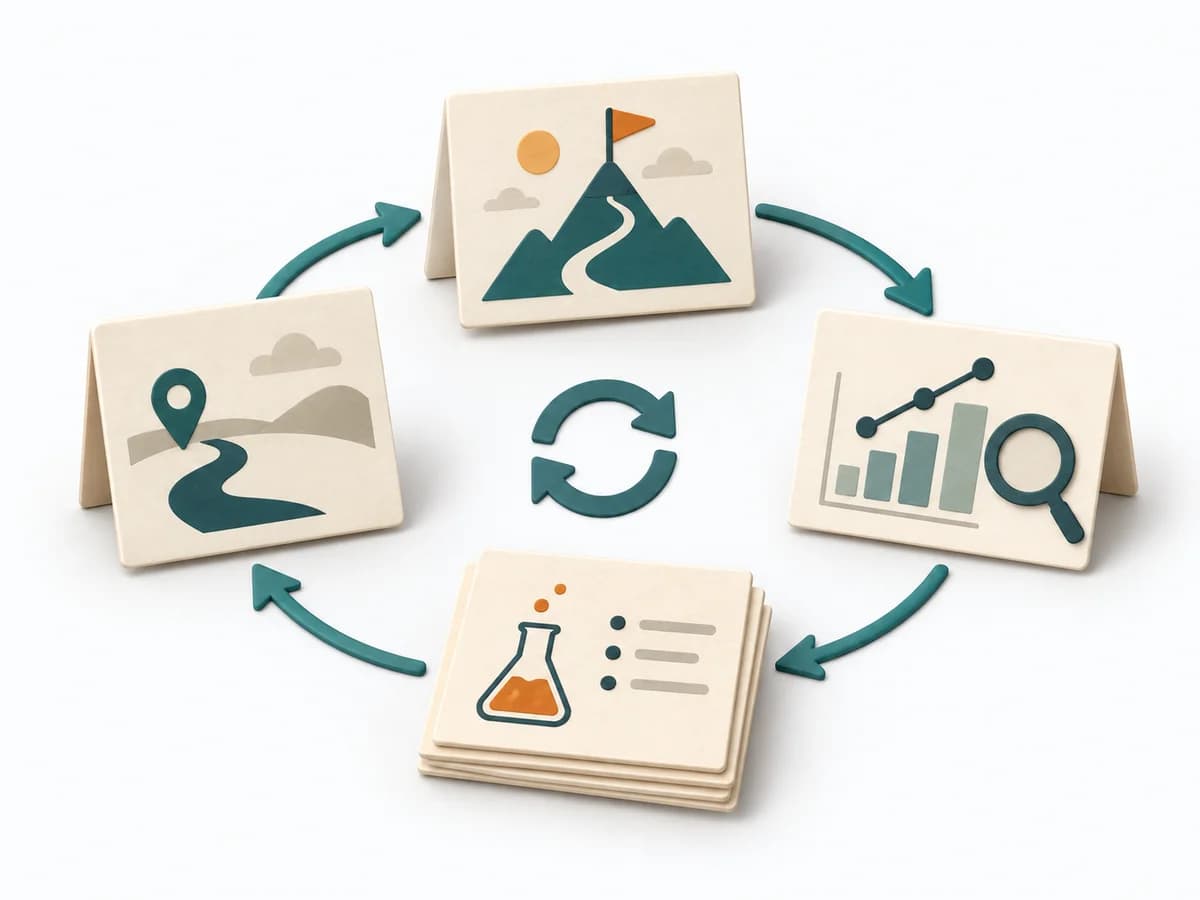 Product Discovery Product Kata |
|---|---|---|---|---|
Purposedifferent | When a topic is still unclear and too many thoughts surface at once, Mind Mapping creates an open surface for ordering them. It makes connections, subtopics, and starting points visible without fixing them too early. | The Lean UX Canvas helps clarify user behavior, touchpoints, and concept decisions. It makes assumptions and desired outcomes visible and captures the result as a completed canvas, hypothesis list, and first experiment. | When many people can contribute knowledge and the flow should stay open, Barcamp provides a framework for self-organized sessions. The format channels energy without defining the content too narrowly in advance. | Product Kata helps clarify customer problems, solution ideas, and evidence through a repeatable improvement routine. It captures direction, current metric, target metric, experiment notes, and learning. |
Complexitydifferent | Low | Medium | Medium | Medium |
Timedifferent | 15-45 min | 2-3 h | Halber Tag bis 2 Tage | 1-2 Wochen je Loop |
Participantsdifferent | 1-10 | 3-8 | 15-200 | 3-10 |
Formatdifferent | Workshop + async | Workshop + async | Workshop | Workshop + async |
Outputdifferent | Mind Map, Topic Clusters, Open Questions | Completed Lean UX Canvas, Hypothesis list, First experiment | Session Board, Session Notes, Community Learnings | Direction, Current metric, Target metric, Experiment note, Learning report |
Tagsno overlap | BrainstormingIdeasMappingStructureFacilitation | CanvasHypothesisOutcomesDiscovery | FacilitationLarge groupLearning | OutcomesDiscoveryLearningIterationCoaching |