View methods side by side.
Choose up to four methods. Add them using the search and share the comparison by copying its link.
| Criterion |  Facilitation Mind Mapping |  DevOps Incident Timeline Analysis |  DevOps Game Day | 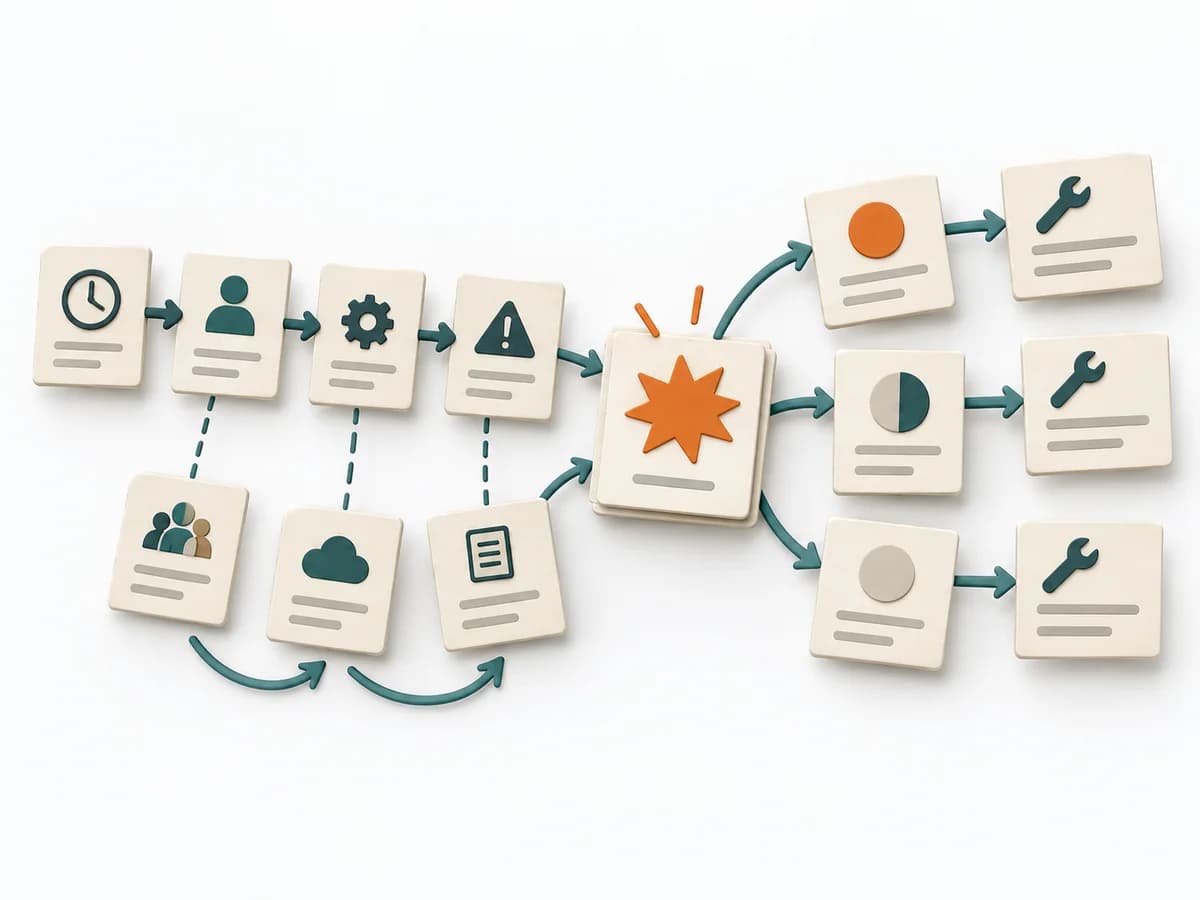 Operations Causal Factor Analysis |
|---|---|---|---|---|
Purposedifferent | When a topic is still unclear and too many thoughts surface at once, Mind Mapping creates an open surface for ordering them. It makes connections, subtopics, and starting points visible without fixing them too early. | For an incident with an unclear sequence, the method makes the timeline precisely visible. It separates perception, reaction, and delay so cause and effect become more clearly readable. | In preparing for rare incidents, the method tests response capability under controlled conditions. It shows where assumptions about stability, roles, and recovery are too optimistic. | For an event with a complicated course, the method breaks down the contributing factors along the timeline. It shows how conditions, decisions, and reactions together produce a course of events. |
Complexitydifferent | Low | Medium | High | High |
Timedifferent | 15-45 min | 60-180 min | Halber Tag | 2-6 h |
Participantsdifferent | 1-10 | 3-10 | 5-20 | 3-10 |
Formatdifferent | Workshop + async | Workshop + async | Workshop | Workshop + async |
Outputdifferent | Mind Map, Topic Clusters, Open Questions | Incident Timeline, Evidence Log, Delay Analysis, Improvement Actions | Simulation Notes, Gaps List, Updated Runbooks | Event Timeline, Causal Factor Chart, Cause List, Corrective Actions |
Tagsno overlap | BrainstormingIdeasMappingStructureFacilitation | IncidentTimelineSite Reliability Engineering | ResilienceOperationsIncident | CausalityIncidentRoot causeTimeline |