View methods side by side.
Choose up to four methods. Add them using the search and share the comparison by copying its link.
| Criterion |  Facilitation Mind Mapping |  Domain Modeling Context Map | 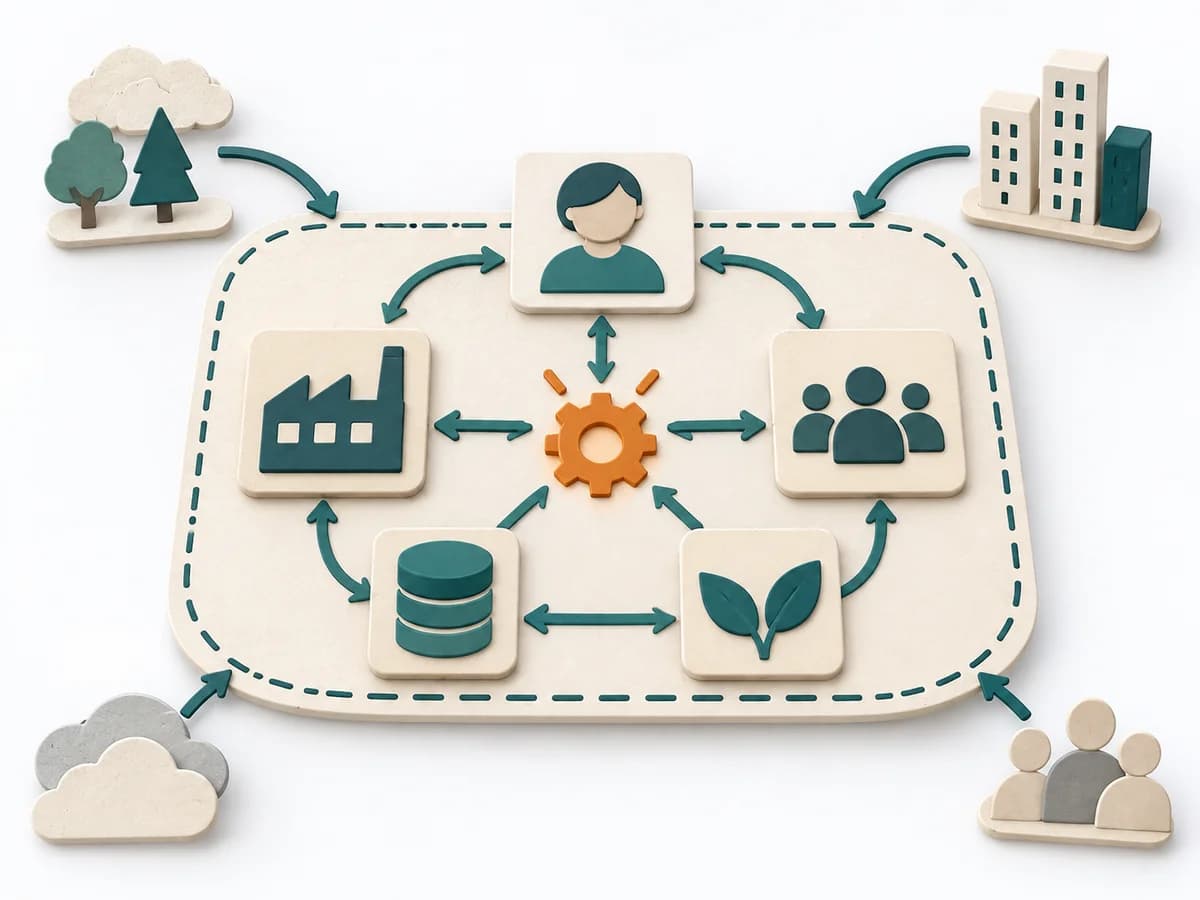 Systems Thinking Systems Mapping |  Facilitation Alignment Mapping |
|---|---|---|---|---|
Purposedifferent | When a topic is still unclear and too many thoughts surface at once, Mind Mapping creates an open surface for ordering them. It makes connections, subtopics, and starting points visible without fixing them too early. | When several contexts need to talk to each other, it makes their relationships and dependencies legible. It helps sort integration pressure and responsibilities across system boundaries. | Systems Mapping arranges elements, relationships, and boundaries so a complex field becomes legible at a glance. The overview stabilizes the overall picture before detail work or steering begins. | When several people work toward one goal but hold different mental maps, Alignment Mapping makes the discrepancies visible. It arranges goals, assumptions, and priorities so shared direction becomes verifiable. |
Complexitydifferent | Low | Medium | Medium | Medium |
Timedifferent | 15-45 min | 1-3 h | 1-3 h | 1-2 h |
Participantsdifferent | 1-10 | 2-8 | 3-12 | 4-12 |
Formatdifferent | Workshop + async | Workshop + async | Workshop + async | Workshop |
Outputdifferent | Mind Map, Topic Clusters, Open Questions | Context Map, Integration Patterns, Boundary Notes | System Map, Dependencies, Leverage Points | Alignment Map, Open Issues, Decision Questions |
Tagsno overlap | BrainstormingIdeasMappingStructureFacilitation | Domain-Driven DesignBoundariesStrategy | Systems thinkingMappingBoundariesChange | AlignmentStakeholdersStrategyFacilitation |