View methods side by side.
Choose up to four methods. Add them using the search and share the comparison by copying its link.
| Criterion |  Facilitation Mind Mapping | 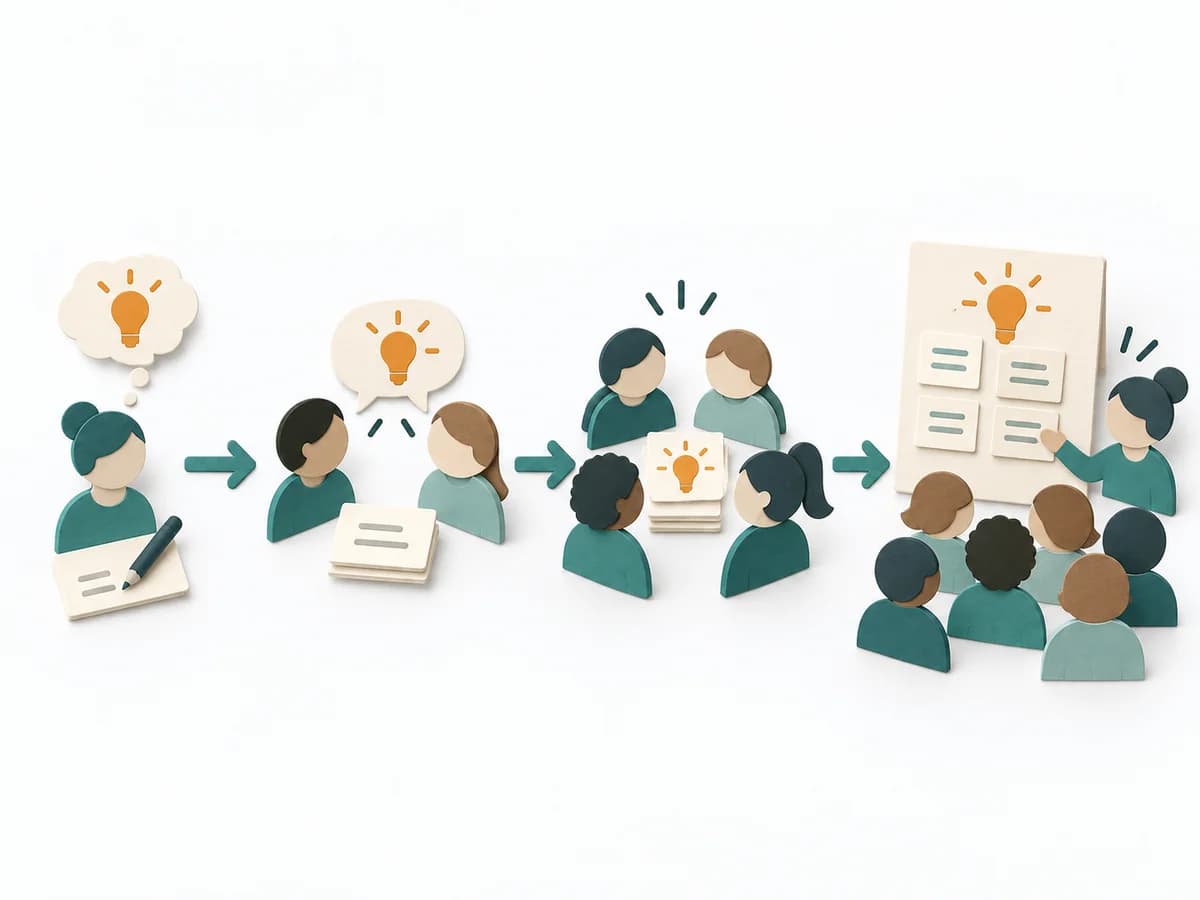 Facilitation 1-2-4-All |  Operations A3 Problem Solving |  Operations 5 Whys |
|---|---|---|---|---|
Purposedifferent | When a topic is still unclear and too many thoughts surface at once, Mind Mapping creates an open surface for ordering them. It makes connections, subtopics, and starting points visible without fixing them too early. | When many people in a group too rarely get to speak, 1-2-4-All distributes thinking time more fairly. The format builds participation step by step and makes quiet or still-unformed thoughts usable faster. | For a complex deviation with several people involved, the method bundles problem, analysis, and decision onto one page. It creates a shared working space where causes, countermeasures, and follow-up fit together. | For a single, hard-to-explain deviation, the method exposes the causal chain behind the visible symptom. It keeps the cause open until a controllable condition emerges instead of a mere description. |
Complexitydifferent | Low | Low | Medium | Low |
Timedifferent | 15-45 min | 10-20 min | 45-90 min | 15-30 min |
Participantsdifferent | 1-10 | 4-100+ | 2-5 | 2-6 |
Formatdifferent | Workshop + async | Workshop | Workshop + async | Workshop |
Outputdifferent | Mind Map, Topic Clusters, Open Questions | Idea List, Shared Insights, Emergent Themes | A3 Report, Action Plan, Root Cause Analysis | Root cause notes, Countermeasures |
Tagsno overlap | BrainstormingIdeasMappingStructureFacilitation | FacilitationInclusionIdeation | LeanProblem solvingCoachingOperations | Root causeIncidentLeanProblem solving |