View methods side by side.
Choose up to four methods. Add them using the search and share the comparison by copying its link.
| Criterion | 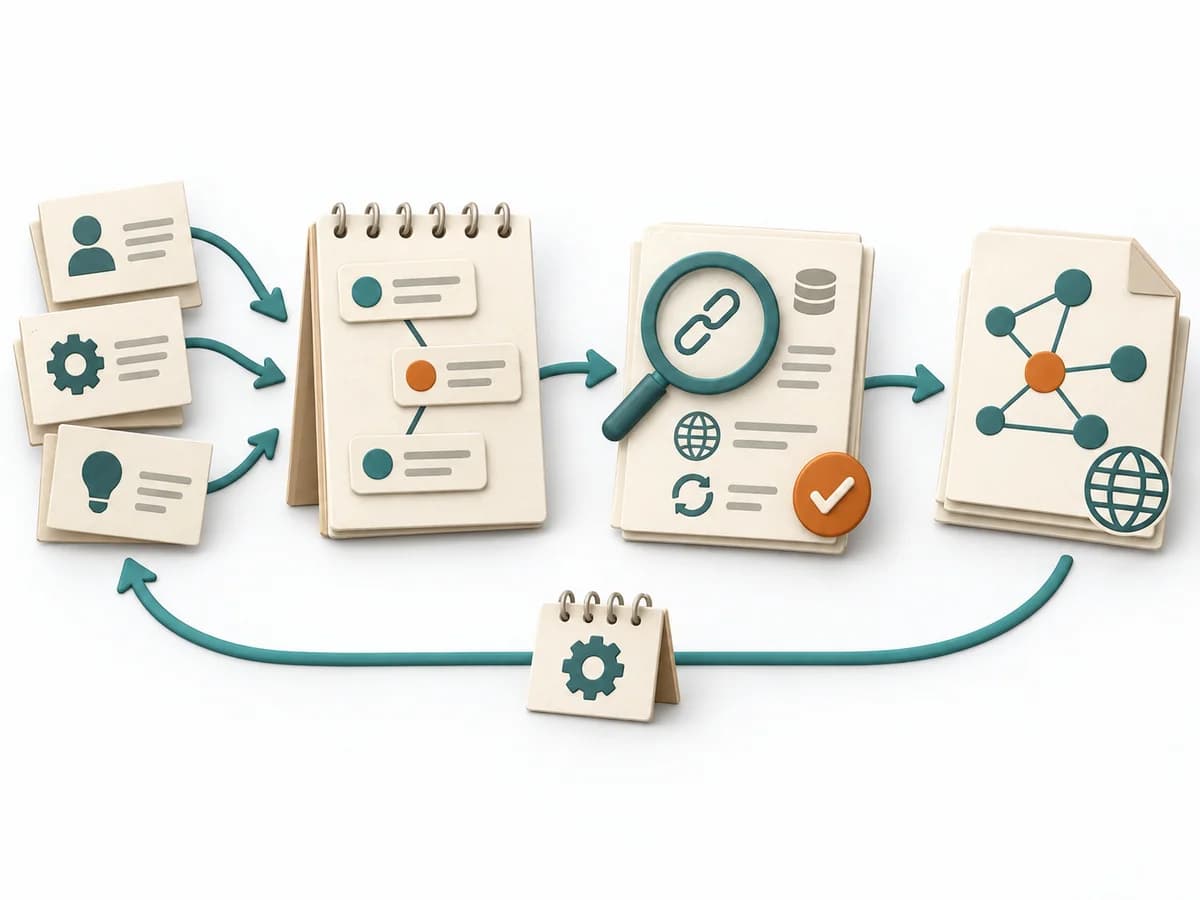 Knowledge Modeling Linked Open Terms |  Operations Failure Mode and Effects Analysis |  Agile Example Mapping | 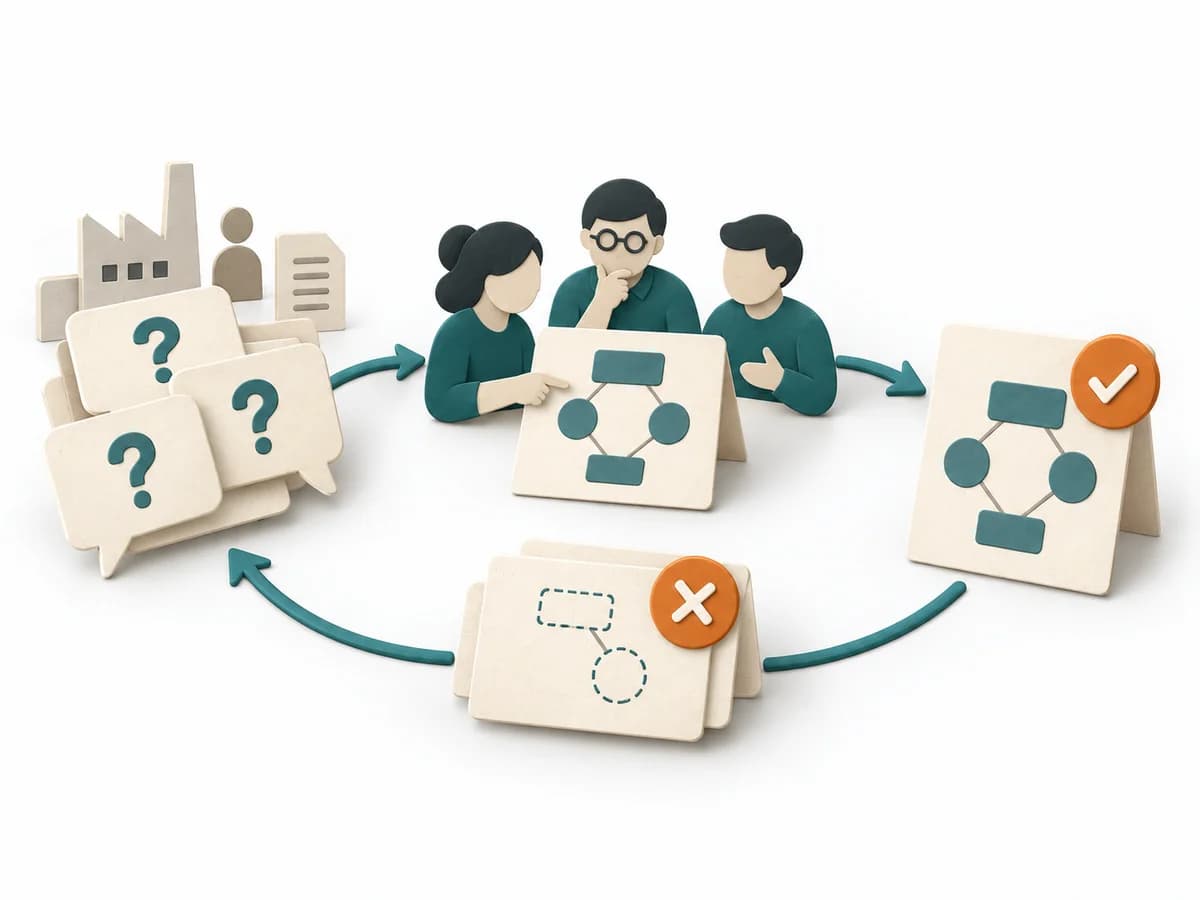 Knowledge Modeling Competency Questions |
|---|---|---|---|---|
Purposedifferent | Linked Open Terms connects terminology work with linked-data thinking and makes terminology technically connectable. Vocabulary, meanings, and references can thereby be maintained consistently. | For a process, product, or service with noticeable failure risks, the method assesses possible failure modes in advance. It directs attention to combinations of occurrence, effect, and detectability. | When a story carries business rules and exceptions, it brings clarity before implementation. It makes examples, open questions, and boundaries visible enough that the logic becomes jointly sound. | Competency Questions translate a domain model into concrete questions that it must be able to answer. The method keeps the model's scope clean and prevents pretty but useless structures. |
Complexitydifferent | Medium | High | Low | Medium |
Timedifferent | Wochen bis Monate | 2-6 h | 30-60 min | 2-4 h |
Participantsdifferent | 2-8 | 3-10 | 3-7 | 2-8 |
Formatdifferent | Workshop + async | Workshop | Workshop | Workshop + async |
Outputdifferent | Ontology Requirements, Conceptual Model, Published Ontology, Documentation, Maintenance Plan | FMEA Table, Risk Priority, Mitigation Actions | Example Map, Acceptance Criteria, Open Questions | Competency Question Set, Required Concepts, Test Queries, Coverage Matrix |
Tagsno overlap | OntologyMethodologyAgileSemantic | RiskQualityOperationsRoot cause | Behavior-Driven DevelopmentRequirementsExamplesRefinement | OntologyKnowledge graphScopeRequirementsSemantic |