View methods side by side.
Choose up to four methods. Add them using the search and share the comparison by copying its link.
| Criterion |  Knowledge Modeling Linked Open Terms | 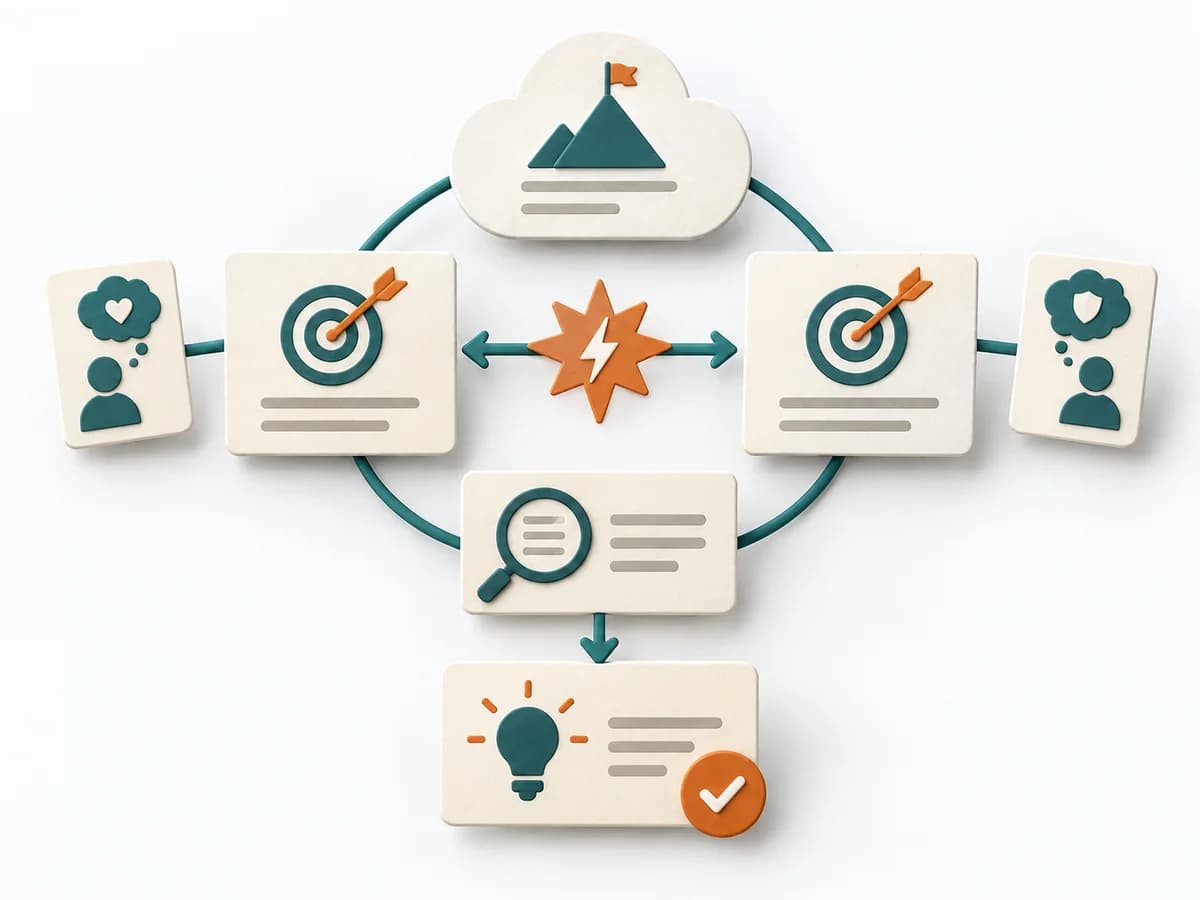 Systems Thinking Evaporating Cloud |  Decision Making Assumption Surfacing | 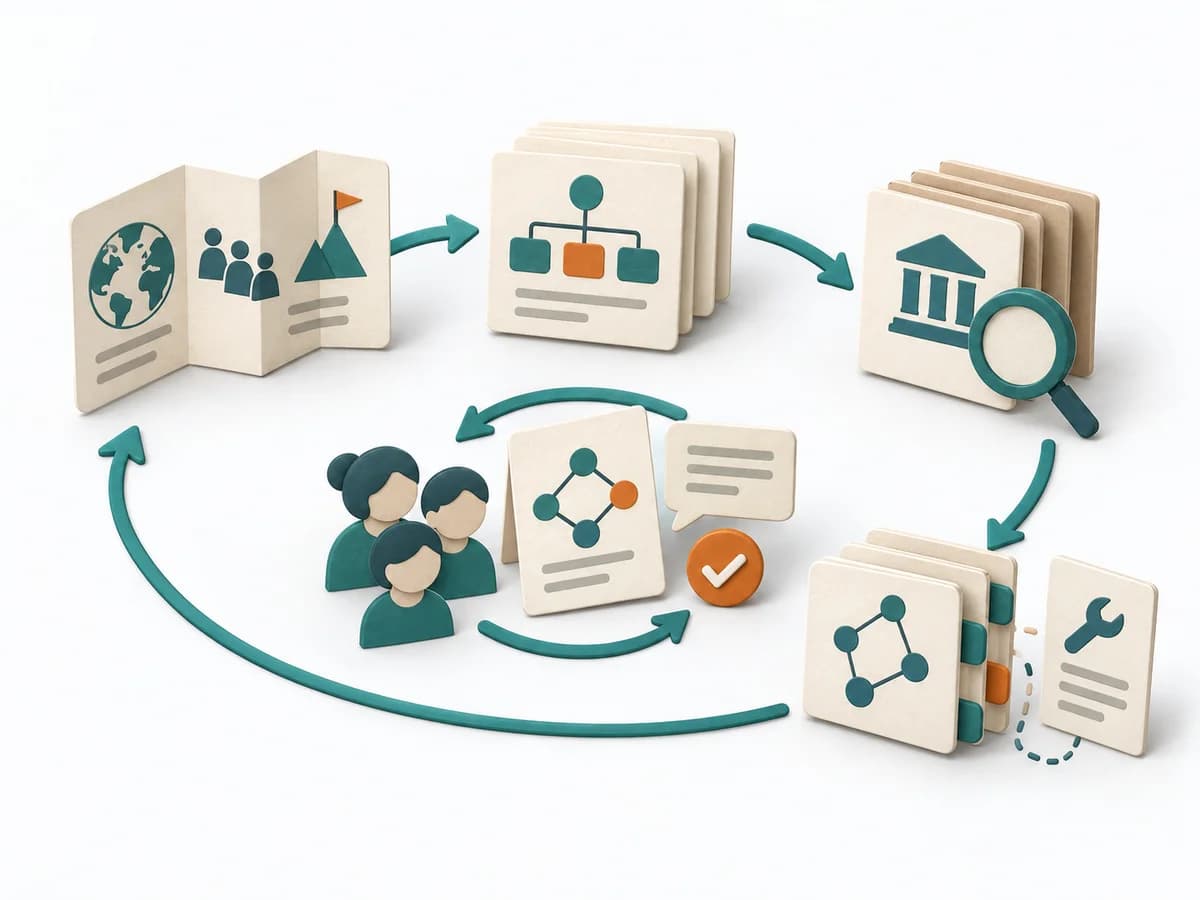 Knowledge Modeling NeOn Methodology |
|---|---|---|---|---|
Purposedifferent | Linked Open Terms connects terminology work with linked-data thinking and makes terminology technically connectable. Vocabulary, meanings, and references can thereby be maintained consistently. | The method makes visible why two seemingly incompatible demands arise and which assumption must be tested to resolve the conflict. | Plans often contain assumptions that were never openly stated and remain dangerous precisely because of that. Assumption Surfacing makes these silent premises visible and prioritizes which of them carry the initiative or could sink it. | The NeOn Methodology structures ontology work as a controlled process with reuse, scenarios, and reviews. It is useful when ontologies should not emerge ad hoc but modularly and reusably. |
Complexitydifferent | Medium | Medium | Low | High |
Timedifferent | Wochen bis Monate | 60-120 min | 45-90 min | Mehrere Wochen bis Monate |
Participantsdifferent | 2-8 | 2-8 | 2-8 | 2-10 |
Formatdifferent | Workshop + async | Workshop | Workshop + async | Workshop + async |
Outputdifferent | Ontology Requirements, Conceptual Model, Published Ontology, Documentation, Maintenance Plan | Conflict Cloud, Assumption List, Breakthrough Ideas, Next Experiments | Assumption List, Critical Assumptions, Learning Plan | Ontology Requirements Specification, Reuse Plan, Ontology Modules, Evaluation Report |
Tagsno overlap | OntologyMethodologyAgileSemantic | Theory of ConstraintsAssumptionsSystems thinking | AssumptionsRiskDecisionDiscovery | OntologyMethodologyReuseSemanticEngineering |