View methods side by side.
Choose up to four methods. Add them using the search and share the comparison by copying its link.
| Criterion | 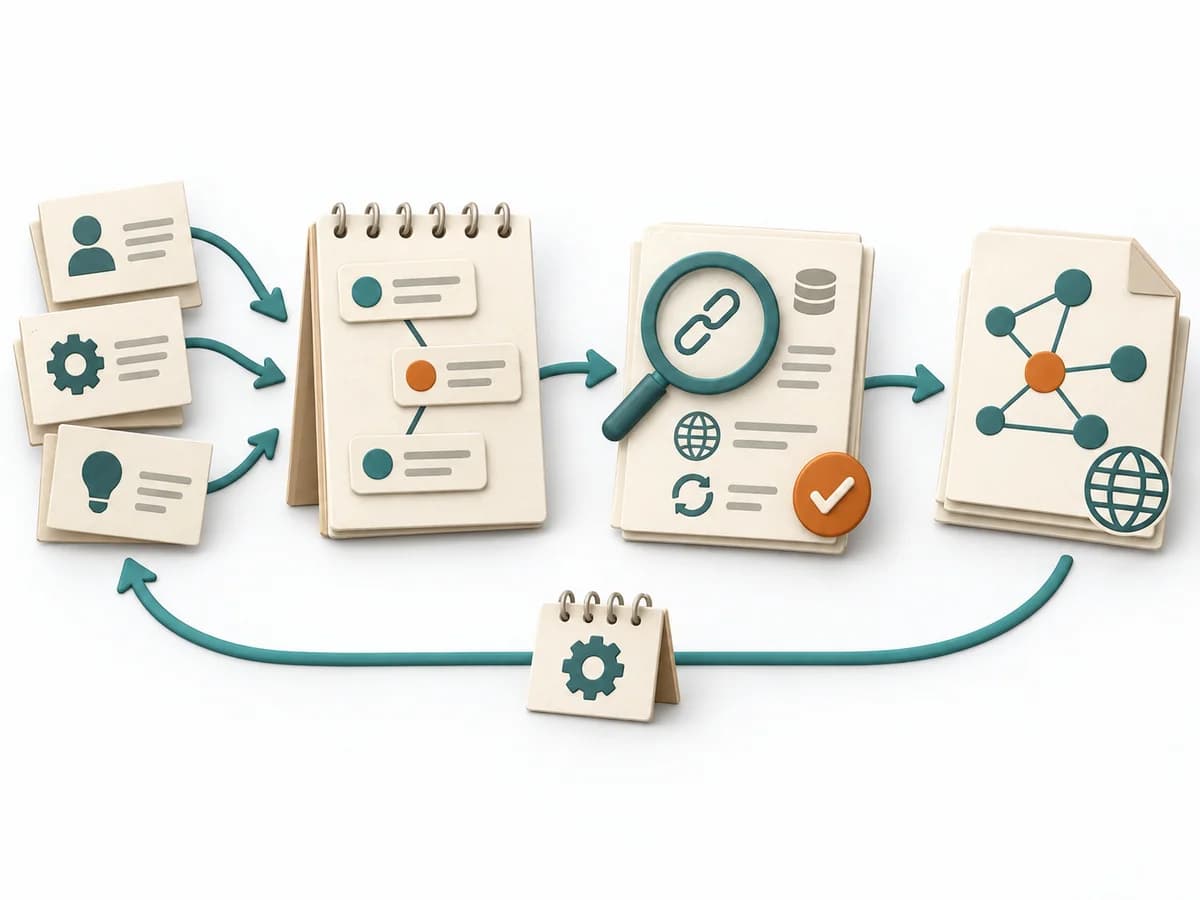 Knowledge Modeling Linked Open Terms |  Decision Making Delphi Method | 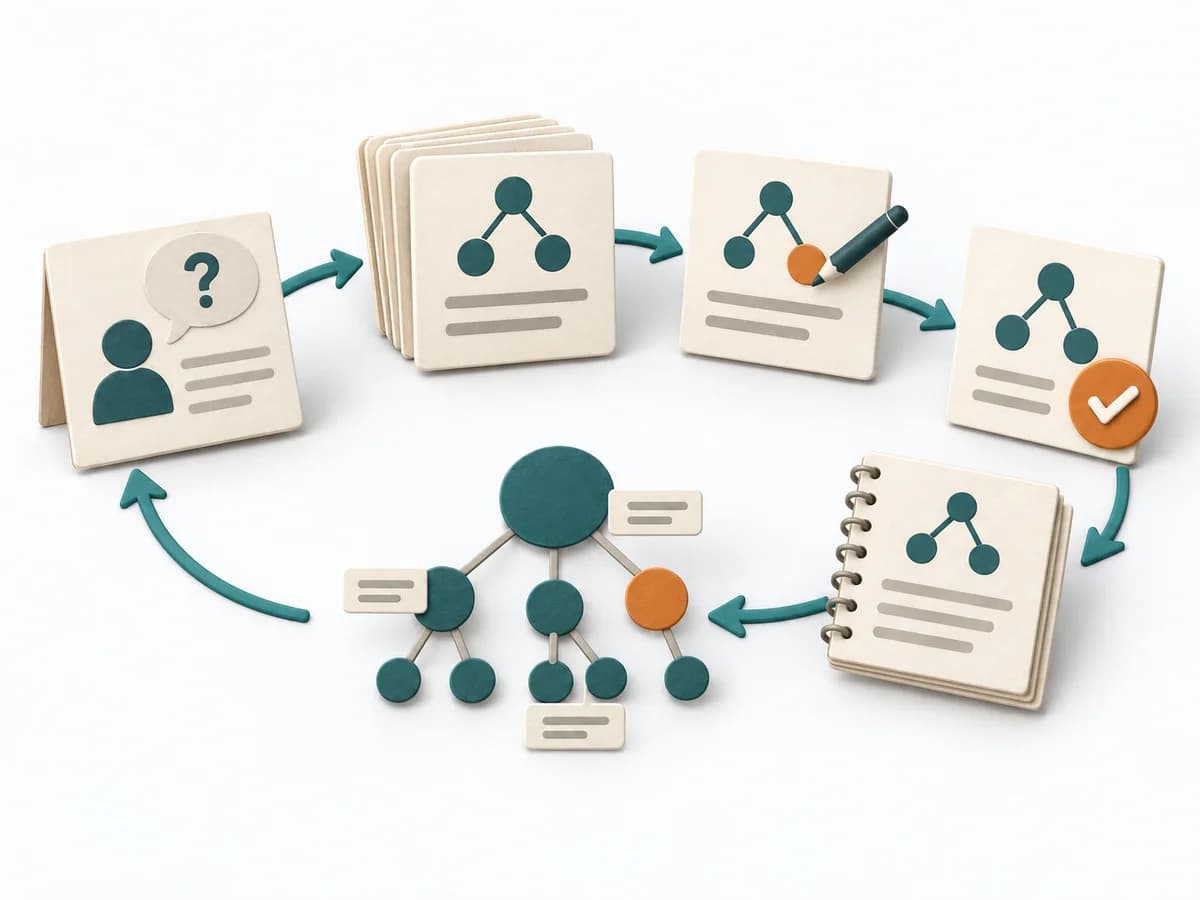 Knowledge Modeling Ontology Design Patterns |  Product Strategy DIBB |
|---|---|---|---|---|
Purposedifferent | Linked Open Terms connects terminology work with linked-data thinking and makes terminology technically connectable. Vocabulary, meanings, and references can thereby be maintained consistently. | When knowledge is distributed and direct dominance should be avoided, groups quickly fall under the sway of their opinion leaders. The Delphi Method gathers assessments iteratively and gradually brings expert judgments closer together. | Ontology Design Patterns provide reusable building blocks for recurring modeling problems. The method brings structure to the search for clean concepts, relationships, and roles. | DIBB helps clarify target groups, value, goals, and priorities by making the logic behind a decision explicit. It captures results as a DIBB document, belief list, bet list, and learning report. |
Complexitydifferent | Medium | High | Medium | Low |
Timedifferent | Wochen bis Monate | 1-4 Wochen | 1-3 h pro Pattern | 1-2 h |
Participantsdifferent | 2-8 | 6-30 Experten | 1-6 | 2-8 |
Formatdifferent | Workshop + async | Async | Workshop + async | Workshop + async |
Outputdifferent | Ontology Requirements, Conceptual Model, Published Ontology, Documentation, Maintenance Plan | Expert Forecast, Consensus Range, Assumption Notes | Selected Patterns, Adapted Schema Fragments, Pattern Documentation | DIBB document, Belief list, Bet list, Learning report |
Tagsno overlap | OntologyMethodologyAgileSemantic | ForecastingExpertsDecisionStrategy | OntologyPatternsReuseSemanticModeling | StrategyDecisionAssumptionsHypothesis |