View methods side by side.
Choose up to four methods. Add them using the search and share the comparison by copying its link.
| Criterion |  Systems Thinking Leverage Points | 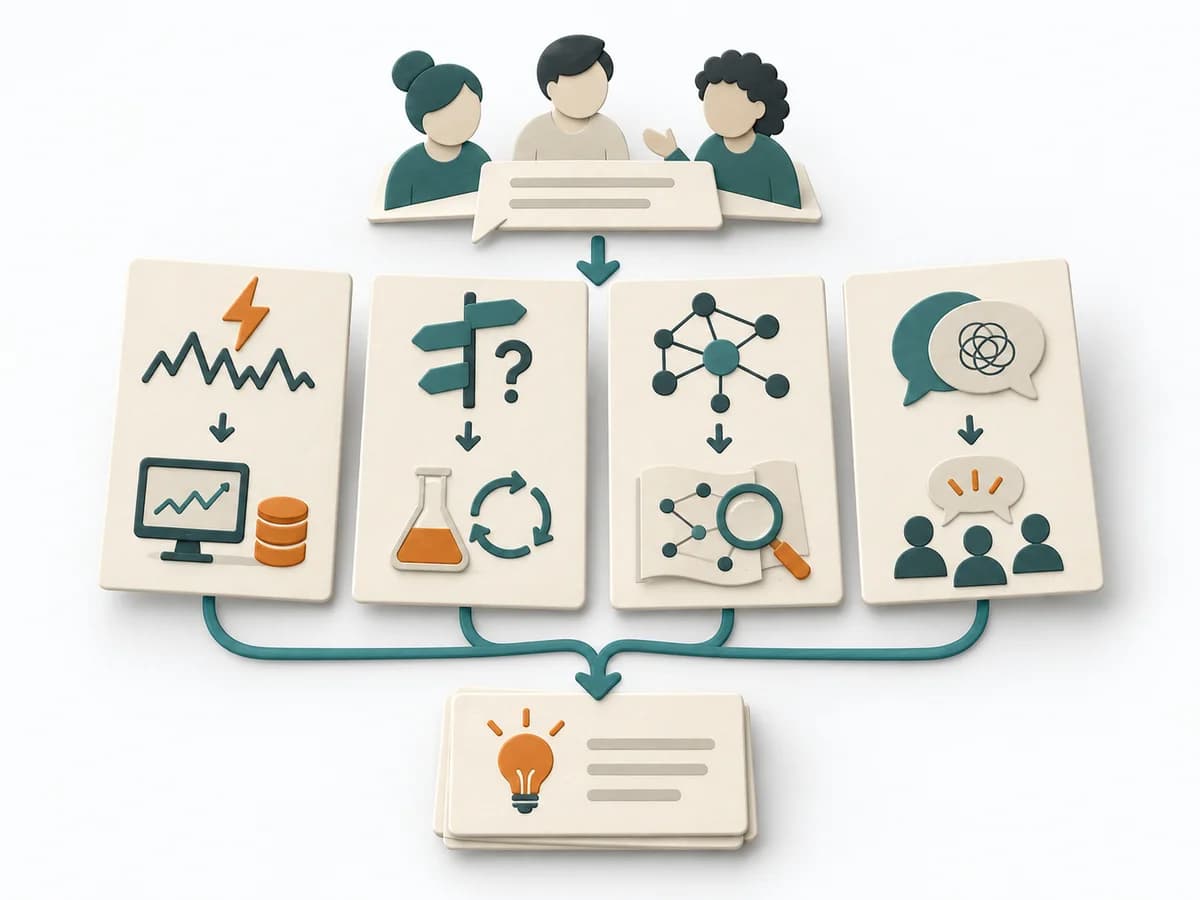 Systems Thinking VUCA Scan |  Facilitation Team Charter |  Facilitation Alignment Mapping |
|---|---|---|---|---|
Purposedifferent | Leverage Points show exactly where interventions in a system produce a disproportionate effect. It draws relationships, patterns, and feedback loops. The result is captured as a leverage map and action strategy. | The VUCA Scan helps read difficult situations more precisely. Instead of treating unclarity as generally complicated, the method separates fast change, missing knowledge, systemic entanglement, and ambiguous interpretation. | When a team is starting fresh or working past each other, Team Charter clarifies the shared working basis. It visibly sets out how collaboration, decision paths, and mutual conduct should work day to day. | When several people work toward one goal but hold different mental maps, Alignment Mapping makes the discrepancies visible. It arranges goals, assumptions, and priorities so shared direction becomes verifiable. |
Complexitydifferent | High | Low | Medium | Medium |
Timedifferent | Half day | 30-90 min | 2-4 h | 1-2 h |
Participantsdifferent | 3-12 | 1-10 | 3-12 | 4-12 |
Formatdifferent | Workshop | Workshop + async | Workshop | Workshop |
Outputdifferent | Leverage Map, Action Strategy | VUCA Map, Response Options, Signal and Learning Plan | Team Charter, Working Norms, Role Notes | Alignment Map, Open Issues, Decision Questions |
Tagsno overlap | Systems thinkingChangeStrategy | SensemakingUncertaintyComplexityStrategyForesight | TeamAlignmentCollaboration | AlignmentStakeholdersStrategyFacilitation |