View methods side by side.
Choose up to four methods. Add them using the search and share the comparison by copying its link.
| Criterion |  Systems Thinking Leverage Points | 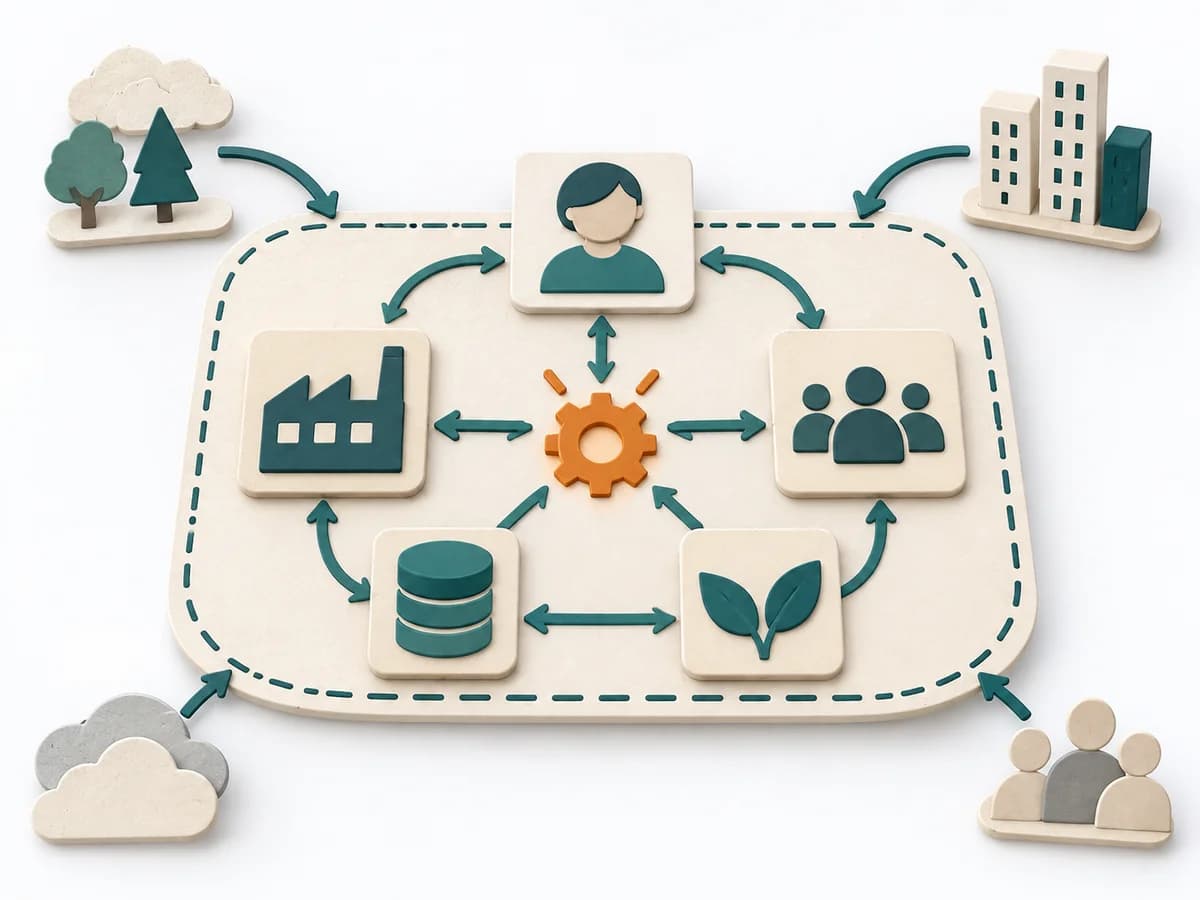 Systems Thinking Systems Mapping | 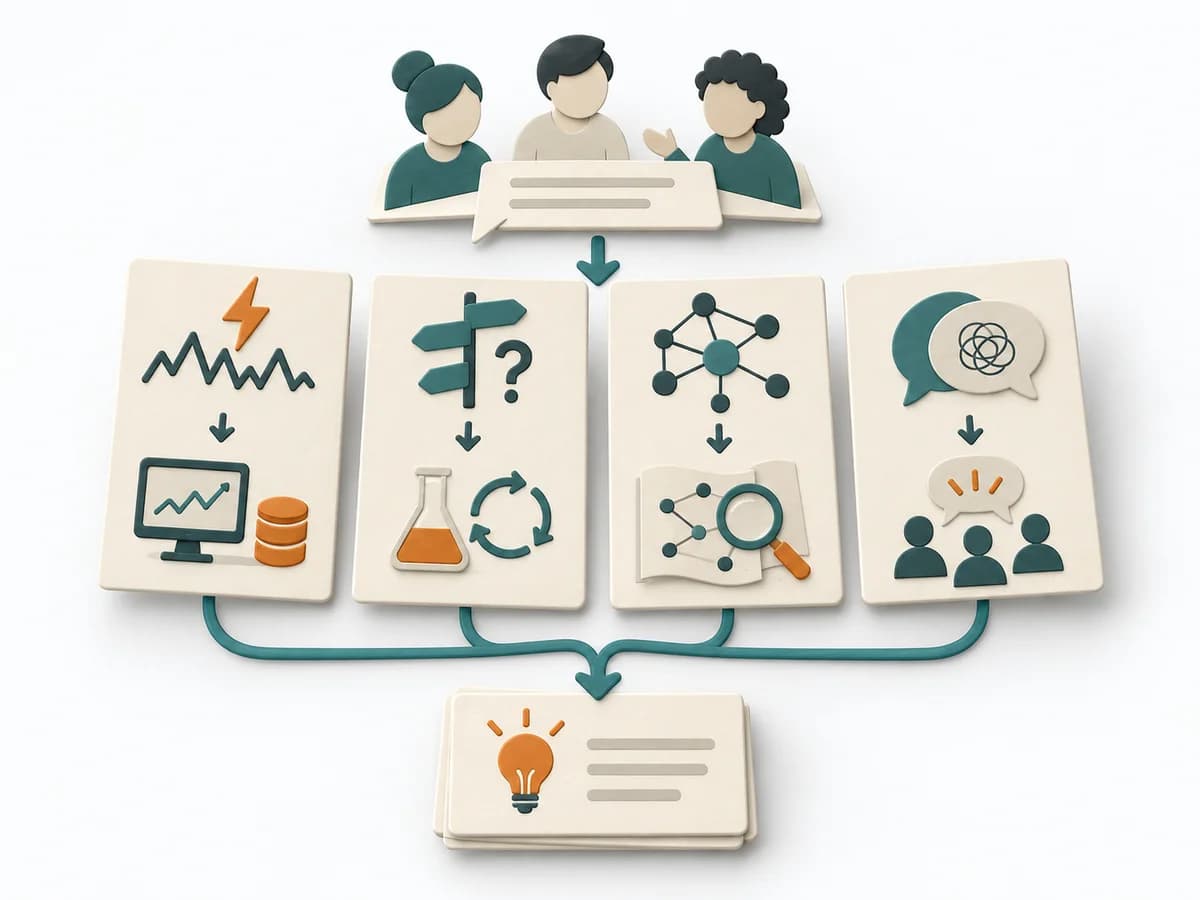 Systems Thinking VUCA Scan |  Knowledge Modeling Concept Mapping |
|---|---|---|---|---|
Purposedifferent | Leverage Points show exactly where interventions in a system produce a disproportionate effect. It draws relationships, patterns, and feedback loops. The result is captured as a leverage map and action strategy. | Systems Mapping arranges elements, relationships, and boundaries so a complex field becomes legible at a glance. The overview stabilizes the overall picture before detail work or steering begins. | The VUCA Scan helps read difficult situations more precisely. Instead of treating unclarity as generally complicated, the method separates fast change, missing knowledge, systemic entanglement, and ambiguous interpretation. | Concept Mapping arranges terms and relationships in a network that makes subject-matter connections tangible. It fits when a topic needs to be understood structurally rather than linearly. |
Complexitydifferent | High | Medium | Low | Medium |
Timedifferent | Half day | 1-3 h | 30-90 min | 1-2 h |
Participantsdifferent | 3-12 | 3-12 | 1-10 | 1-8 |
Formatdifferent | Workshop | Workshop + async | Workshop + async | Workshop + async |
Outputdifferent | Leverage Map, Action Strategy | System Map, Dependencies, Leverage Points | VUCA Map, Response Options, Signal and Learning Plan | Concept Map, Relationship Labels, Knowledge Gaps |
Tagsno overlap | Systems thinkingChangeStrategy | Systems thinkingMappingBoundariesChange | SensemakingUncertaintyComplexityStrategyForesight | KnowledgeConceptsMappingSensemaking |