View methods side by side.
Choose up to four methods. Add them using the search and share the comparison by copying its link.
| Criterion |  Systems Thinking Leverage Points | 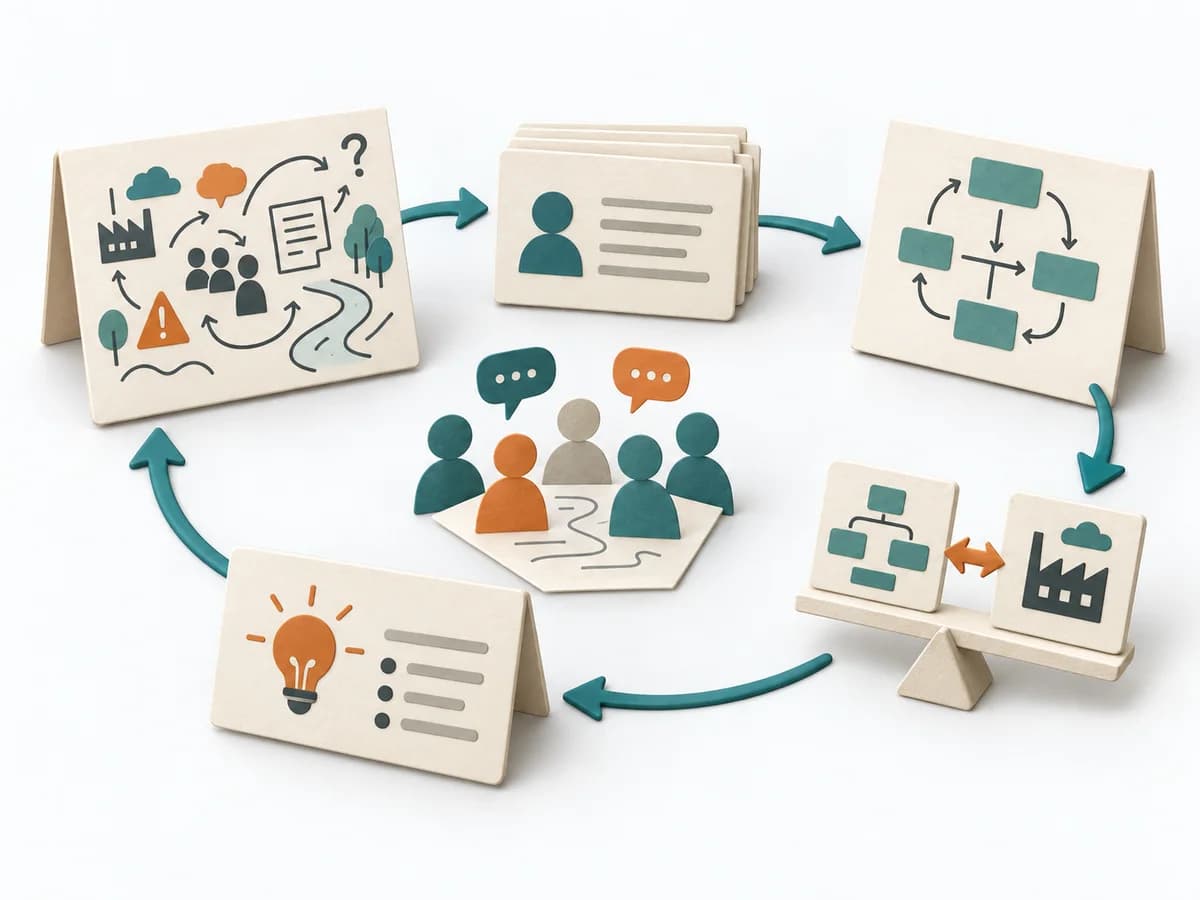 Systems Thinking Soft Systems Methodology | 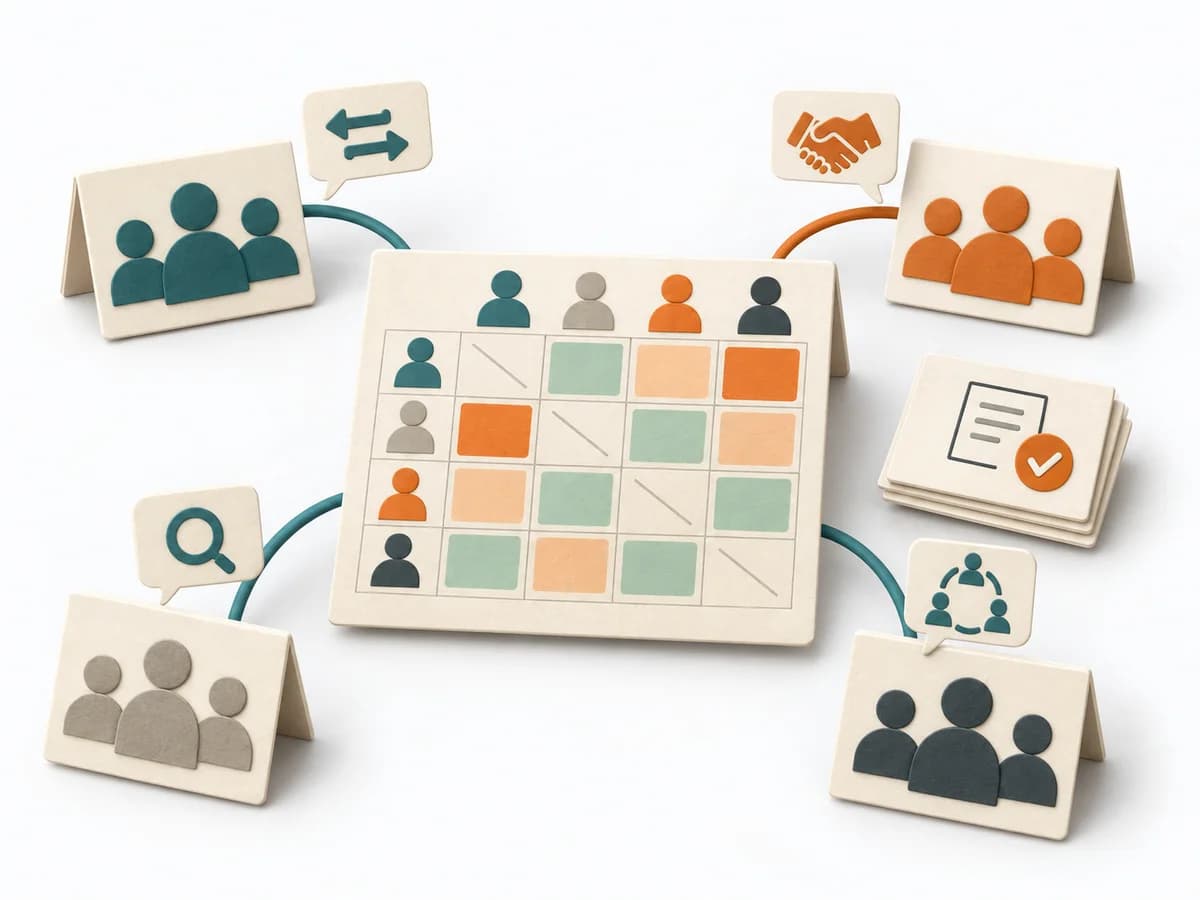 Team Design Team Topologies Interaction Modes | 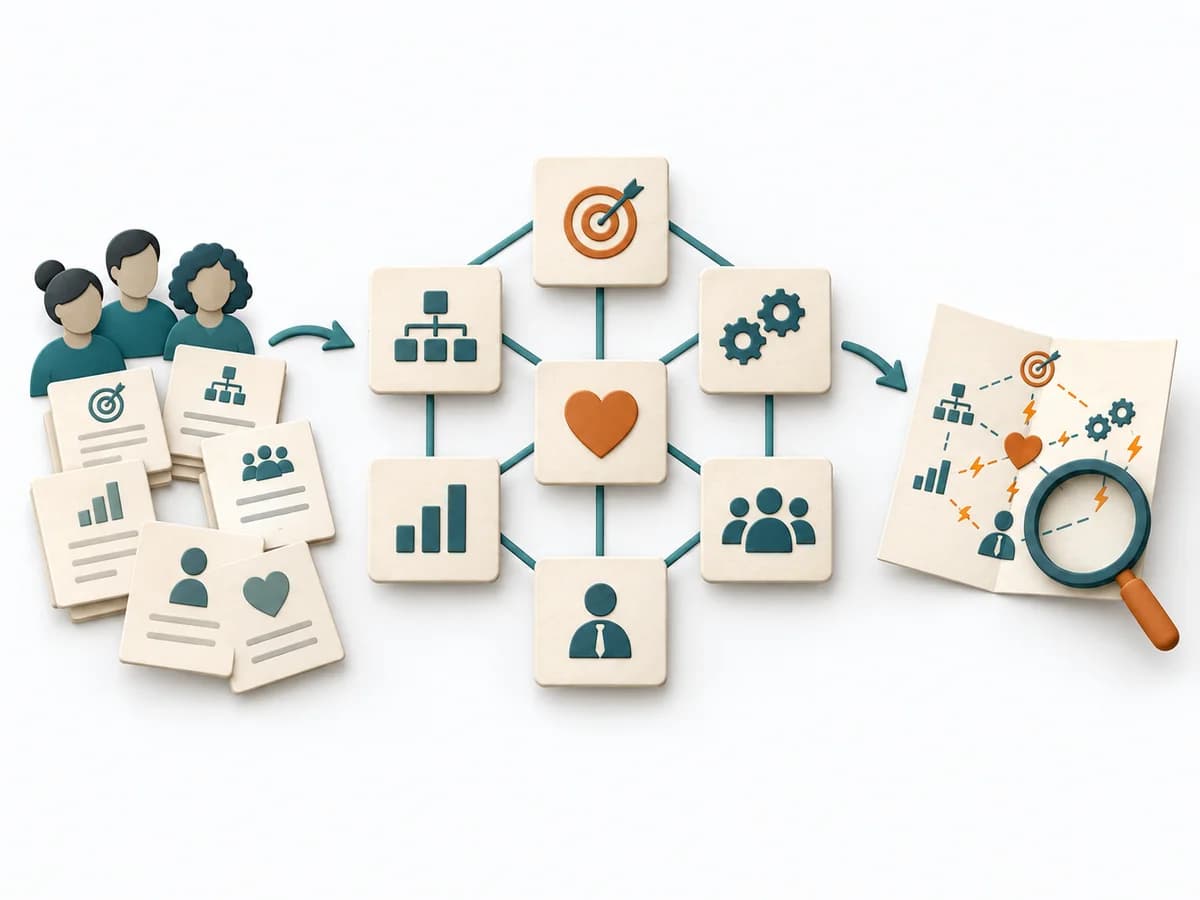 Business Strategy McKinsey 7S |
|---|---|---|---|---|
Purposedifferent | Leverage Points show exactly where interventions in a system produce a disproportionate effect. It draws relationships, patterns, and feedback loops. The result is captured as a leverage map and action strategy. | Soft Systems Methodology helps explore unclear or politically charged problems systematically. Instead of forcing a quick answer, the method builds a shared understanding of perspectives and room for action. | When several teams collaborate repeatedly, it describes the right interaction mode for each interface between them. It clarifies responsibility, interaction, and load between teams. The result is captured as an interaction heat map and pairwise agreements. | McKinsey 7S checks whether Strategy, Structure, Systems, Shared Values, Skills, Style, and Staff fit together. Organizational misalignments become visible across multiple levers as a result. |
Complexitydifferent | High | High | Medium | Medium |
Timedifferent | Half day | 0.5-3 Tage | Half day | 2-4 h |
Participantsdifferent | 3-12 | 5-15 | Team-Leads plus Architecture | 3-12 |
Formatsame | Workshop | Workshop | Workshop | Workshop |
Outputdifferent | Leverage Map, Action Strategy | Rich Picture, Root Definitions, Conceptual Models, Change Agenda | Interaction Heat Map, Agreements per Pair | 7S Assessment, Alignment Gaps, Change Actions |
Tagsno overlap | Systems thinkingChangeStrategy | Soft systemsComplexitySensemakingSystems thinking | TeamAlignmentCollaborationOrganization | OrganizationStrategyAlignmentChange |