View methods side by side.
Choose up to four methods. Add them using the search and share the comparison by copying its link.
| Criterion |  Systems Thinking Leverage Points | 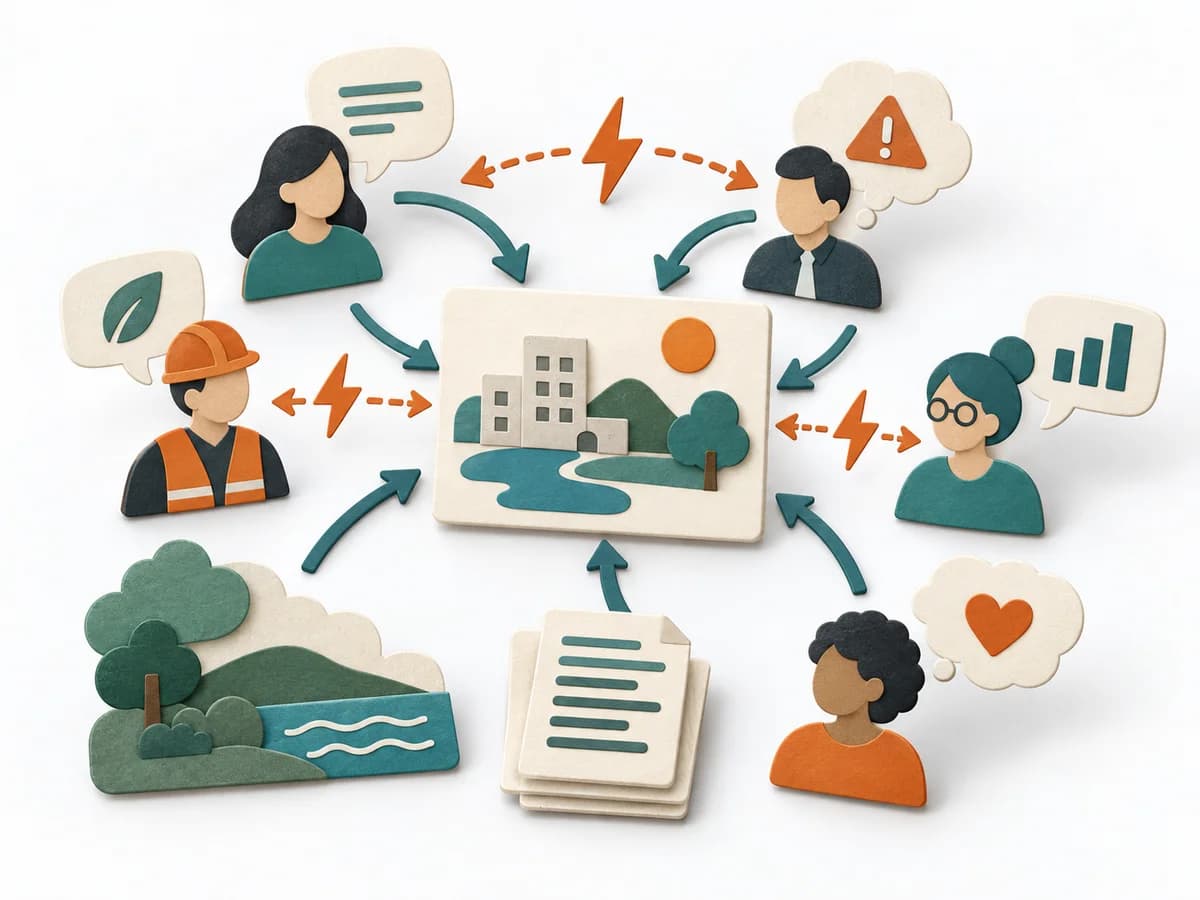 Systems Thinking Rich Picture |  Facilitation Alignment Mapping |  Facilitation Stakeholder Mapping |
|---|---|---|---|---|
Purposedifferent | Leverage Points show exactly where interventions in a system produce a disproportionate effect. It draws relationships, patterns, and feedback loops. The result is captured as a leverage map and action strategy. | A Rich Picture brings an unclear situation onto a shared drawing. It captures actors, tensions, information flows, and blind spots before the team jumps to solutions too early. | When several people work toward one goal but hold different mental maps, Alignment Mapping makes the discrepancies visible. It arranges goals, assumptions, and priorities so shared direction becomes verifiable. | When an initiative depends on many people, interests, and power dynamics, Stakeholder Mapping systematically orders the environment. It shows who influences, who is affected, and where relationship management or safeguarding matters first. |
Complexitydifferent | High | Low | Medium | Low |
Timedifferent | Half day | 30-90 min | 1-2 h | 60–90 min |
Participantsdifferent | 3-12 | 2-10 | 4-12 | 2-8 |
Formatdifferent | Workshop | Workshop | Workshop | Workshop + async |
Outputdifferent | Leverage Map, Action Strategy | Rich Picture, Problem Framing Notes | Alignment Map, Open Issues, Decision Questions | Stakeholder Map, Engagement Plan, Risk Notes |
Tagsno overlap | Systems thinkingChangeStrategy | Systems thinkingSoft systemsFramingVisualization | AlignmentStakeholdersStrategyFacilitation | StakeholdersAlignmentFacilitationChange |