View methods side by side.
Choose up to four methods. Add them using the search and share the comparison by copying its link.
| Criterion |  Systems Thinking Leverage Points |  Facilitation Problem Framing Workshop | 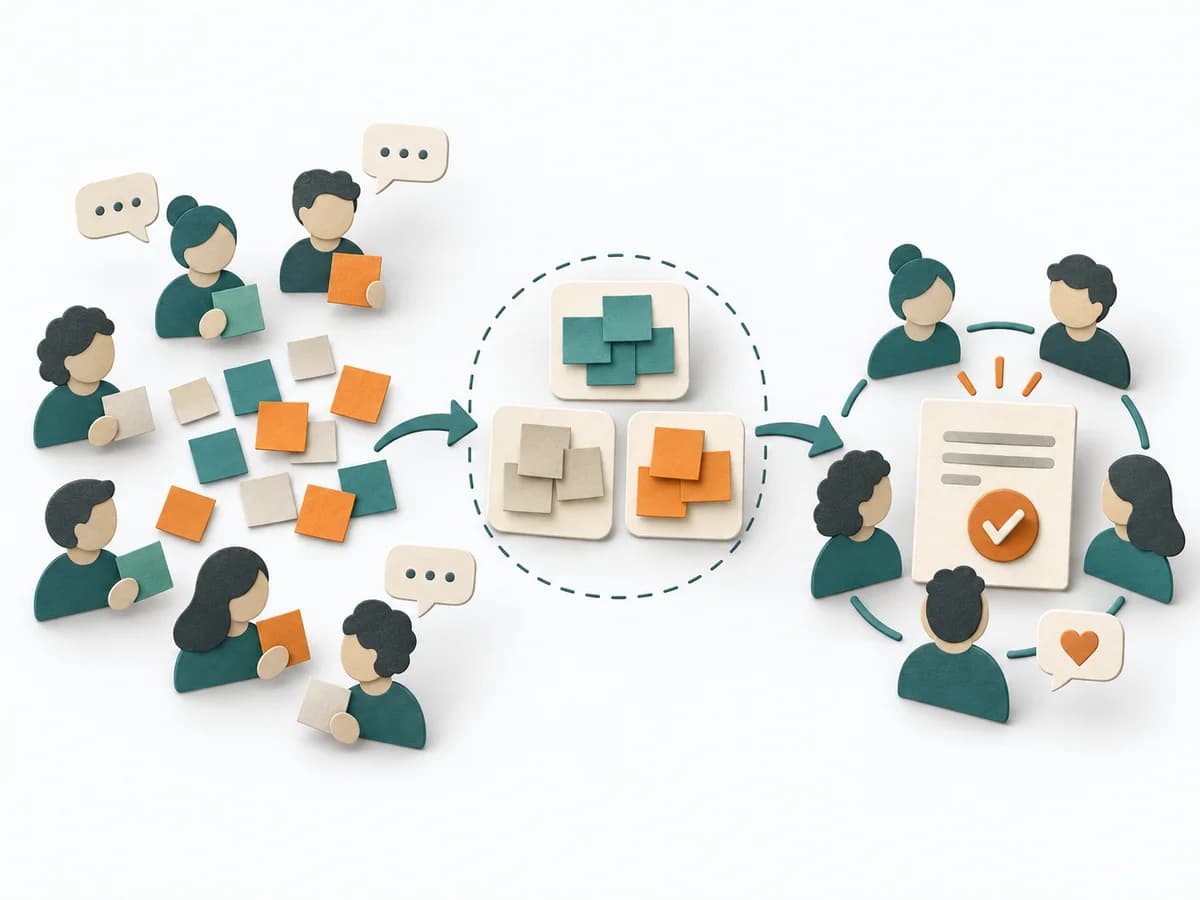 Facilitation Consensus Workshop |  Facilitation Stakeholder Mapping |
|---|---|---|---|---|
Purposedifferent | Leverage Points show exactly where interventions in a system produce a disproportionate effect. It draws relationships, patterns, and feedback loops. The result is captured as a leverage map and action strategy. | When a team works on symptoms but the real question stays fuzzy, a Problem Framing Workshop sharpens the view of the right problem. It separates observation, interpretation, and target picture from each other. | When a group needs a solid decision without outvoting individual factions, a Consensus Workshop creates a negotiable common ground. It makes agreement, reservations, and open tensions discussable at the same time. | When an initiative depends on many people, interests, and power dynamics, Stakeholder Mapping systematically orders the environment. It shows who influences, who is affected, and where relationship management or safeguarding matters first. |
Complexitydifferent | High | Low | Medium | Low |
Timedifferent | Half day | 60-120 min | 1-3 h | 60–90 min |
Participantsdifferent | 3-12 | 4-10 | 5-30 | 2-8 |
Formatdifferent | Workshop | Workshop | Workshop | Workshop + async |
Outputdifferent | Leverage Map, Action Strategy | Problem Statement, Scope Boundaries, Assumption List, Next Analysis Questions | Consensus Clusters, Theme Titles, Priority Areas | Stakeholder Map, Engagement Plan, Risk Notes |
Tagsno overlap | Systems thinkingChangeStrategy | FacilitationAlignmentDiscovery | FacilitationConsensusWorkshopAlignment | StakeholdersAlignmentFacilitationChange |