View methods side by side.
Choose up to four methods. Add them using the search and share the comparison by copying its link.
| Criterion |  Systems Thinking Leverage Points |  Knowledge Modeling Peer Instruction | 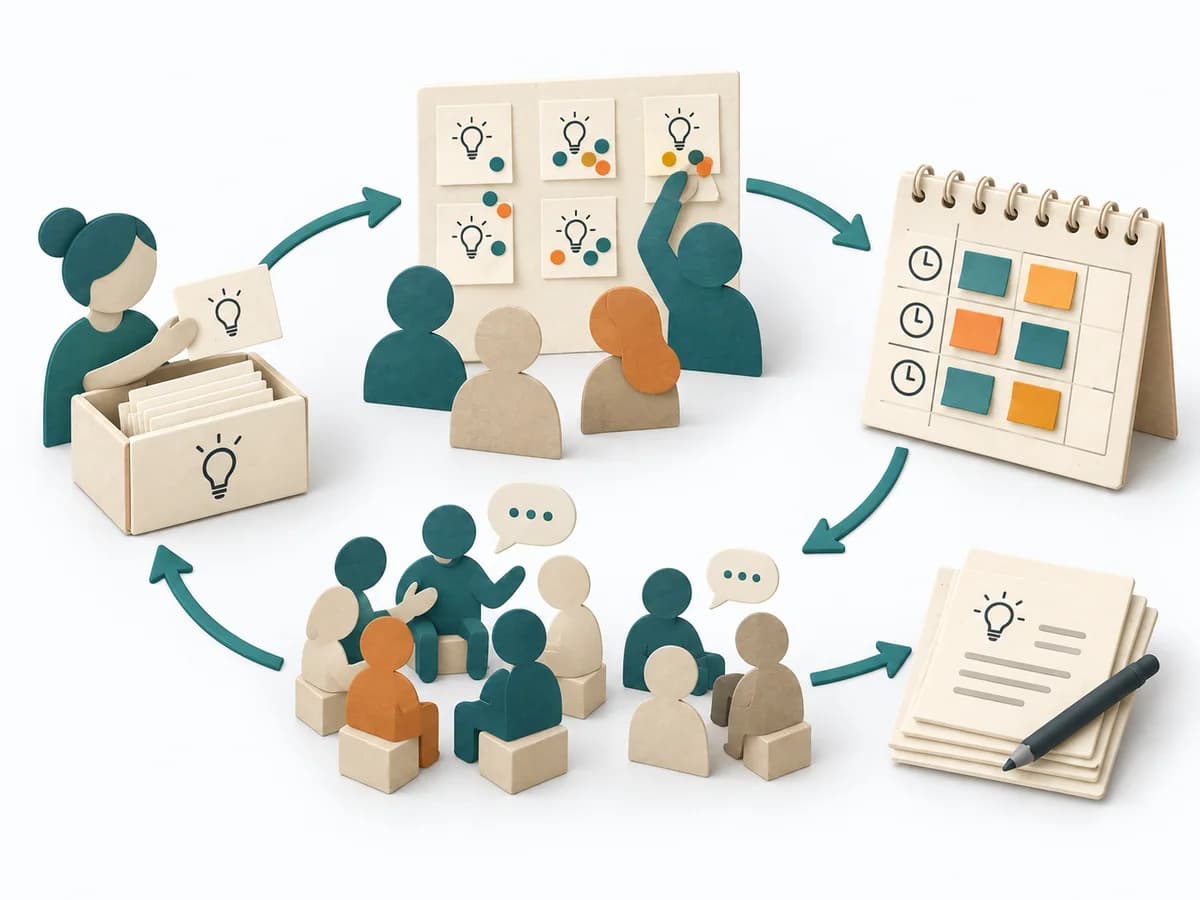 Facilitation Barcamp |  Facilitation World Café |
|---|---|---|---|---|
Purposedifferent | Leverage Points show exactly where interventions in a system produce a disproportionate effect. It draws relationships, patterns, and feedback loops. The result is captured as a leverage map and action strategy. | Peer Instruction uses group thinking to clarify difficult terms or concepts faster. The method combines individual reflection with social correction and shared precision. | When many people can contribute knowledge and the flow should stay open, Barcamp provides a framework for self-organized sessions. The format channels energy without defining the content too narrowly in advance. | When a group needs to connect many viewpoints in a short time, World Café creates a calm alternation between closeness and rotation. It sets thinking in motion without forcing the conversation into full-plenary rigidity. |
Complexitydifferent | High | Medium | Medium | Medium |
Timedifferent | Half day | 10-20 min je Frage | Halber Tag bis 2 Tage | 60-180 min |
Participantsdifferent | 3-12 | 6-50 | 15-200 | 12-100+ |
Formatsame | Workshop | Workshop | Workshop | Workshop |
Outputdifferent | Leverage Map, Action Strategy | Concept Questions, Vote Results, Learning Notes | Session Board, Session Notes, Community Learnings | Table Notes, Emergent Themes, Shared Questions |
Tagsno overlap | Systems thinkingChangeStrategy | LearningDialogueFacilitation | FacilitationLarge groupLearning | FacilitationDialogueLarge groupSensemaking |