View methods side by side.
Choose up to four methods. Add them using the search and share the comparison by copying its link.
| Criterion |  Systems Thinking Leverage Points |  Business Strategy McKinsey 7S | 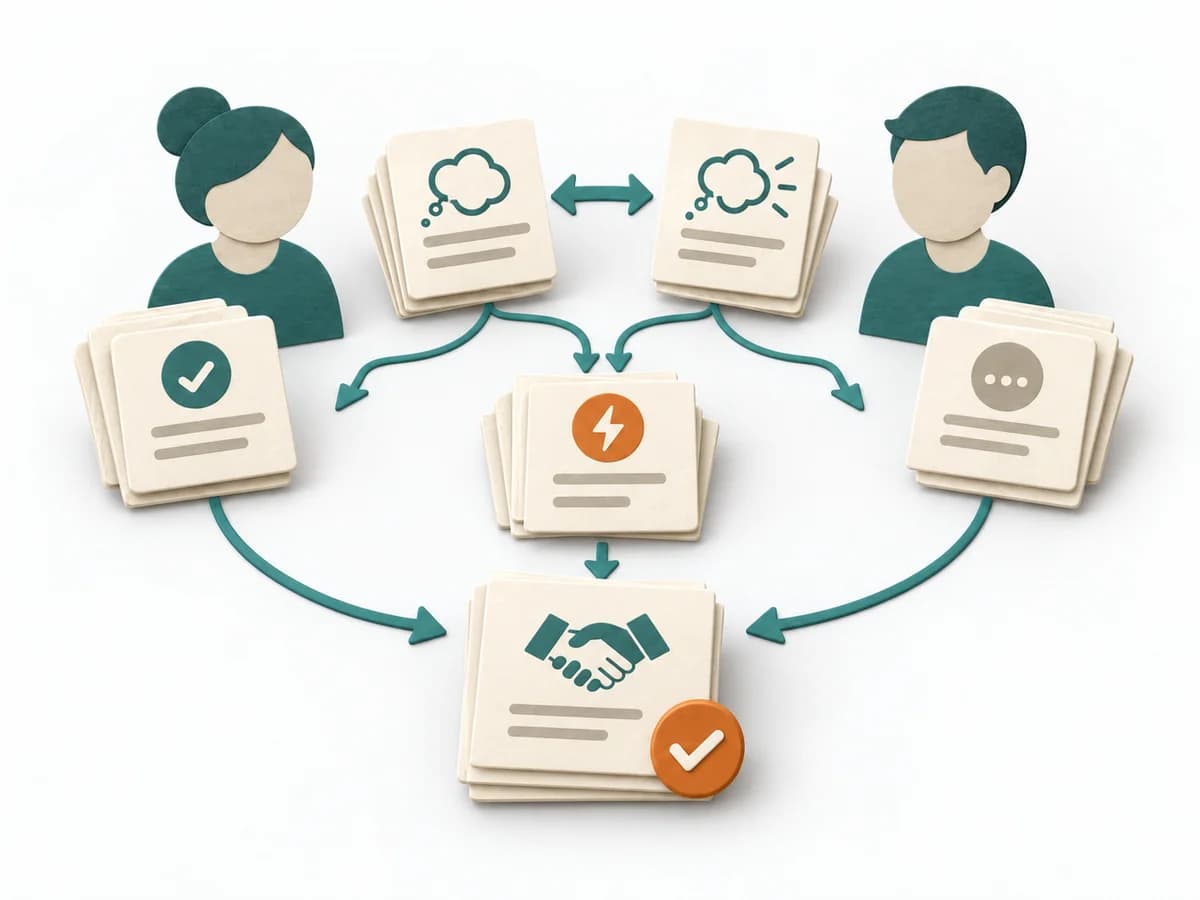 Facilitation Expectation Mapping | 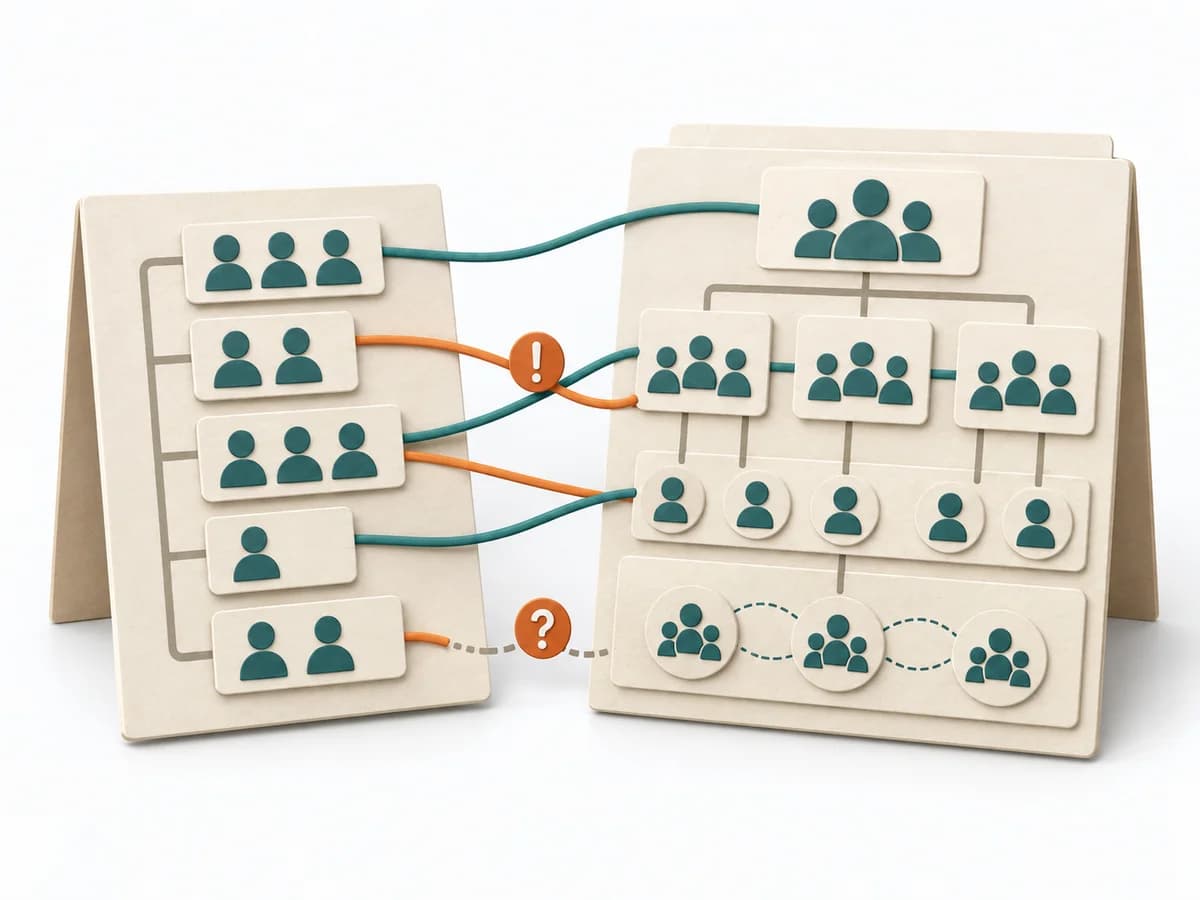 Team Design Spotify Model Mapping |
|---|---|---|---|---|
Purposedifferent | Leverage Points show exactly where interventions in a system produce a disproportionate effect. It draws relationships, patterns, and feedback loops. The result is captured as a leverage map and action strategy. | McKinsey 7S checks whether Strategy, Structure, Systems, Shared Values, Skills, Style, and Staff fit together. Organizational misalignments become visible across multiple levers as a result. | When roles, interfaces, or projects fail because of differing expectations, Expectation Mapping surfaces these differences. It shows what each side takes for granted and where the pictures diverge. | When a team landscape has grown without clear grouping, it maps roles and relationships onto the Spotify model. It clarifies responsibility, interaction, and load between teams. The result is captured as a Spotify model map and action list. |
Complexitydifferent | High | Medium | Low | Medium |
Timedifferent | Half day | 2-4 h | 45-90 min | 90-180 min |
Participantsdifferent | 3-12 | 3-12 | 3-12 | 5-15 |
Formatsame | Workshop | Workshop | Workshop | Workshop |
Outputdifferent | Leverage Map, Action Strategy | 7S Assessment, Alignment Gaps, Change Actions | Expectation Map, Alignment Notes, Agreements | Spotify Model Map, Action List |
Tagsno overlap | Systems thinkingChangeStrategy | OrganizationStrategyAlignmentChange | AlignmentStakeholdersTeam | TeamOrganizationAlignmentDiagnosis |