View methods side by side.
Choose up to four methods. Add them using the search and share the comparison by copying its link.
| Criterion |  Systems Thinking Leverage Points |  Facilitation Fishbowl Discussion | 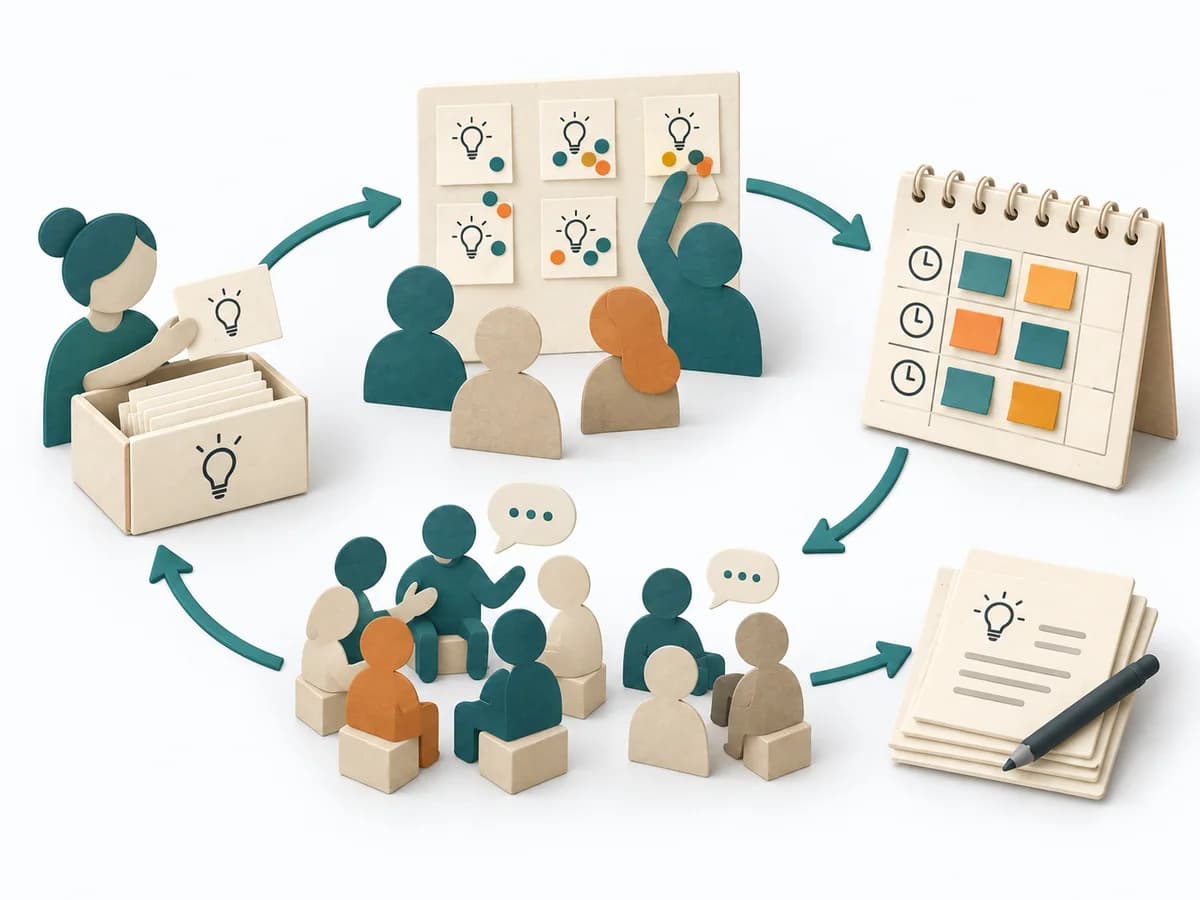 Facilitation Barcamp |  Facilitation Alignment Mapping |
|---|---|---|---|---|
Purposedifferent | Leverage Points show exactly where interventions in a system produce a disproportionate effect. It draws relationships, patterns, and feedback loops. The result is captured as a leverage map and action strategy. | When a controversial topic needs depth and discipline at the same time, Fishbowl Discussion makes the structure of the conversation transparent. The format keeps the core small enough for real dialogue and open enough for controlled turnover. | When many people can contribute knowledge and the flow should stay open, Barcamp provides a framework for self-organized sessions. The format channels energy without defining the content too narrowly in advance. | When several people work toward one goal but hold different mental maps, Alignment Mapping makes the discrepancies visible. It arranges goals, assumptions, and priorities so shared direction becomes verifiable. |
Complexitydifferent | High | Medium | Medium | Medium |
Timedifferent | Half day | 45-90 min | Halber Tag bis 2 Tage | 1-2 h |
Participantsdifferent | 3-12 | 8-80 | 15-200 | 4-12 |
Formatsame | Workshop | Workshop | Workshop | Workshop |
Outputdifferent | Leverage Map, Action Strategy | Discussion Insights, Observed Tensions, Follow-up Questions | Session Board, Session Notes, Community Learnings | Alignment Map, Open Issues, Decision Questions |
Tagsno overlap | Systems thinkingChangeStrategy | FacilitationDialogueLarge group | FacilitationLarge groupLearning | AlignmentStakeholdersStrategyFacilitation |