View methods side by side.
Choose up to four methods. Add them using the search and share the comparison by copying its link.
| Criterion |  Systems Thinking Leverage Points |  Decision Making Delphi Method | 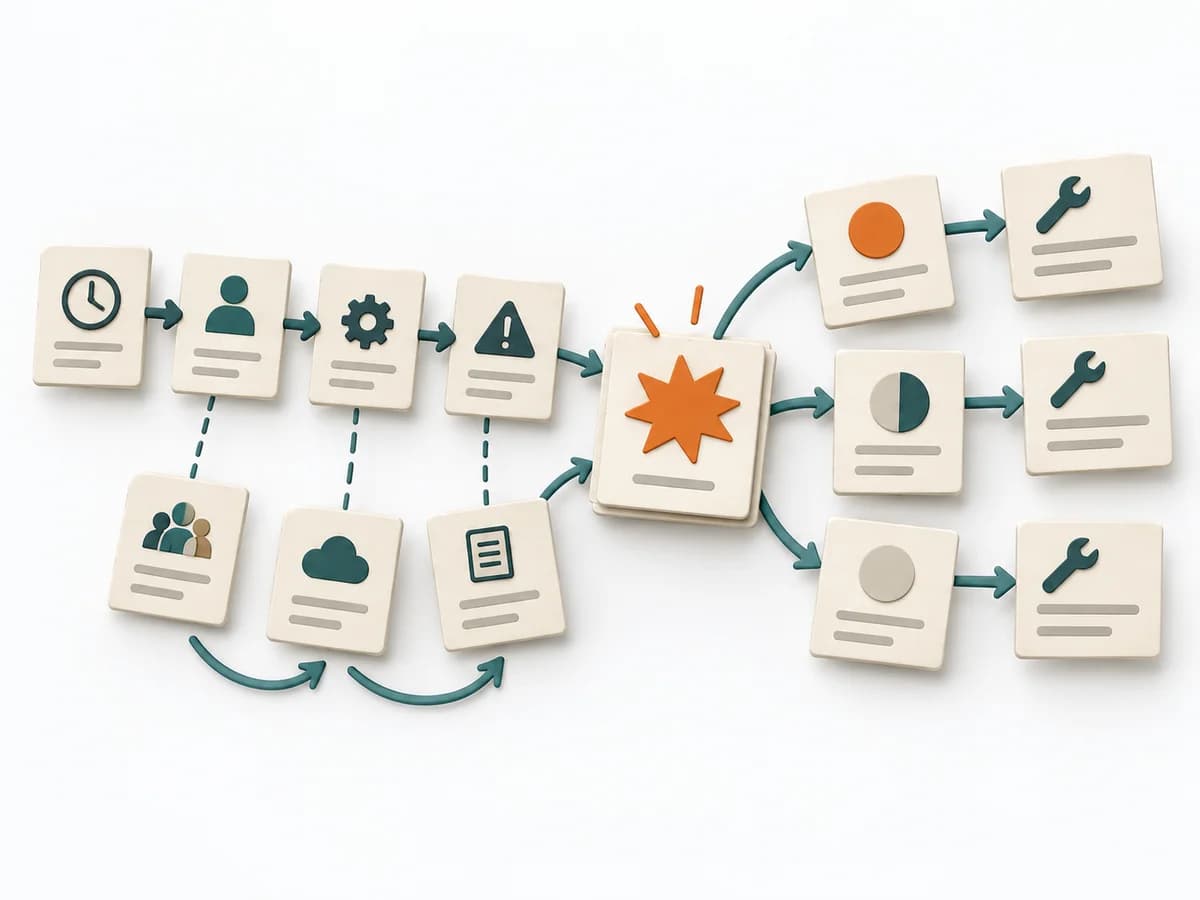 Operations Causal Factor Analysis |  Operations 5 Whys |
|---|---|---|---|---|
Purposedifferent | Leverage Points show exactly where interventions in a system produce a disproportionate effect. It draws relationships, patterns, and feedback loops. The result is captured as a leverage map and action strategy. | When knowledge is distributed and direct dominance should be avoided, groups quickly fall under the sway of their opinion leaders. The Delphi Method gathers assessments iteratively and gradually brings expert judgments closer together. | For an event with a complicated course, the method breaks down the contributing factors along the timeline. It shows how conditions, decisions, and reactions together produce a course of events. | For a single, hard-to-explain deviation, the method exposes the causal chain behind the visible symptom. It keeps the cause open until a controllable condition emerges instead of a mere description. |
Complexitydifferent | High | High | High | Low |
Timedifferent | Half day | 1-4 Wochen | 2-6 h | 15-30 min |
Participantsdifferent | 3-12 | 6-30 Experten | 3-10 | 2-6 |
Formatdifferent | Workshop | Async | Workshop + async | Workshop |
Outputdifferent | Leverage Map, Action Strategy | Expert Forecast, Consensus Range, Assumption Notes | Event Timeline, Causal Factor Chart, Cause List, Corrective Actions | Root cause notes, Countermeasures |
Tagsno overlap | Systems thinkingChangeStrategy | ForecastingExpertsDecisionStrategy | CausalityIncidentRoot causeTimeline | Root causeIncidentLeanProblem solving |