View methods side by side.
Choose up to four methods. Add them using the search and share the comparison by copying its link.
| Criterion |  Systems Thinking Leverage Points |  Operations Change Analysis | 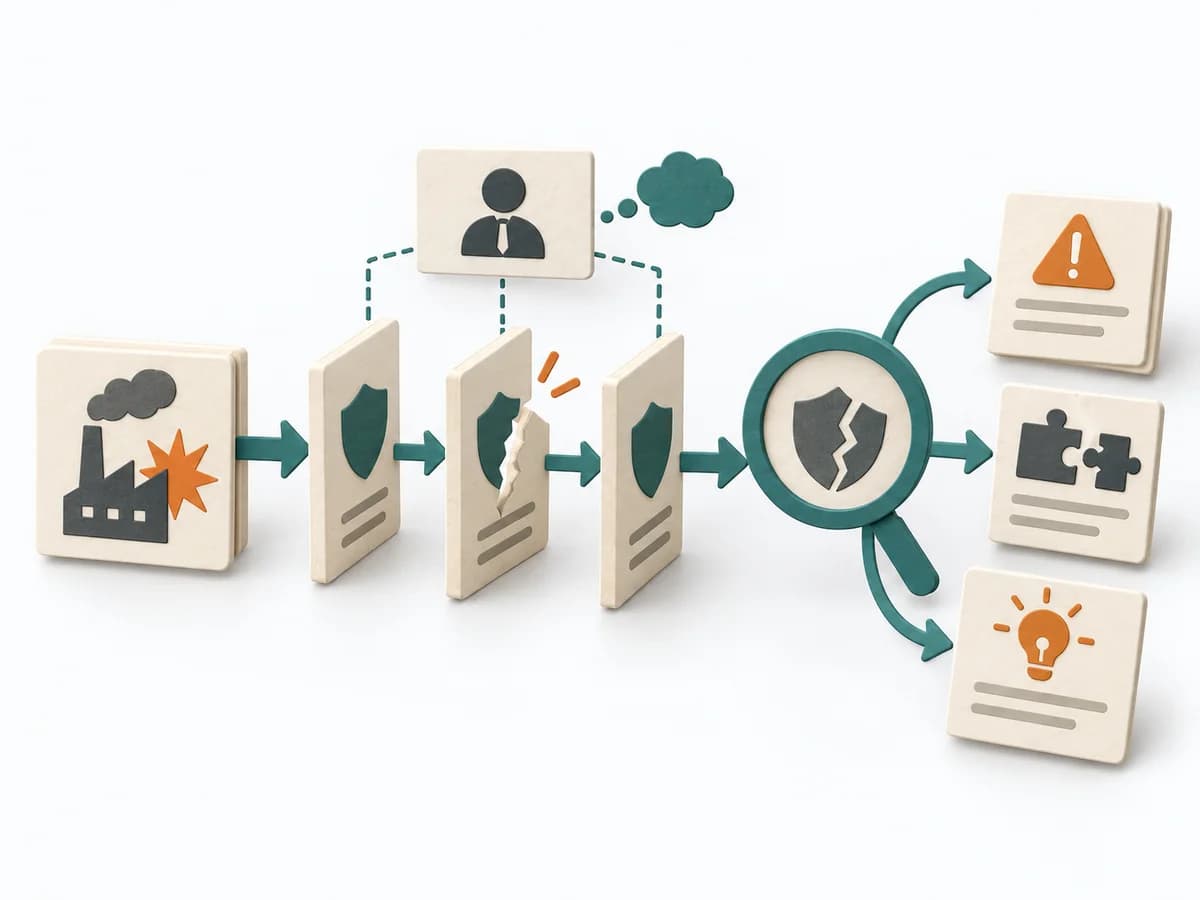 Operations MORT Analysis |  Operations 5 Whys |
|---|---|---|---|---|
Purposedifferent | Leverage Points show exactly where interventions in a system produce a disproportionate effect. It draws relationships, patterns, and feedback loops. The result is captured as a leverage map and action strategy. | For a deviation after a change, the method isolates the influence of the altered condition. It narrows down which differences are relevant and which are just accompanying noise. | For a safety-relevant event or a system with high protection requirements, the method examines where controls failed. It exposes both technical and organizational gaps. | For a single, hard-to-explain deviation, the method exposes the causal chain behind the visible symptom. It keeps the cause open until a controllable condition emerges instead of a mere description. |
Complexitydifferent | High | Medium | High | Low |
Timedifferent | Half day | 45-120 min | Mehrere Tage bis Wochen | 15-30 min |
Participantsdifferent | 3-12 | 2-6 | 2-6 | 2-6 |
Formatdifferent | Workshop | Workshop + async | Workshop + async | Workshop |
Outputdifferent | Leverage Map, Action Strategy | Change Matrix, Cause Hypotheses, Validation Questions, Action List | MORT Worksheets, Findings per Branch, Corrective Actions, Systemic Recommendations | Root cause notes, Countermeasures |
Tagsno overlap | Systems thinkingChangeStrategy | ChangeRoot causeTroubleshootingComparison | Root causeSafetySystemicIncident | Root causeIncidentLeanProblem solving |