View methods side by side.
Choose up to four methods. Add them using the search and share the comparison by copying its link.
| Criterion |  Systems Thinking Leverage Points | 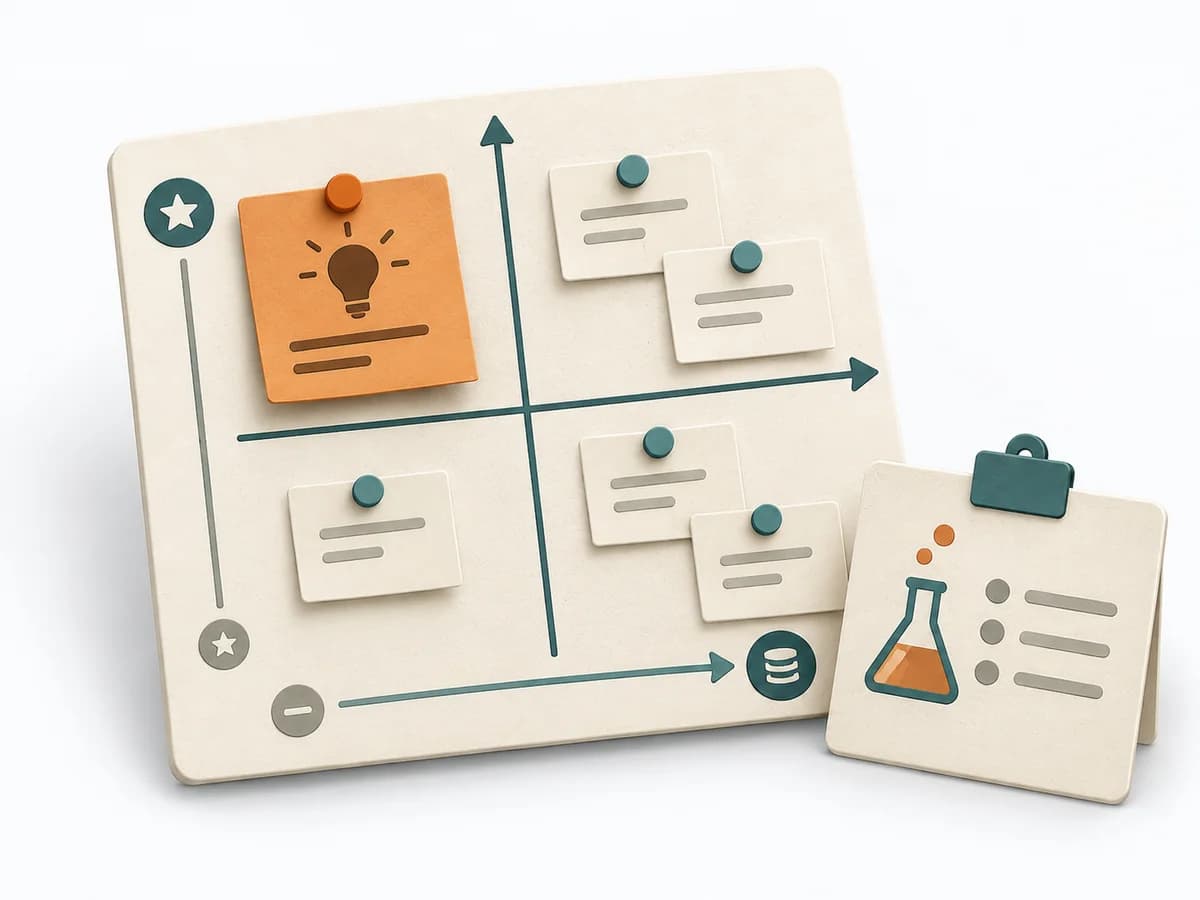 Product Discovery Assumption Mapping |  Decision Making Force Field Analysis | 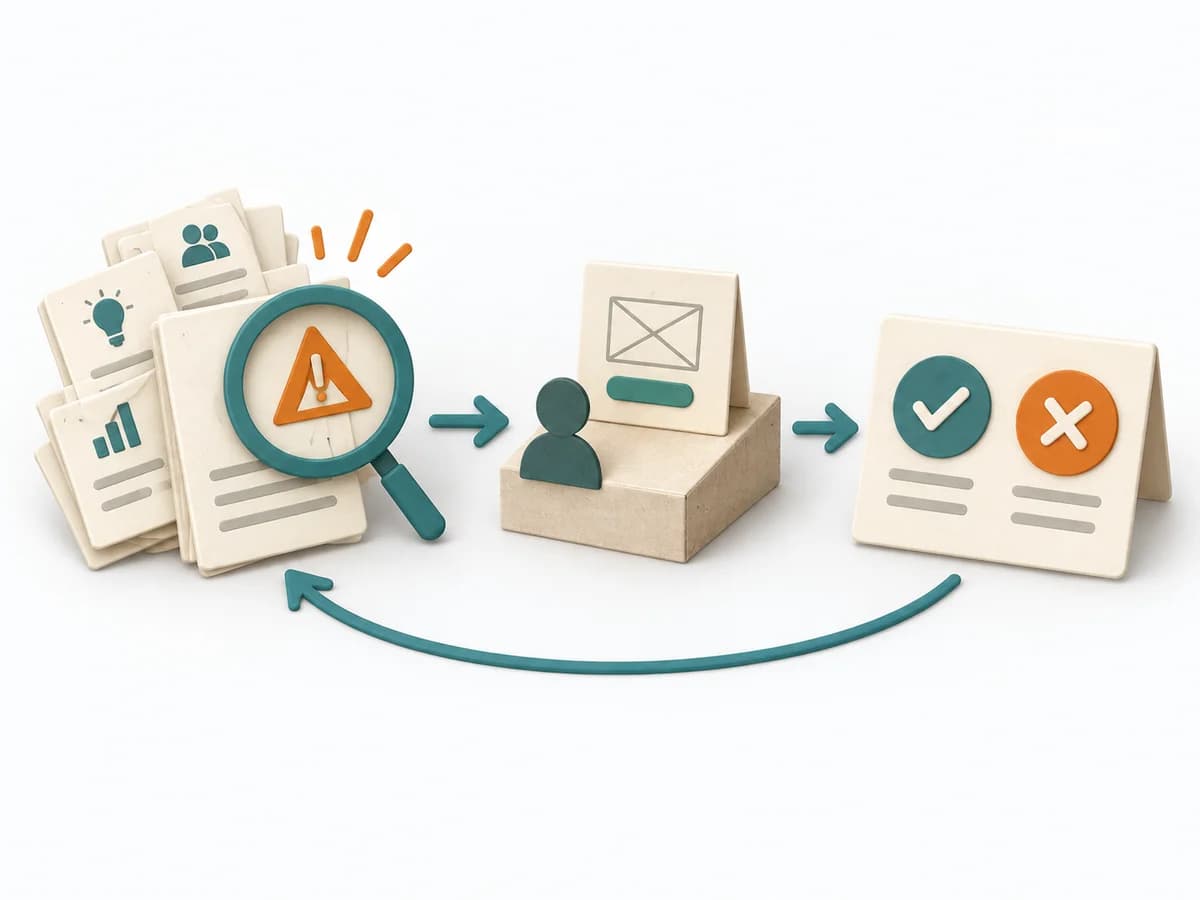 Product Discovery Riskiest Assumption Test |
|---|---|---|---|---|
Purposedifferent | Leverage Points show exactly where interventions in a system produce a disproportionate effect. It draws relationships, patterns, and feedback loops. The result is captured as a leverage map and action strategy. | When assumptions still sit unordered in the room, it weighs uncertainty against leverage. It makes visible which hypotheses should be checked first. | In change initiatives, supporting and restraining forces sit at the table at the same time. Force Field Analysis makes these tensions explicit and shows where change can be pushed forward by strengthening or relieving. | When an idea hinges on one critical unknown, it prioritizes testing that exact piece of uncertainty first. It separates problem, assumption, solution, and evidence. The result is captured as a prioritized list of assumptions, a test plan, and a result report. |
Complexitydifferent | High | Medium | Low | Medium |
Timedifferent | Half day | 45-60 min | 45-90 min | 1-2 Wochen pro Iteration |
Participantsdifferent | 3-12 | 2-8 | 3-12 | 2-6 |
Formatdifferent | Workshop | Workshop + async | Workshop | Workshop + async |
Outputdifferent | Leverage Map, Action Strategy | Assumption map, Test backlog, Risk ranking | Force Field Map, Change Levers, Risk Notes | Prioritized Assumption List, Test Plan, Results Report |
Tagsno overlap | Systems thinkingChangeStrategy | AssumptionsRiskExperimentsValidation | ChangeDecisionStrategy | ExperimentsValidationDiscoveryAssumptions |