View methods side by side.
Choose up to four methods. Add them using the search and share the comparison by copying its link.
Selected:Leverage PointsARID (Active Reviews for Intermediate Designs)Current Reality TreeCausal Factor Analysis
| Criterion |  Systems Thinking Leverage Points |  Architecture ARID (Active Reviews for Intermediate Designs) |  Systems Thinking Current Reality Tree | 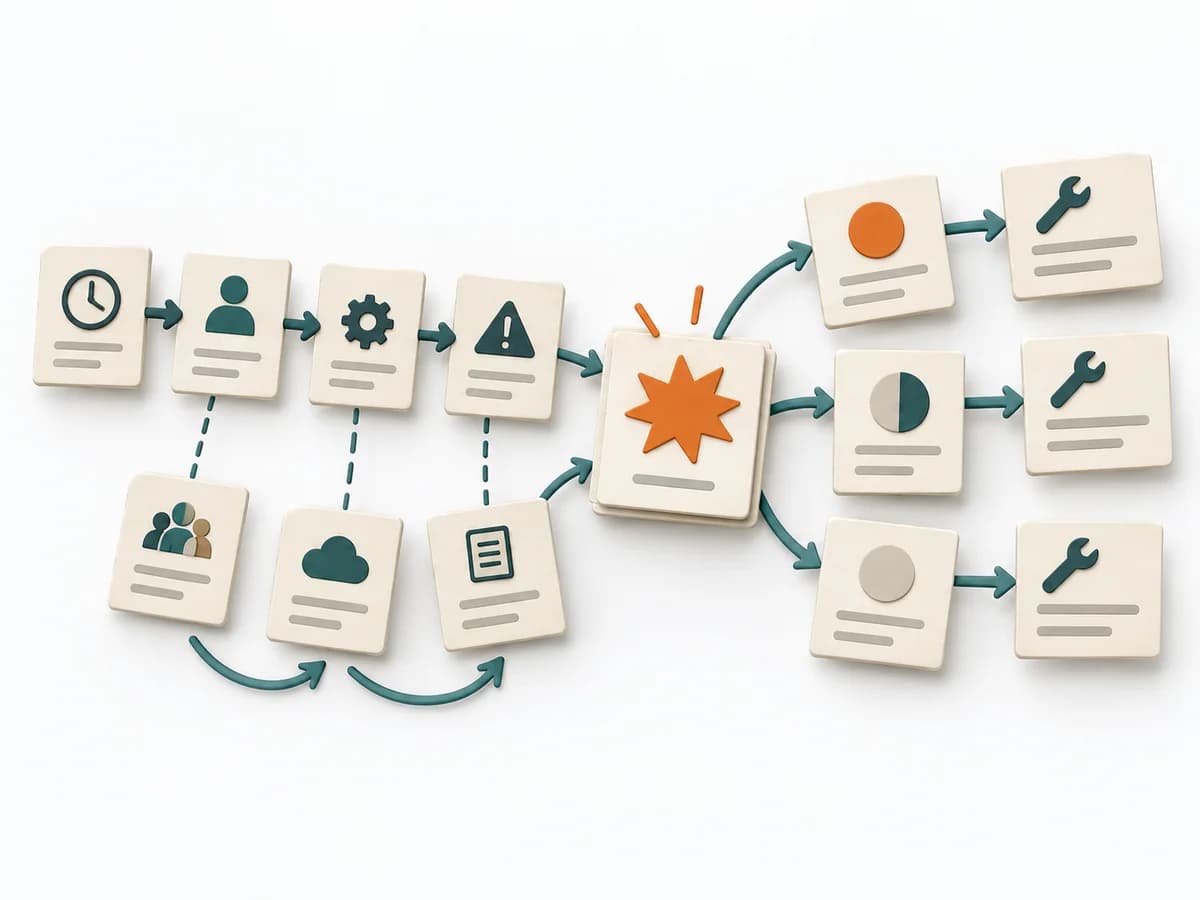 Operations Causal Factor Analysis |
|---|---|---|---|---|
Purposedifferent | Leverage Points show exactly where interventions in a system produce a disproportionate effect. It draws relationships, patterns, and feedback loops. The result is captured as a leverage map and action strategy. | ARID examines how well developers can work with a technical design. It focuses on a part of the system that can still be revised, between the architecture overview and the detailed specification. | A Current Reality Tree condenses many symptoms into a few causal chains. The method makes visible which core problems drive several negative effects at once. | For an event with a complicated course, the method breaks down the contributing factors along the timeline. It shows how conditions, decisions, and reactions together produce a course of events. |
Complexitydifferent | High | Medium | High | High |
Timedifferent | Half day | 2–4 h review as a planning range; preparation and evaluation additional | 2-6 h | 2-6 h |
Participantsdifferent | 3-12 | Designers, developers as users, and facilitation | 3-8 | 3-10 |
Formatdifferent | Workshop | Workshop + async | Workshop | Workshop + async |
Outputdifferent | Leverage Map, Action Strategy | Prioritized development tasks, Jointly produced code or pseudocode, Observed difficulties and open design questions, Proposed design revisions | Current Reality Tree, Core Problems, Intervention Ideas | Event Timeline, Causal Factor Chart, Cause List, Corrective Actions |
Tagsno overlap | Systems thinkingChangeStrategy | ArchitectureEngineeringFeedbackValidationTasks | Systems thinkingRoot causeConstraintsCausality | CausalityIncidentRoot causeTimeline |