View methods side by side.
Choose up to four methods. Add them using the search and share the comparison by copying its link.
| Criterion |  Systems Thinking Leverage Points | 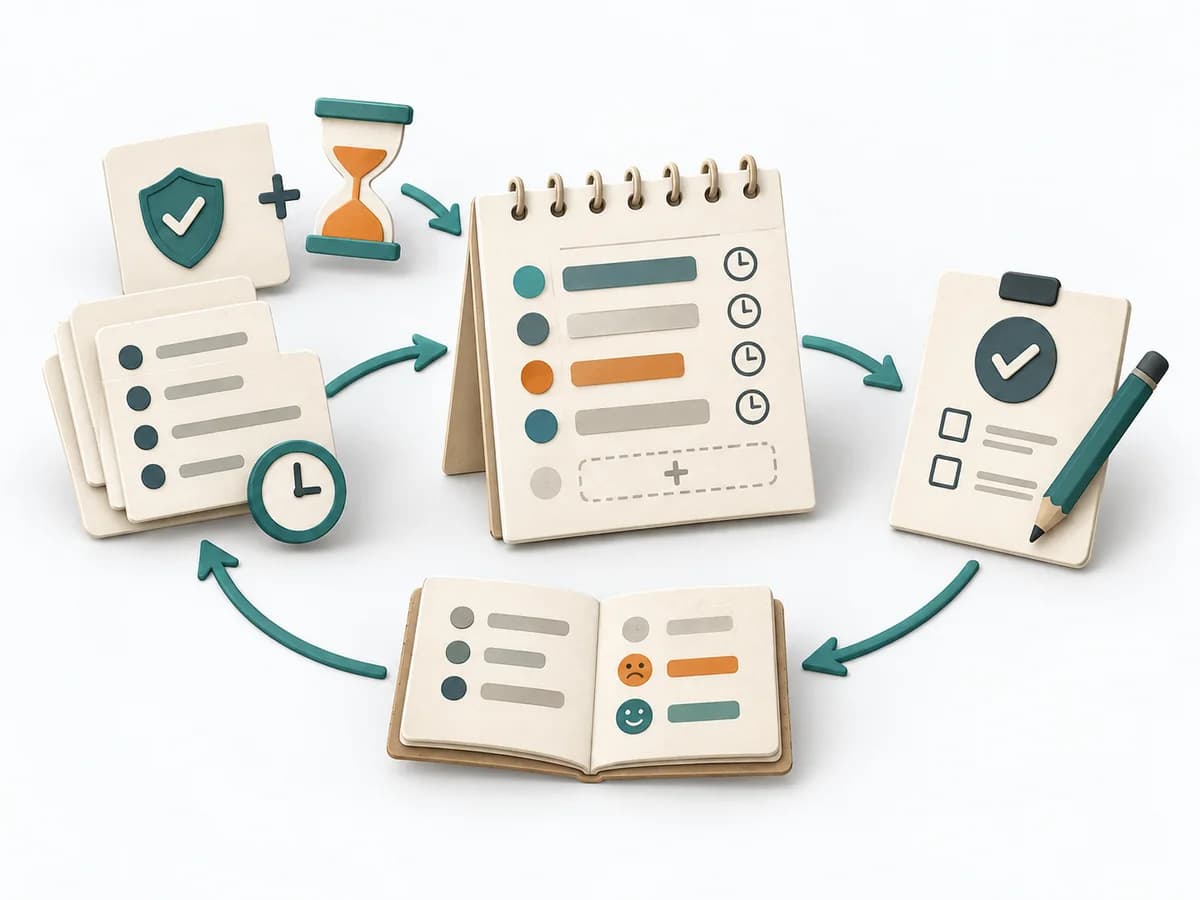 Operations ALPEN Method |  Operations After-Action Review |  Business Strategy GAP Analysis |
|---|---|---|---|---|
Purposedifferent | Leverage Points show exactly where interventions in a system produce a disproportionate effect. It draws relationships, patterns, and feedback loops. The result is captured as a leverage map and action strategy. | With an overloaded day full of too many tasks, a realistic picture of the day emerges. The method connects estimating, deciding, and buffer thinking so planning fits available energy and time. | After missions or project phases with unclear outcomes, the method makes visible what actually happened and what can be learned from it. It separates course, effect, and causes so experience turns into solid improvement. | GAP Analysis compares the current state with a target picture and makes the distance manageable. It becomes useful when, ahead of new initiatives, it must become clear which capabilities, processes, or resources are missing. |
Complexitydifferent | High | Low | Low | Medium |
Timedifferent | Half day | 10-20 min daily | 20-45 min | 1-3 h |
Participantsdifferent | 3-12 | 1 | 3-12 | 2-8 |
Formatdifferent | Workshop | Async | Workshop + async | Workshop + async |
Outputdifferent | Leverage Map, Action Strategy | Daily Plan, Time Estimates, Review Notes | Lessons learned, Action items, Event summary | Gap Matrix, Action Plan, Risk Notes |
Tagsno overlap | Systems thinkingChangeStrategy | PlanningTime managementProductivityOperations | LearningOperationsImprovement | StrategyAnalysisPlanning |