View methods side by side.
Choose up to four methods. Add them using the search and share the comparison by copying its link.
| Criterion |  Systems Thinking Leverage Points | 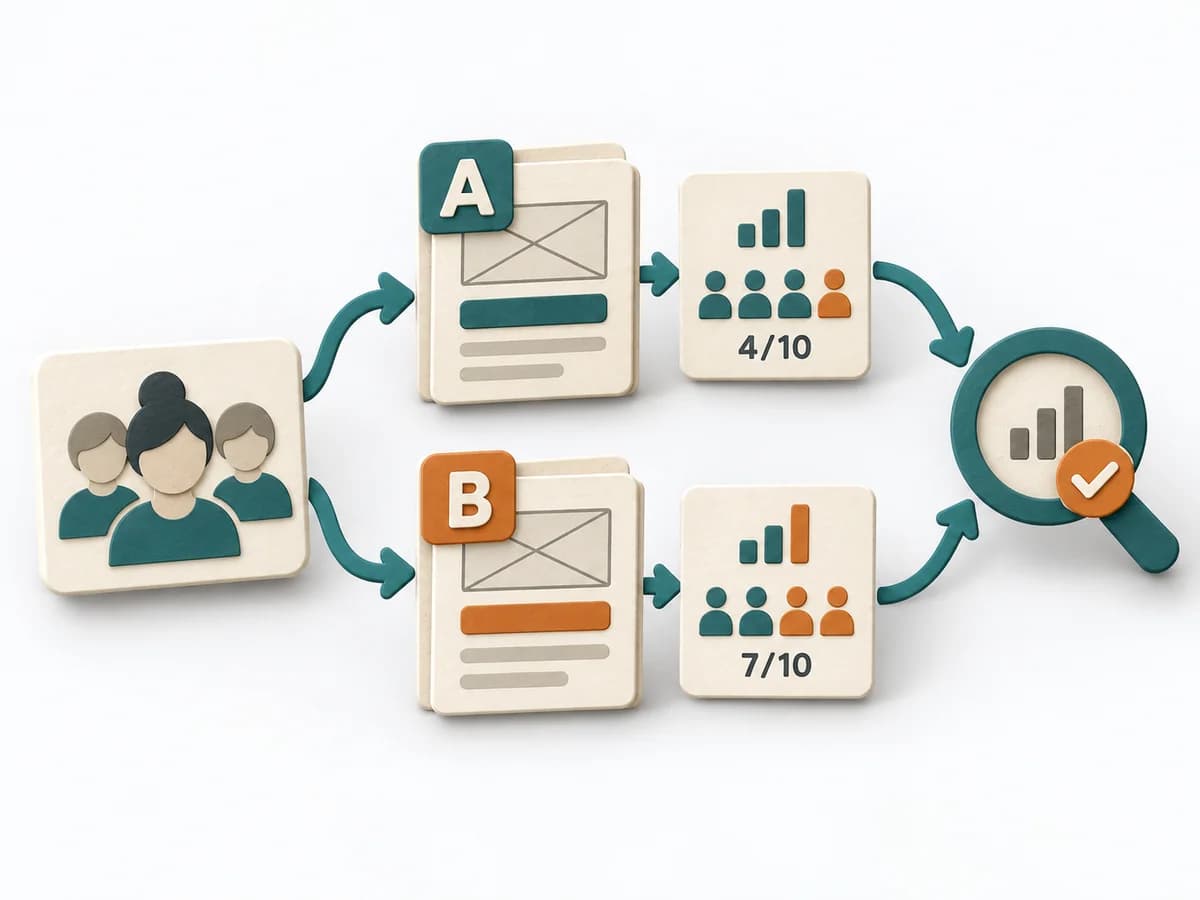 Growth A/B Testing |  Product Discovery Assumption Mapping |  Decision Making Assumption Surfacing |
|---|---|---|---|---|
Purposedifferent | Leverage Points show exactly where interventions in a system produce a disproportionate effect. It draws relationships, patterns, and feedback loops. The result is captured as a leverage map and action strategy. | When two variants compete, discussions quickly decide by taste rather than effect. A/B Testing checks behavior under controlled conditions and separates real improvement from chance or expectation effects. | When assumptions still sit unordered in the room, it weighs uncertainty against leverage. It makes visible which hypotheses should be checked first. | Plans often contain assumptions that were never openly stated and remain dangerous precisely because of that. Assumption Surfacing makes these silent premises visible and prioritizes which of them carry the initiative or could sink it. |
Complexitydifferent | High | High | Medium | Low |
Timedifferent | Half day | 1-4 Wochen | 45-60 min | 45-90 min |
Participantsdifferent | 3-12 | 1-6 | 2-8 | 2-8 |
Formatdifferent | Workshop | Async | Workshop + async | Workshop + async |
Outputdifferent | Leverage Map, Action Strategy | Experiment results, Decision log, Learning summary | Assumption map, Test backlog, Risk ranking | Assumption List, Critical Assumptions, Learning Plan |
Tagsno overlap | Systems thinkingChangeStrategy | ExperimentsGrowthAnalyticsValidation | AssumptionsRiskExperimentsValidation | AssumptionsRiskDecisionDiscovery |