View methods side by side.
Choose up to four methods. Add them using the search and share the comparison by copying its link.
| Criterion |  Systems Thinking Leverage Points | 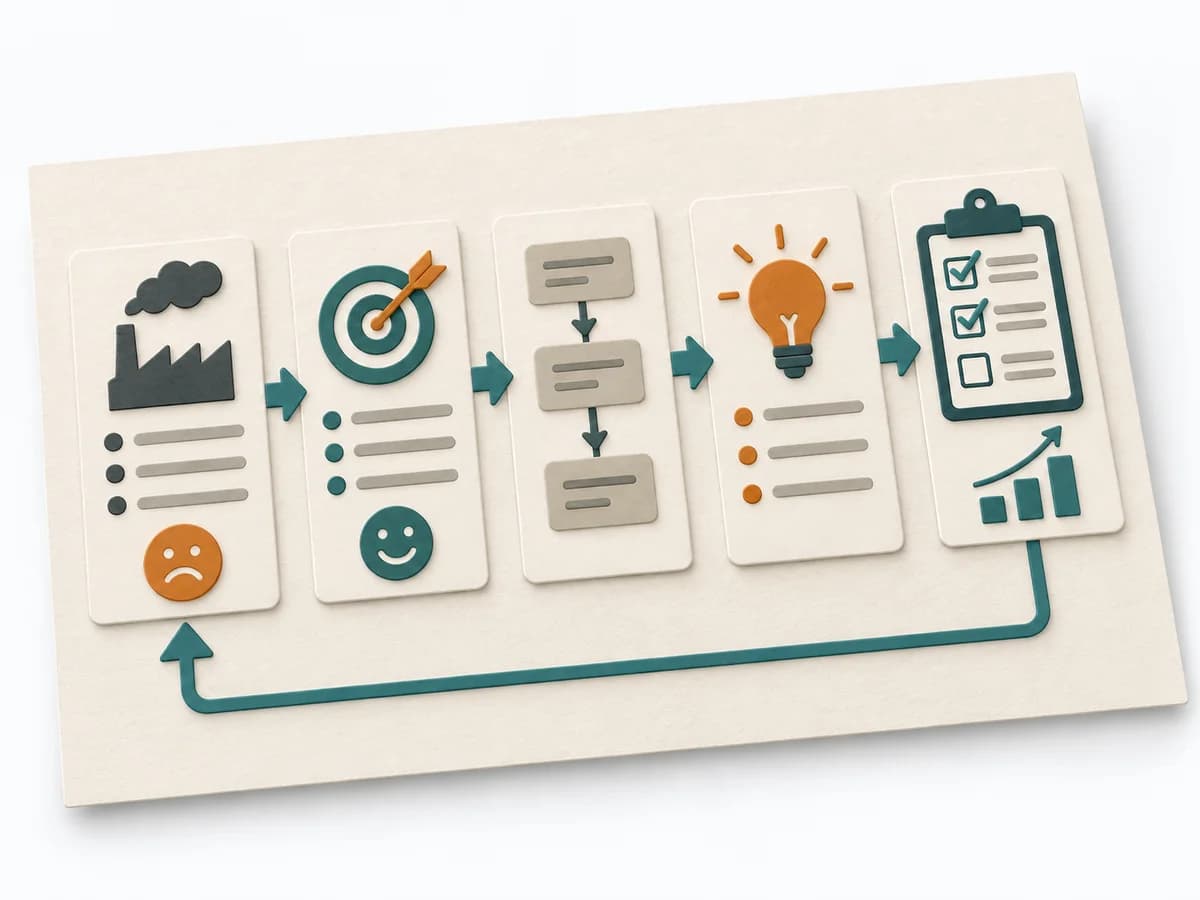 Operations A3 Problem Solving |  Domain Modeling Domain Context Map |  Systems Thinking Systems Mapping |
|---|---|---|---|---|
Purposedifferent | Leverage Points show exactly where interventions in a system produce a disproportionate effect. It draws relationships, patterns, and feedback loops. The result is captured as a leverage map and action strategy. | For a complex deviation with several people involved, the method bundles problem, analysis, and decision onto one page. It creates a shared working space where causes, countermeasures, and follow-up fit together. | When a domain model and its associated contexts need to be thought through together, it creates a shared overview. It connects the business view and organizational boundary into a readable whole. | Systems Mapping arranges elements, relationships, and boundaries so a complex field becomes legible at a glance. The overview stabilizes the overall picture before detail work or steering begins. |
Complexitydifferent | High | Medium | Medium | Medium |
Timedifferent | Half day | 45-90 min | 1-3 h | 1-3 h |
Participantsdifferent | 3-12 | 2-5 | 3-10 | 3-12 |
Formatdifferent | Workshop | Workshop + async | Workshop | Workshop + async |
Outputdifferent | Leverage Map, Action Strategy | A3 Report, Action Plan, Root Cause Analysis | Domain Context Map, Boundary Notes, Ownership Map | System Map, Dependencies, Leverage Points |
Tagsno overlap | Systems thinkingChangeStrategy | LeanProblem solvingCoachingOperations | Domain-Driven DesignContextBoundaries | Systems thinkingMappingBoundariesChange |