View methods side by side.
Choose up to four methods. Add them using the search and share the comparison by copying its link.
| Criterion | 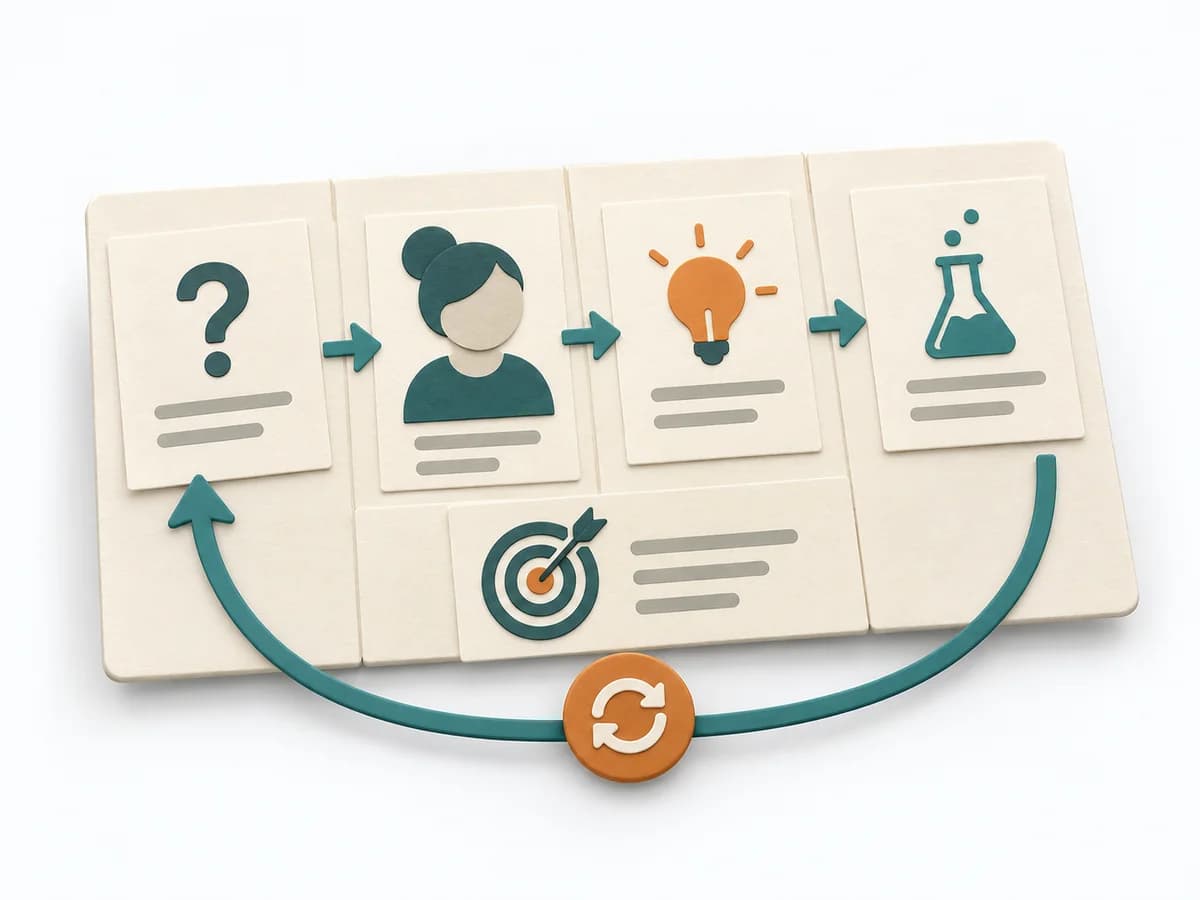 UX Design Lean UX Canvas | 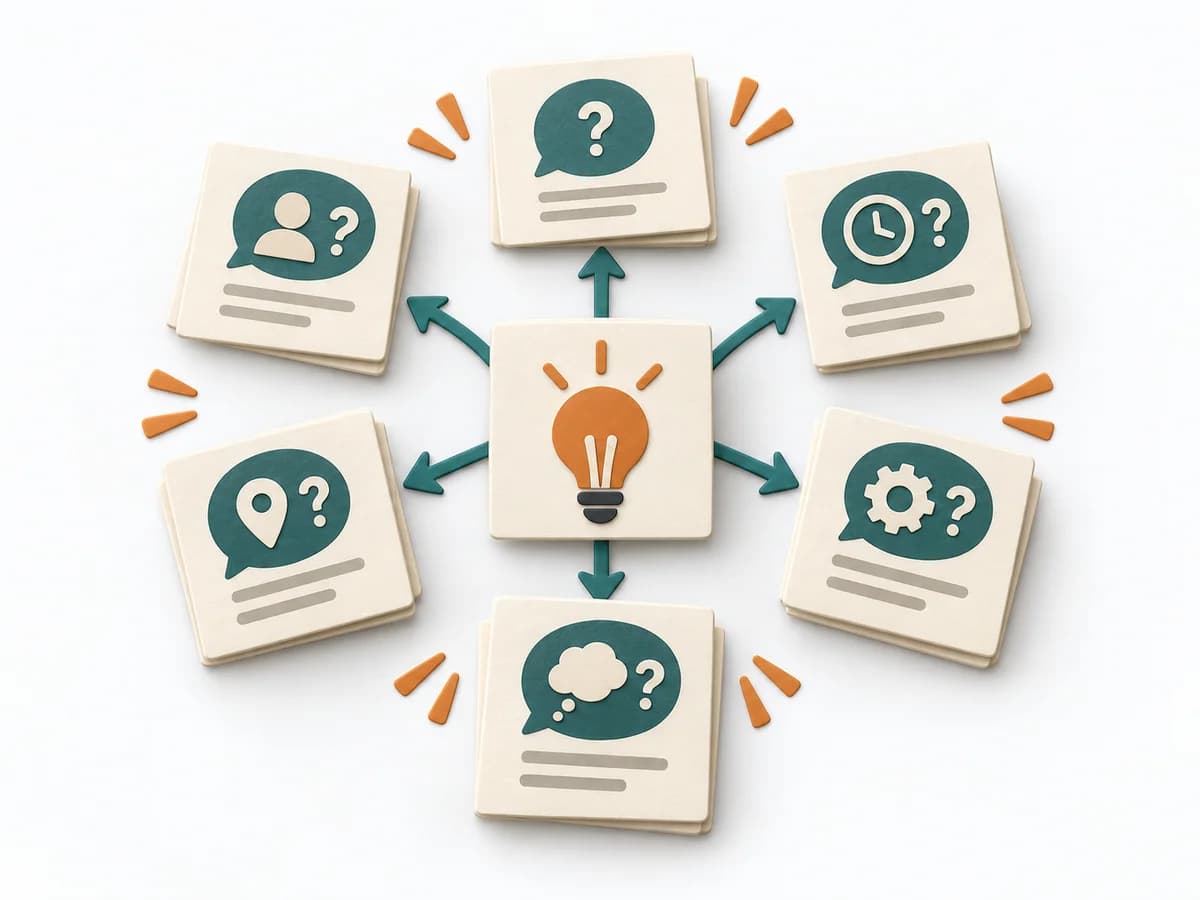 Innovation Starbursting |  Knowledge Modeling Event Modeling |  Innovation Lotus Blossom |
|---|---|---|---|---|
Purposedifferent | The Lean UX Canvas helps clarify user behavior, touchpoints, and concept decisions. It makes assumptions and desired outcomes visible and captures the result as a completed canvas, hypothesis list, and first experiment. | Helps clarify ideas, open questions, and testable next steps in concrete terms. It opens the thinking space, collects ideas, and leads to testable options. The result is captured as a star-shaped question map, question list, and assumption list. | Event Modeling connects business workflows with commands, events, and views into one coherent mental model. It helps design behavior, UI, and technical slices from the same underlying logic. | When a central question feels too large, the method breaks it into neighboring topic fields with their own depth of ideation. It holds structure and openness at the same time, so adjacent perspectives don't get lost. This grows an idea space out of a core problem. |
Complexitydifferent | Medium | Low | Medium | Low |
Timedifferent | 2-3 h | 30-60 min | 2-6 h | 45-90 min |
Participantsdifferent | 3-8 | 3-10 | 2-8 | 3-10 |
Formatdifferent | Workshop + async | Workshop + async | Workshop + async | Workshop |
Outputdifferent | Completed Lean UX Canvas, Hypothesis list, First experiment | Star-Shaped Question Map, Question List, Assumption List | Event Model, UI Flow, Commands, Read Models | Lotus Diagram, Idea Themes, Shortlist |
Tagsno overlap | CanvasHypothesisOutcomesDiscovery | BrainstormingIdeationWorkshopDiscovery | EventsBlueprintDomain-Driven DesignBehavior | BrainstormingIdeationCreativityDivergenceWorkshop |