View methods side by side.
Choose up to four methods. Add them using the search and share the comparison by copying its link.
| Criterion |  UX Design Lean UX Canvas |  Engineering Hypothesis-Driven Troubleshooting | 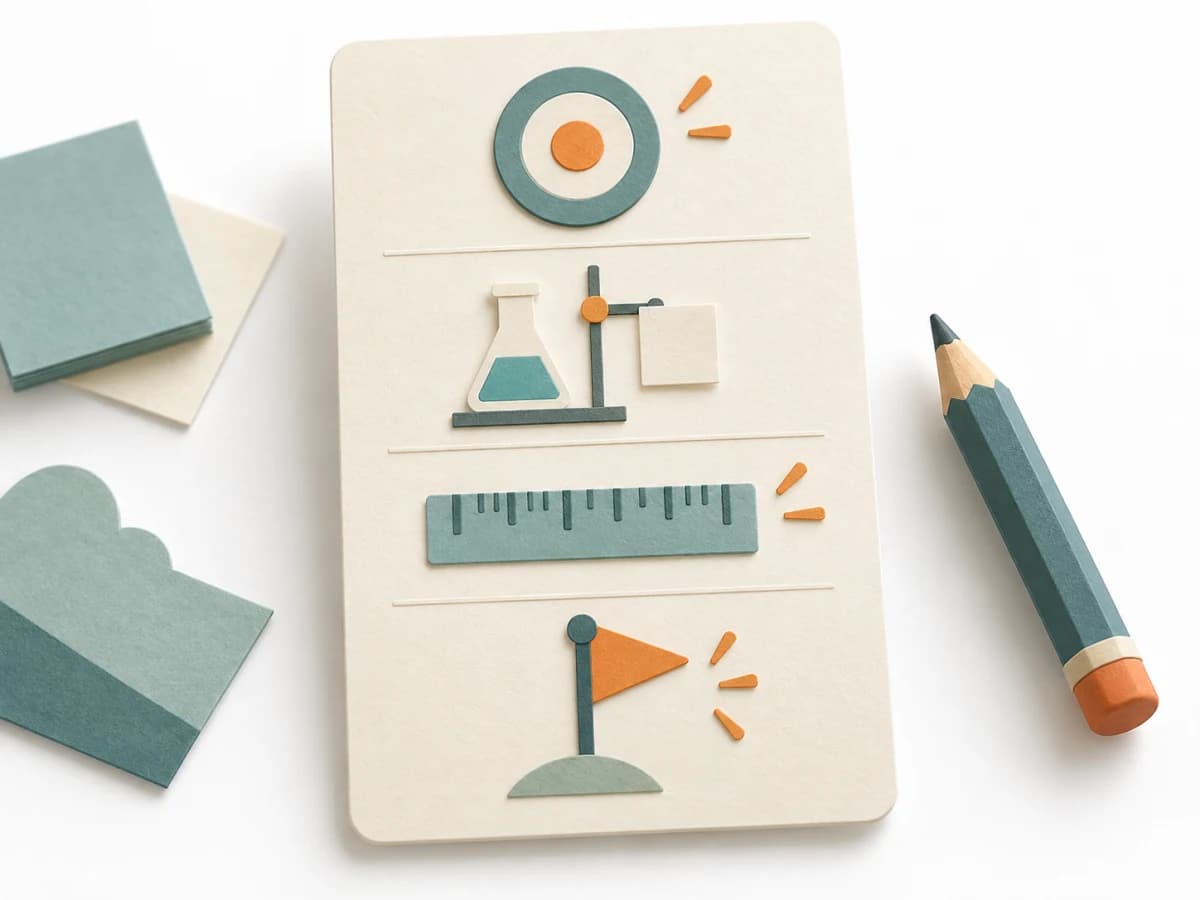 Product Discovery Test Card | 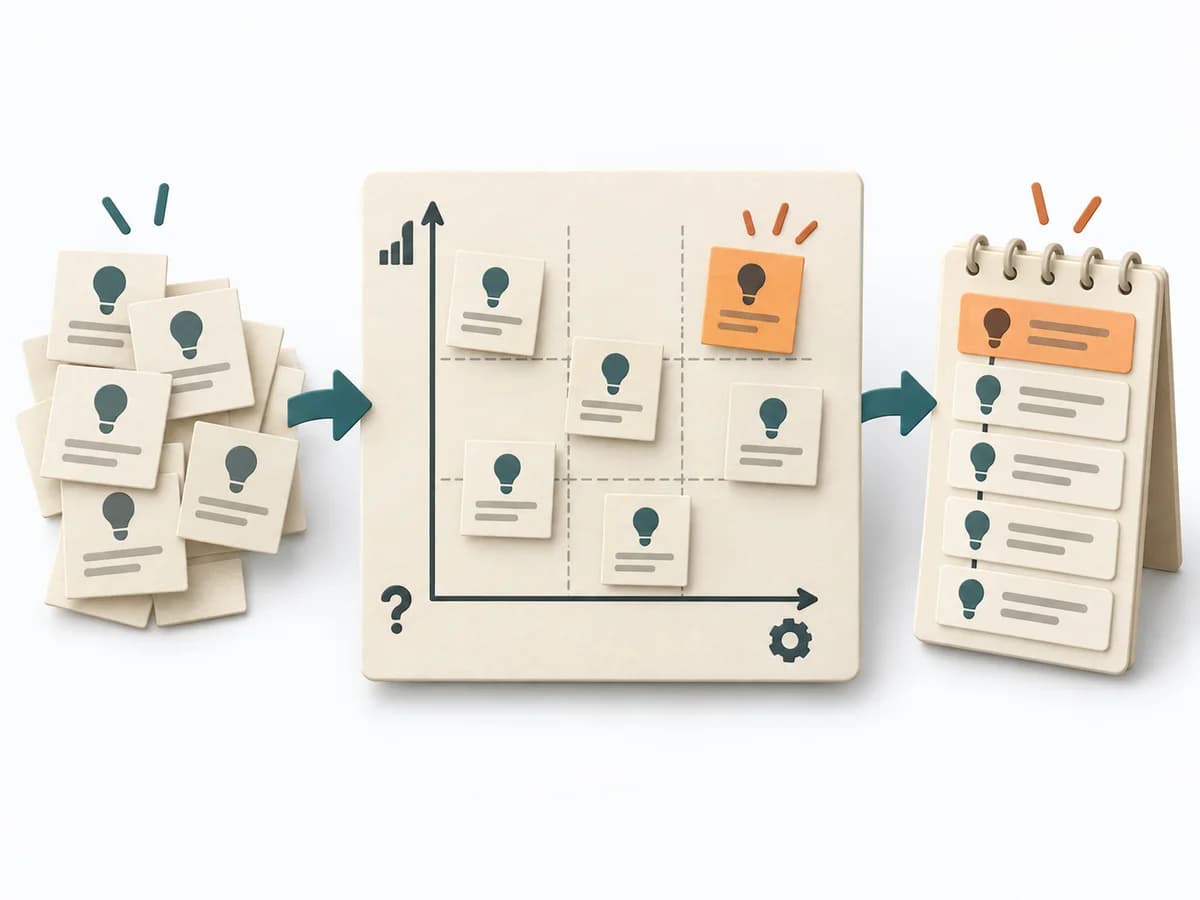 Product Discovery Hypothesis Prioritization Canvas |
|---|---|---|---|---|
Purposedifferent | The Lean UX Canvas helps clarify user behavior, touchpoints, and concept decisions. It makes assumptions and desired outcomes visible and captures the result as a completed canvas, hypothesis list, and first experiment. | When systems fail unexpectedly, spontaneous attempts often produce more noise than insight. Hypothesis-driven Troubleshooting translates symptoms into testable assumptions and makes troubleshooting learnable. | The Test Card turns a critical assumption into a testable claim and specifies in advance which result counts as success. | When many hypotheses compete for attention, it brings order to their learning sequence and importance. It separates problem, assumption, solution, and evidence. The result is captured as a prioritization canvas and a hypothesis backlog. |
Complexitydifferent | Medium | Medium | Low | Medium |
Timedifferent | 2-3 h | 30-240 min | 20-35 min | 60-90 min |
Participantsdifferent | 3-8 | 1-6 | 1-5 | 3-8 |
Formatdifferent | Workshop + async | Workshop + async | Workshop + async | Workshop |
Outputdifferent | Completed Lean UX Canvas, Hypothesis list, First experiment | Hypothesis Log, Test Plan, Evidence Notes, Diagnosis Summary | Test Card with a pre-set threshold | Prioritization Canvas, Hypothesis Backlog |
Tagsno overlap | CanvasHypothesisOutcomesDiscovery | TroubleshootingProblem solvingDiagnosis | ExperimentsValidationDiscoveryHypothesis | ExperimentsPrioritizationDiscoveryHypothesis |