View methods side by side.
Choose up to four methods. Add them using the search and share the comparison by copying its link.
| Criterion |  UX Design Lean UX Canvas |  Operations Barrier Analysis | 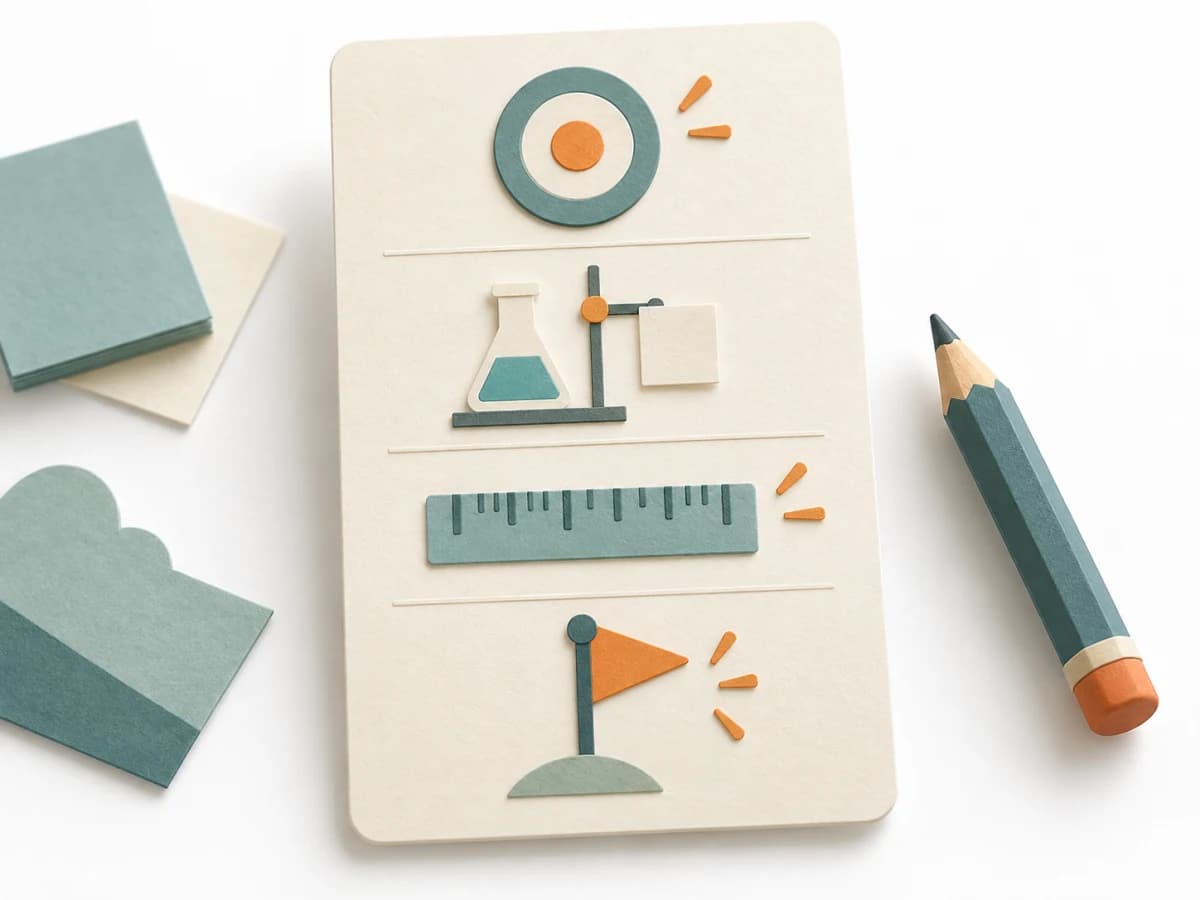 Product Discovery Test Card | 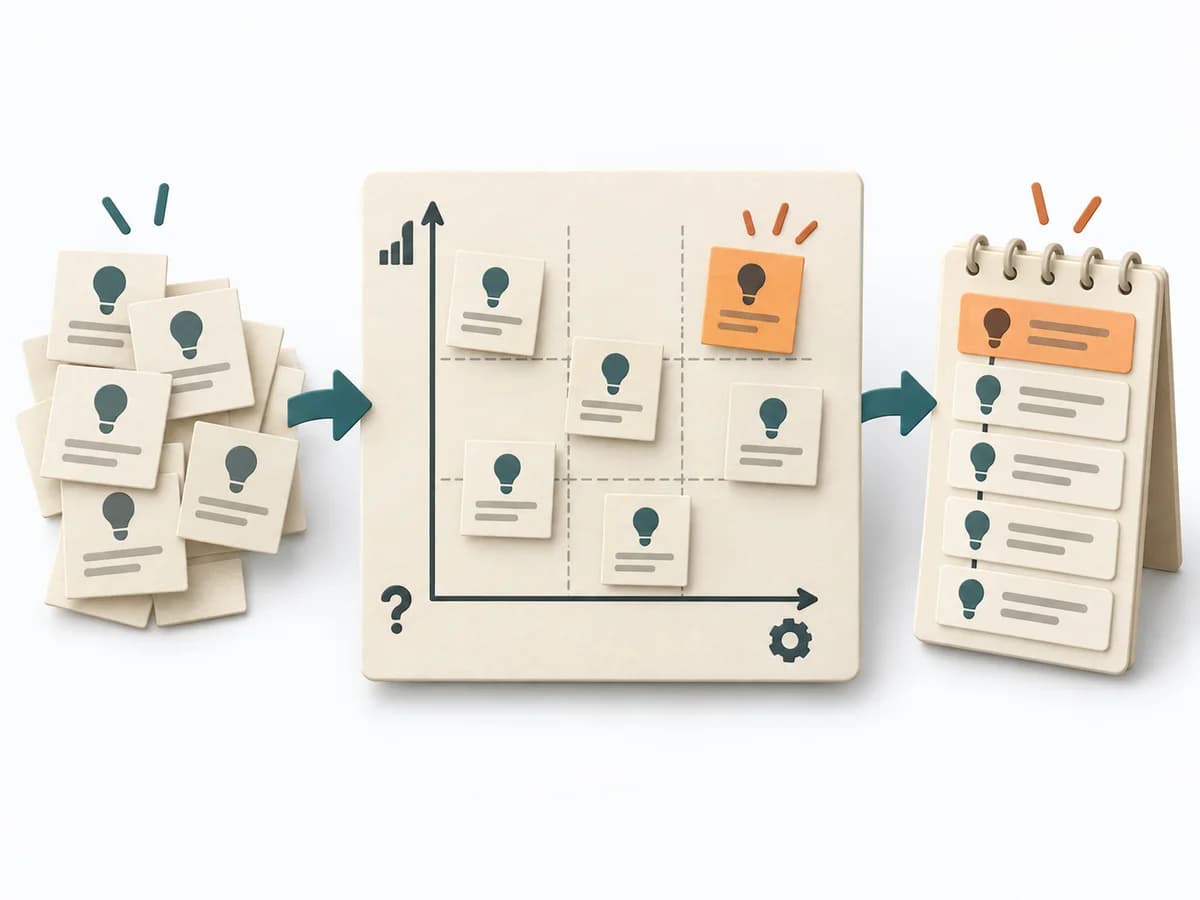 Product Discovery Hypothesis Prioritization Canvas |
|---|---|---|---|---|
Purposedifferent | The Lean UX Canvas helps clarify user behavior, touchpoints, and concept decisions. It makes assumptions and desired outcomes visible and captures the result as a completed canvas, hypothesis list, and first experiment. | For a risk that can only be managed through multiple layers of protection, the method examines the effectiveness of each barrier. It shows where safeguards are missing, too weak, or fail under real conditions. | The Test Card turns a critical assumption into a testable claim and specifies in advance which result counts as success. | When many hypotheses compete for attention, it brings order to their learning sequence and importance. It separates problem, assumption, solution, and evidence. The result is captured as a prioritization canvas and a hypothesis backlog. |
Complexitydifferent | Medium | Medium | Low | Medium |
Timedifferent | 2-3 h | 2-4 h | 20-35 min | 60-90 min |
Participantsdifferent | 3-8 | 2-6 | 1-5 | 3-8 |
Formatdifferent | Workshop + async | Workshop + async | Workshop + async | Workshop |
Outputdifferent | Completed Lean UX Canvas, Hypothesis list, First experiment | Barrier Inventory, Failure Analysis per Barrier, Action Backlog | Test Card with a pre-set threshold | Prioritization Canvas, Hypothesis Backlog |
Tagsno overlap | CanvasHypothesisOutcomesDiscovery | Root causeSafetyIncident | ExperimentsValidationDiscoveryHypothesis | ExperimentsPrioritizationDiscoveryHypothesis |