View methods side by side.
Choose up to four methods. Add them using the search and share the comparison by copying its link.
| Criterion |  UX Design Lean UX Canvas |  Facilitation Barcamp | 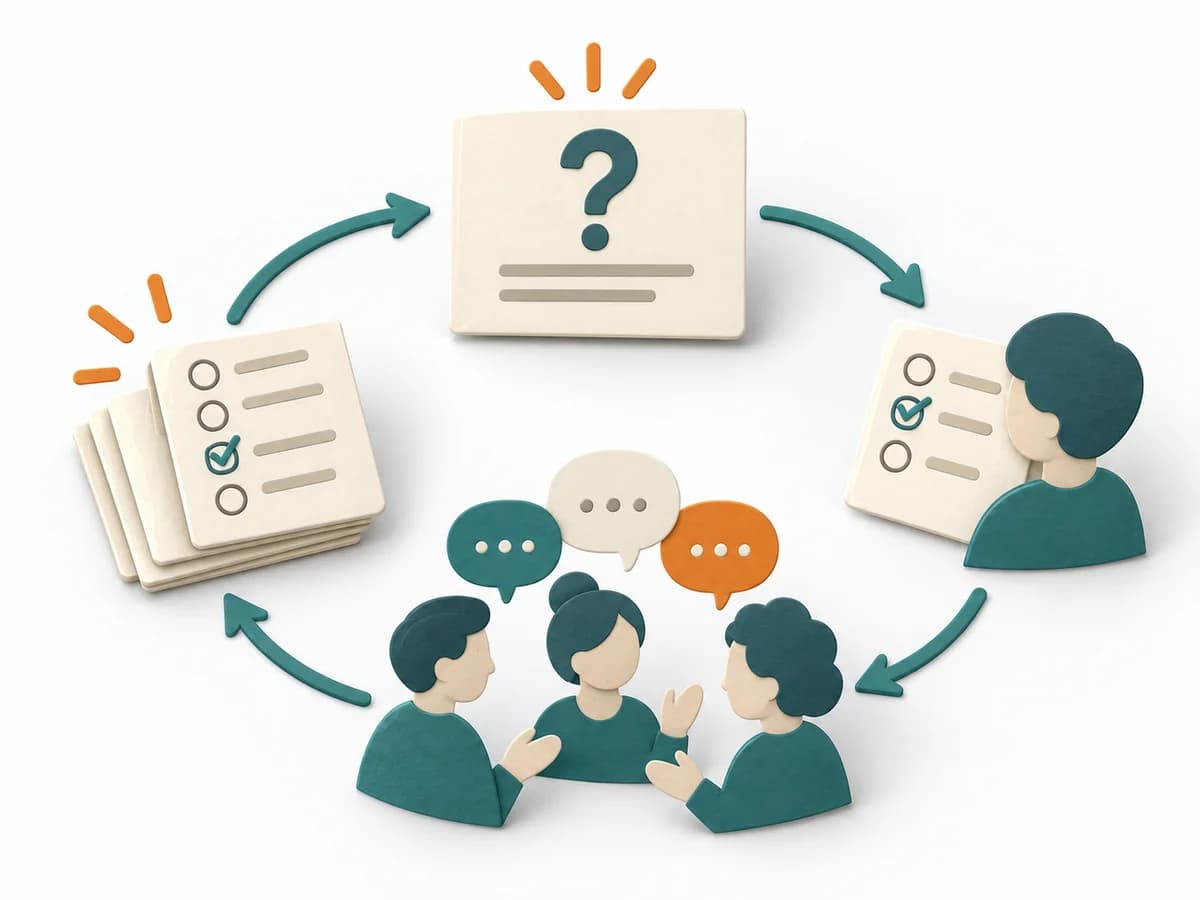 Knowledge Modeling Peer Instruction | 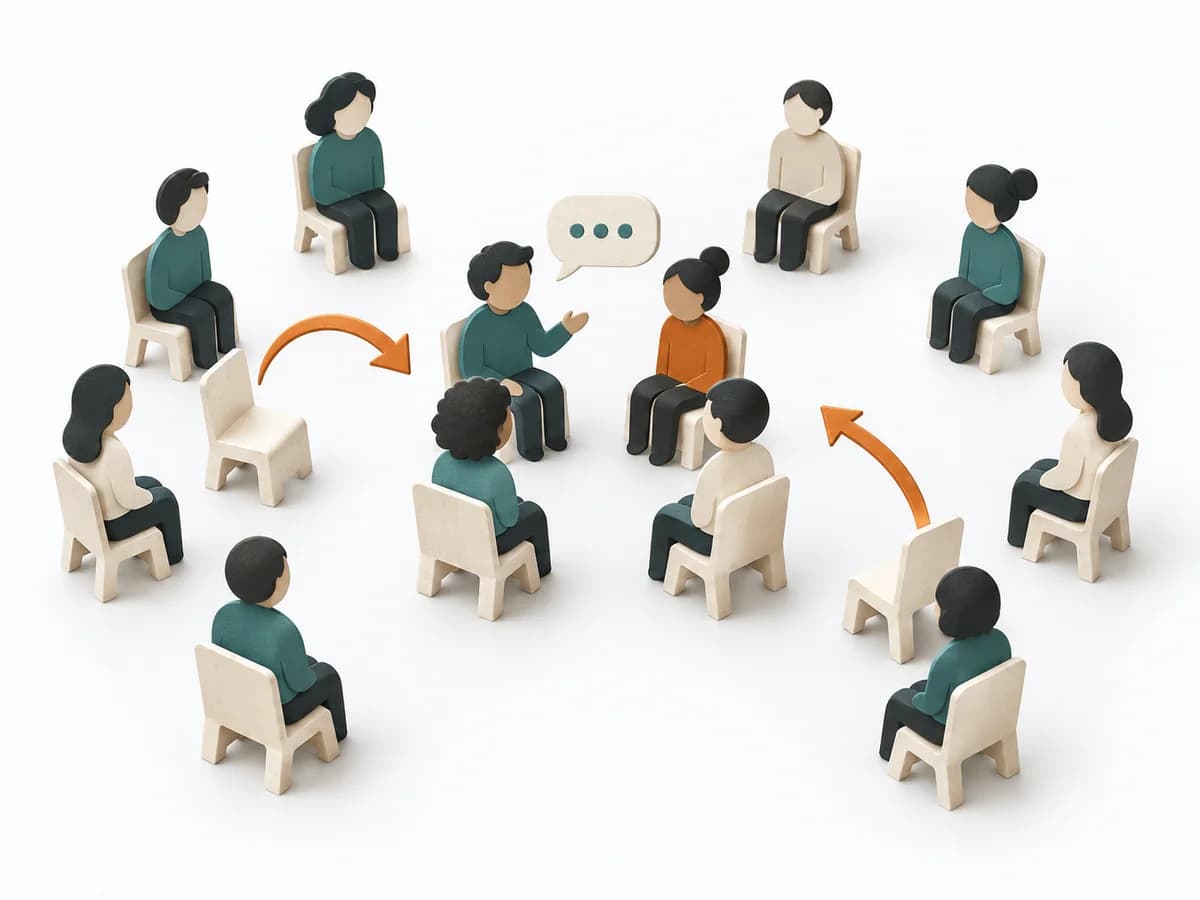 Facilitation Fishbowl Discussion |
|---|---|---|---|---|
Purposedifferent | The Lean UX Canvas helps clarify user behavior, touchpoints, and concept decisions. It makes assumptions and desired outcomes visible and captures the result as a completed canvas, hypothesis list, and first experiment. | When many people can contribute knowledge and the flow should stay open, Barcamp provides a framework for self-organized sessions. The format channels energy without defining the content too narrowly in advance. | Peer Instruction uses group thinking to clarify difficult terms or concepts faster. The method combines individual reflection with social correction and shared precision. | When a controversial topic needs depth and discipline at the same time, Fishbowl Discussion makes the structure of the conversation transparent. The format keeps the core small enough for real dialogue and open enough for controlled turnover. |
Complexitysame | Medium | Medium | Medium | Medium |
Timedifferent | 2-3 h | Halber Tag bis 2 Tage | 10-20 min je Frage | 45-90 min |
Participantsdifferent | 3-8 | 15-200 | 6-50 | 8-80 |
Formatdifferent | Workshop + async | Workshop | Workshop | Workshop |
Outputdifferent | Completed Lean UX Canvas, Hypothesis list, First experiment | Session Board, Session Notes, Community Learnings | Concept Questions, Vote Results, Learning Notes | Discussion Insights, Observed Tensions, Follow-up Questions |
Tagsno overlap | CanvasHypothesisOutcomesDiscovery | FacilitationLarge groupLearning | LearningDialogueFacilitation | FacilitationDialogueLarge group |