View methods side by side.
Choose up to four methods. Add them using the search and share the comparison by copying its link.
| Criterion | 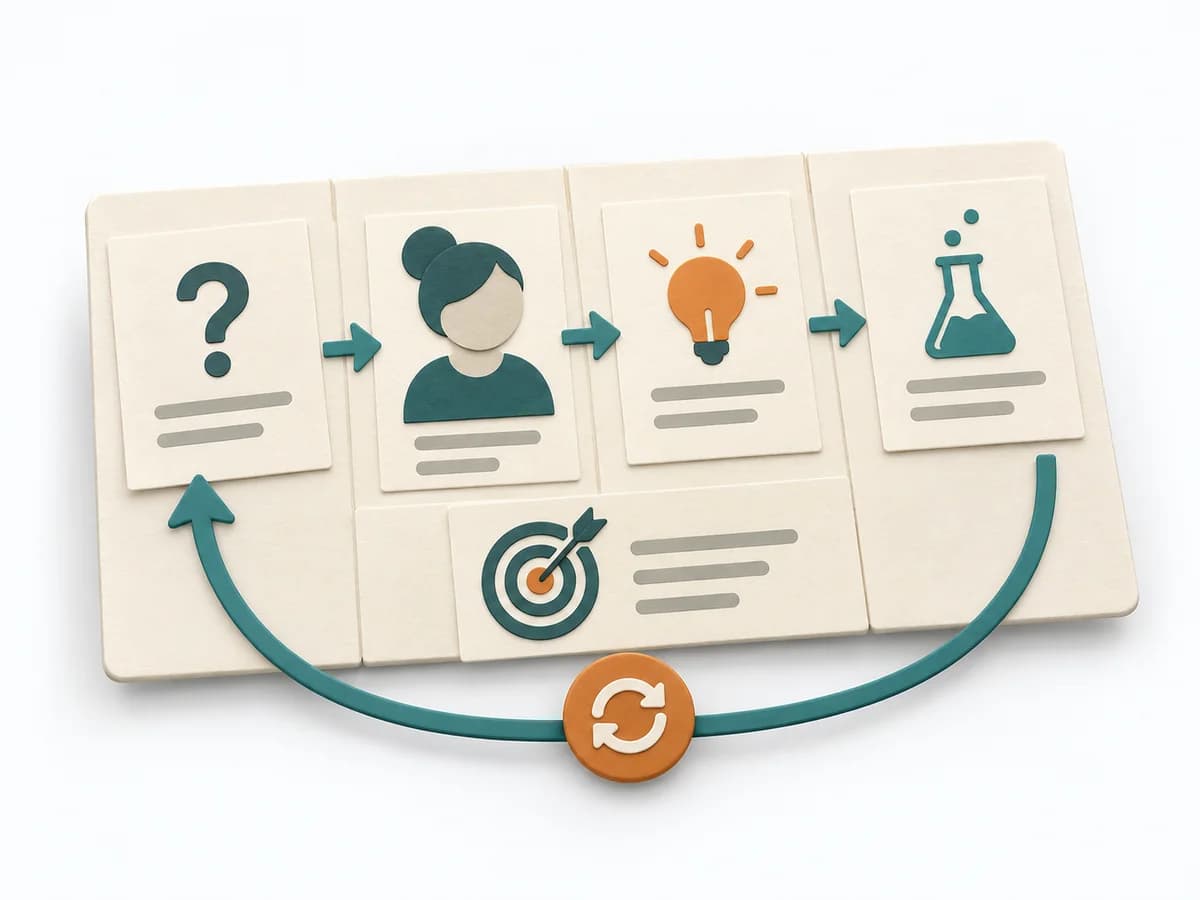 UX Design Lean UX Canvas |  Operations A3 Problem Solving |  Product Strategy DIBB | 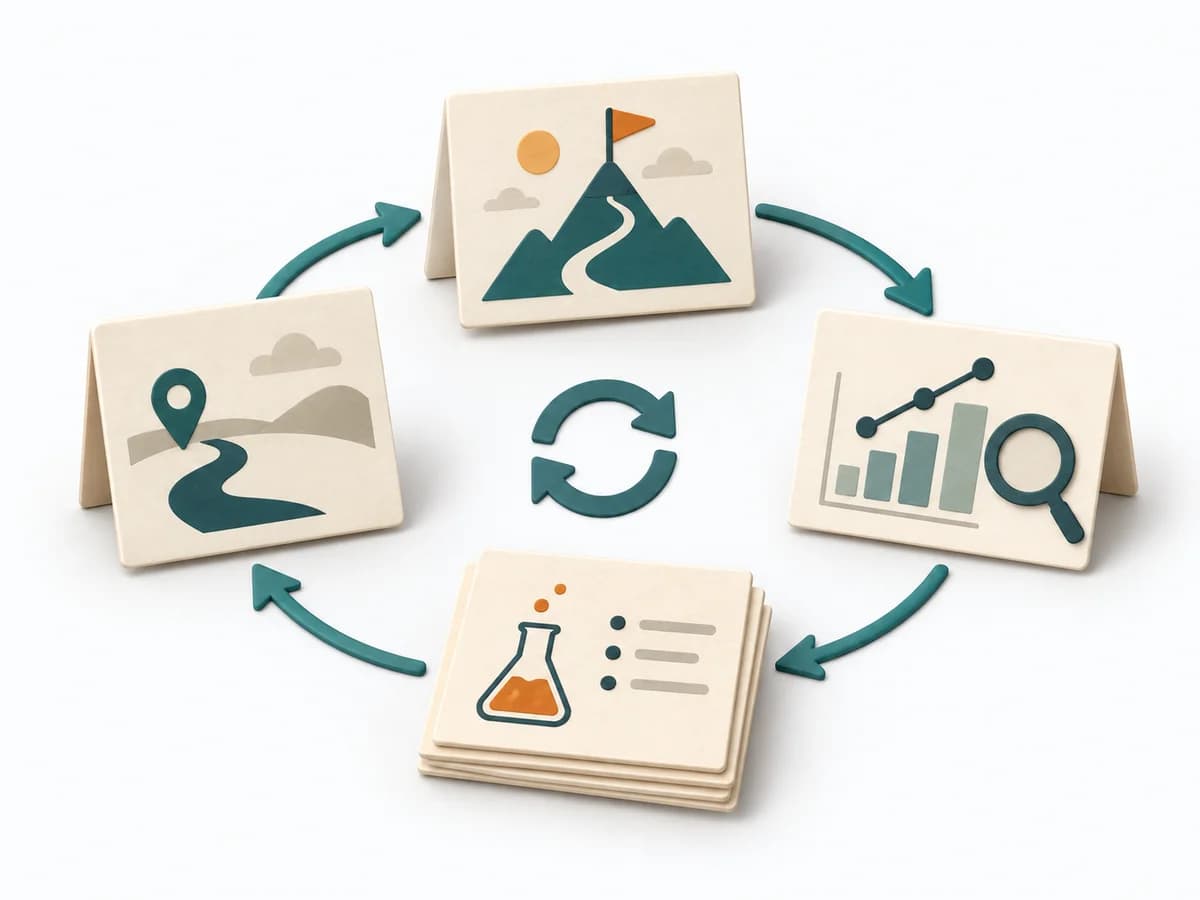 Product Discovery Product Kata |
|---|---|---|---|---|
Purposedifferent | The Lean UX Canvas helps clarify user behavior, touchpoints, and concept decisions. It makes assumptions and desired outcomes visible and captures the result as a completed canvas, hypothesis list, and first experiment. | For a complex deviation with several people involved, the method bundles problem, analysis, and decision onto one page. It creates a shared working space where causes, countermeasures, and follow-up fit together. | DIBB helps clarify target groups, value, goals, and priorities by making the logic behind a decision explicit. It captures results as a DIBB document, belief list, bet list, and learning report. | Product Kata helps clarify customer problems, solution ideas, and evidence through a repeatable improvement routine. It captures direction, current metric, target metric, experiment notes, and learning. |
Complexitydifferent | Medium | Medium | Low | Medium |
Timedifferent | 2-3 h | 45-90 min | 1-2 h | 1-2 Wochen je Loop |
Participantsdifferent | 3-8 | 2-5 | 2-8 | 3-10 |
Formatsame | Workshop + async | Workshop + async | Workshop + async | Workshop + async |
Outputdifferent | Completed Lean UX Canvas, Hypothesis list, First experiment | A3 Report, Action Plan, Root Cause Analysis | DIBB document, Belief list, Bet list, Learning report | Direction, Current metric, Target metric, Experiment note, Learning report |
Tagsno overlap | CanvasHypothesisOutcomesDiscovery | LeanProblem solvingCoachingOperations | StrategyDecisionAssumptionsHypothesis | OutcomesDiscoveryLearningIterationCoaching |