View methods side by side.
Choose up to four methods. Add them using the search and share the comparison by copying its link.
| Criterion | 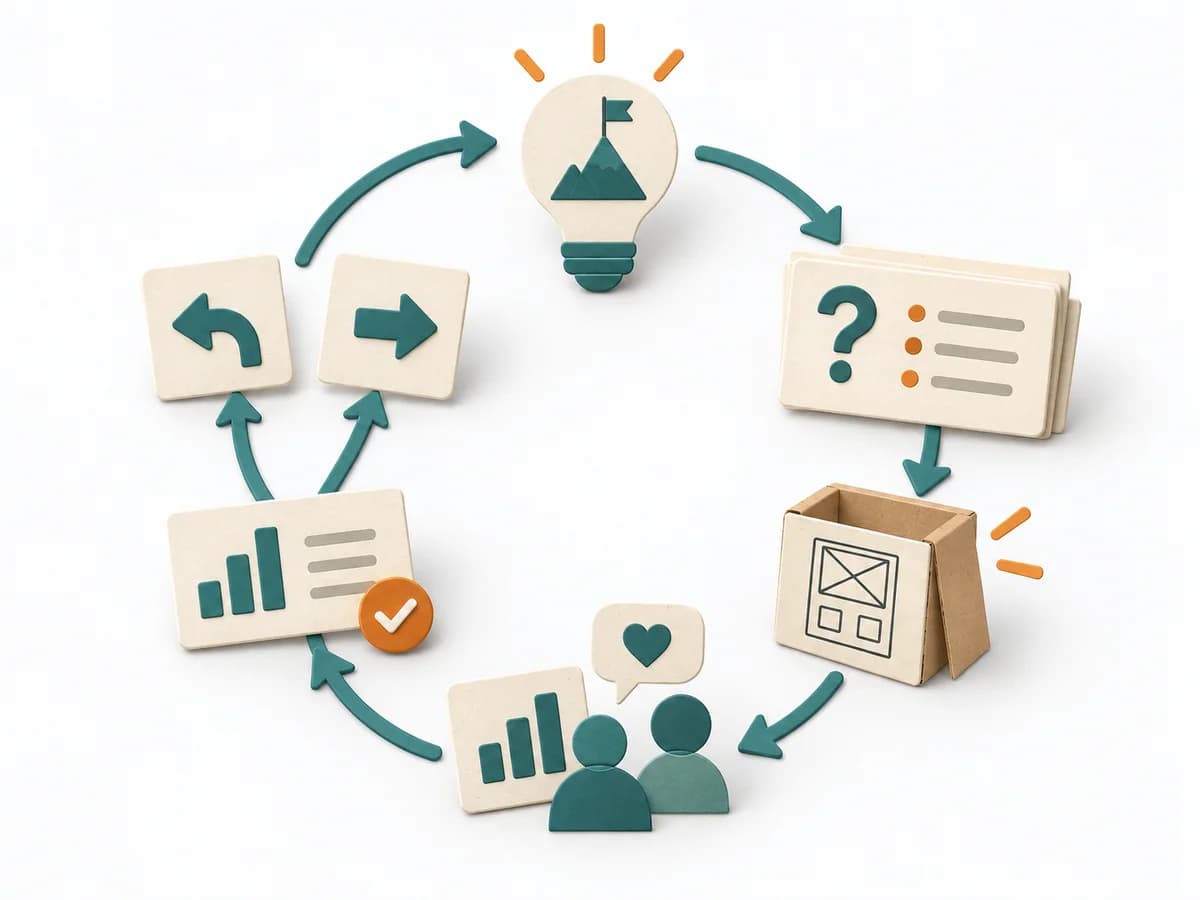 Innovation Lean Startup | 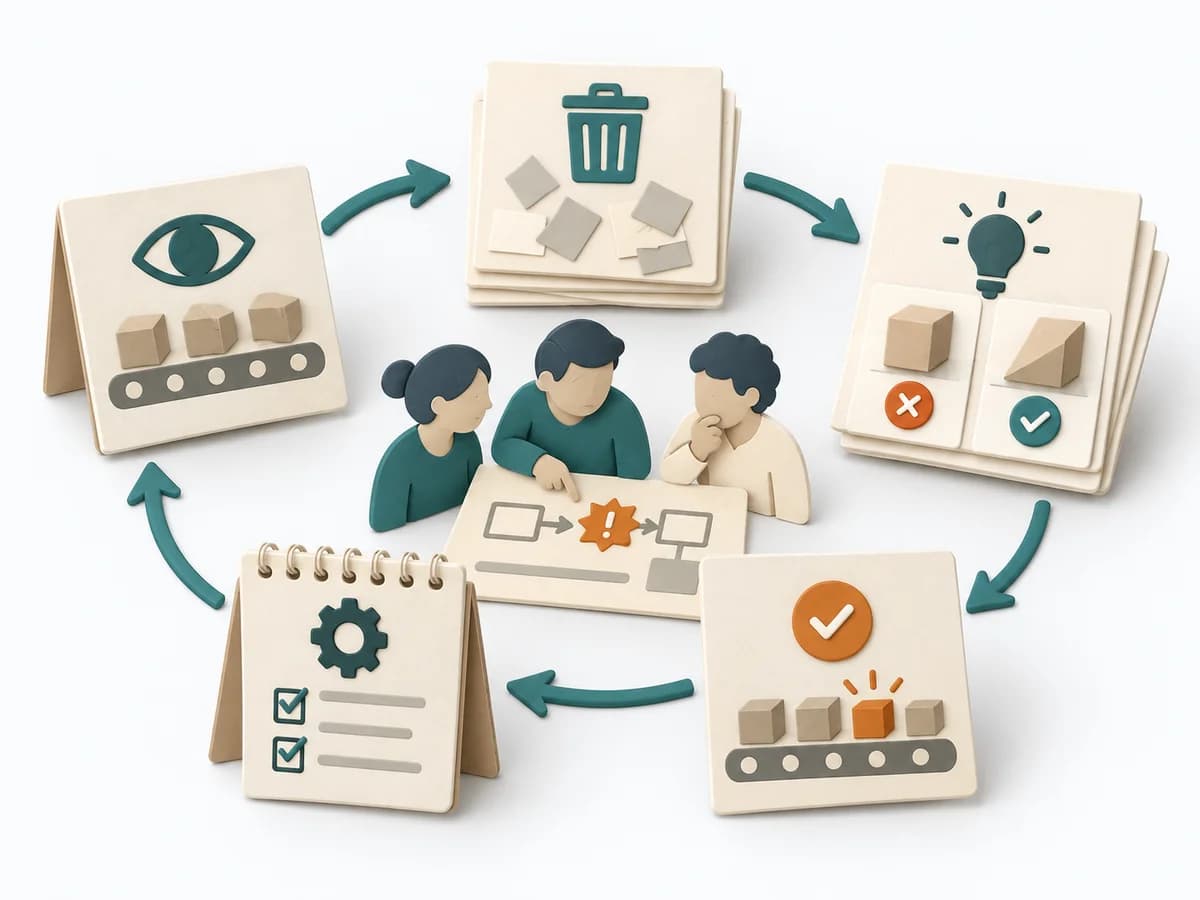 Operations Kaizen Event | 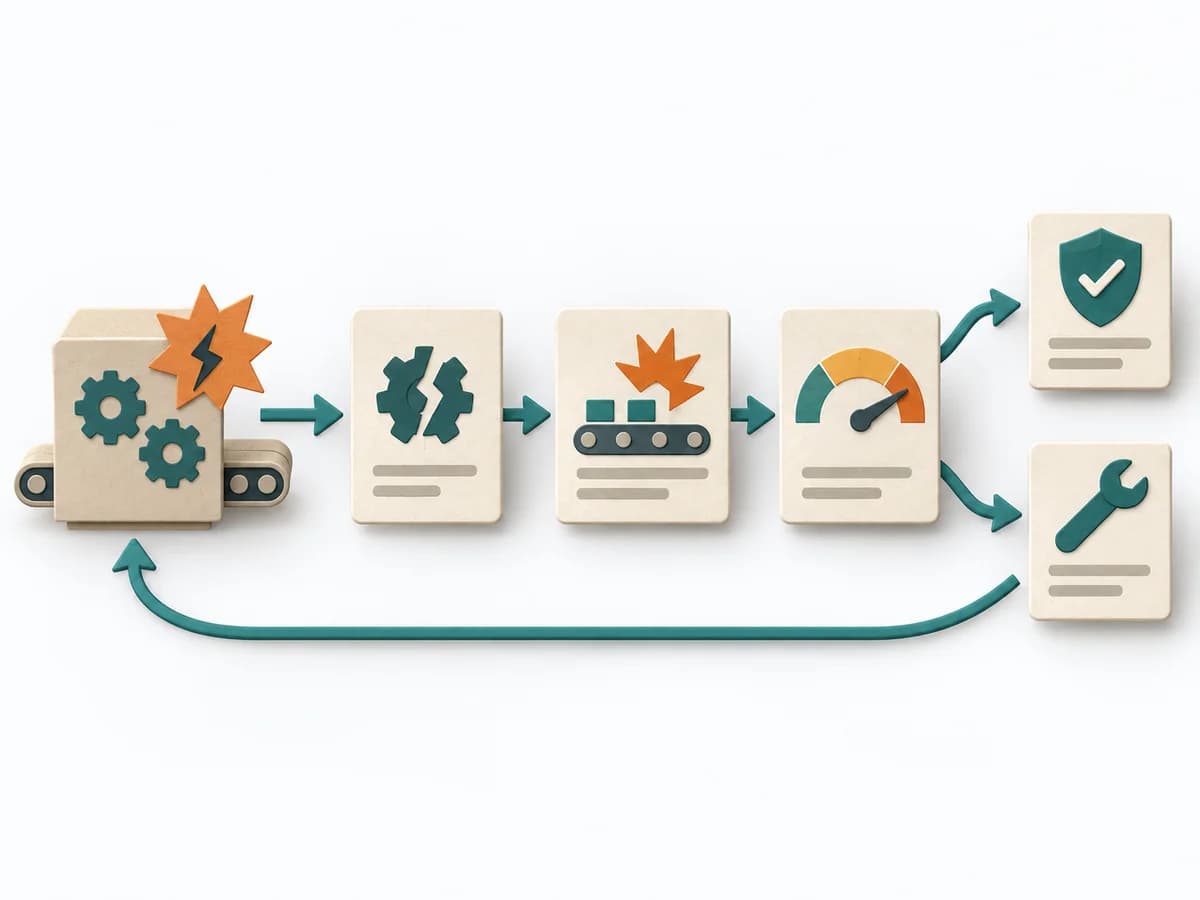 Operations Failure Mode and Effects Analysis |  Operations 5 Whys |
|---|---|---|---|---|
Purposedifferent | For uncertain business assumptions, the method forces the idea into contact with real market reactions early. It separates wishful picture, assumption, and observable behavior, so that learning becomes faster than planning. This translates uncertainty into measurable insight. | For a tightly scoped process segment with noticeable waste, the method bundles shared energy for change. It suits situations that call for fast learning loops and visible adjustments. | For a process, product, or service with noticeable failure risks, the method assesses possible failure modes in advance. It directs attention to combinations of occurrence, effect, and detectability. | For a single, hard-to-explain deviation, the method exposes the causal chain behind the visible symptom. It keeps the cause open until a controllable condition emerges instead of a mere description. |
Complexitydifferent | Medium | Medium | High | Low |
Timedifferent | Wochen bis Monate je Lernzyklus | 0.5-5 Tage | 2-6 h | 15-30 min |
Participantsdifferent | 2-8 | 4-10 | 3-10 | 2-6 |
Formatdifferent | Workshop + async | Workshop | Workshop | Workshop |
Outputdifferent | Hypothesis list, MVPs, Learning reports, Pivot or persevere decision | Kaizen Charter, Waste List, Improvement Experiments, Standard Work Update | FMEA Table, Risk Priority, Mitigation Actions | Root cause notes, Countermeasures |
Tagsno overlap | LeanStartupValidationMVP | LeanContinuous improvementOperations | RiskQualityOperationsRoot cause | Root causeIncidentLeanProblem solving |