View methods side by side.
Choose up to four methods. Add them using the search and share the comparison by copying its link.
| Criterion | 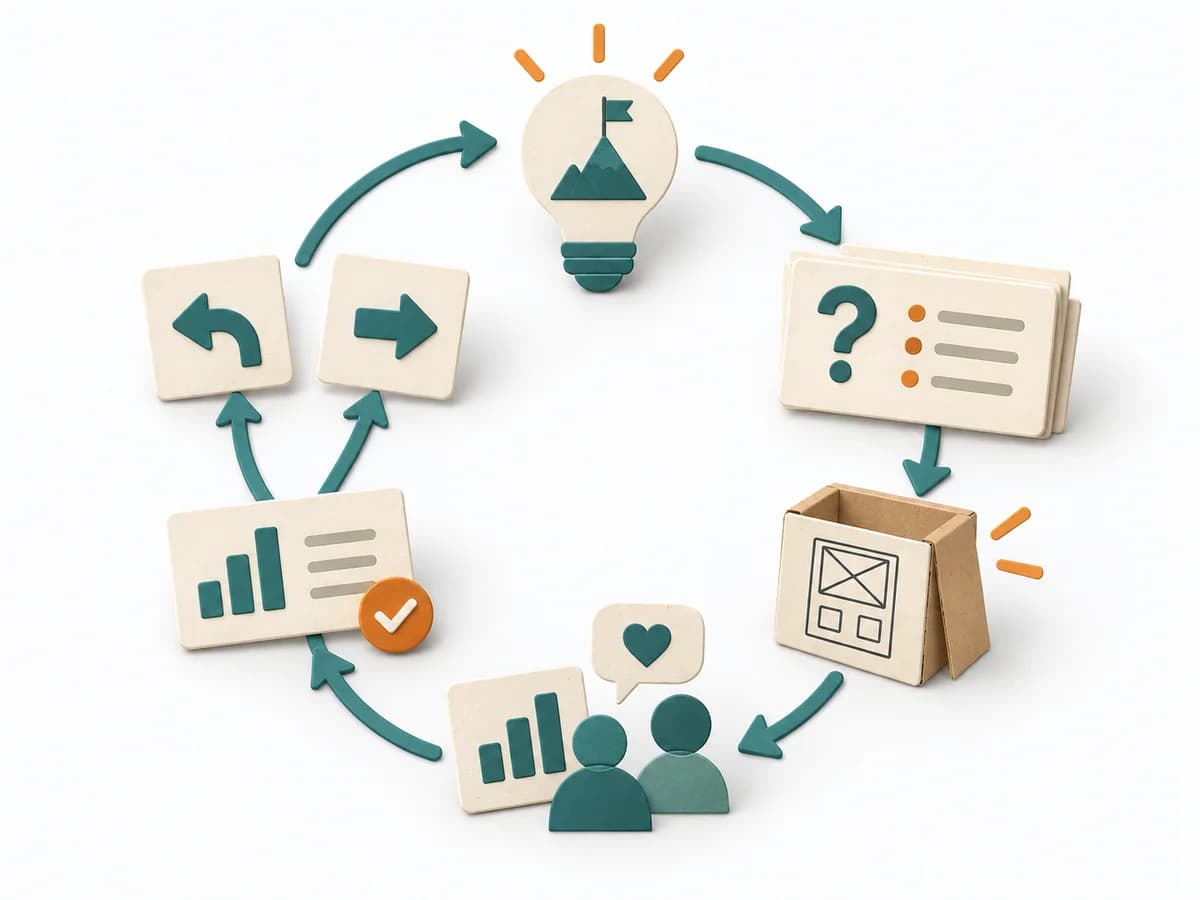 Innovation Lean Startup | 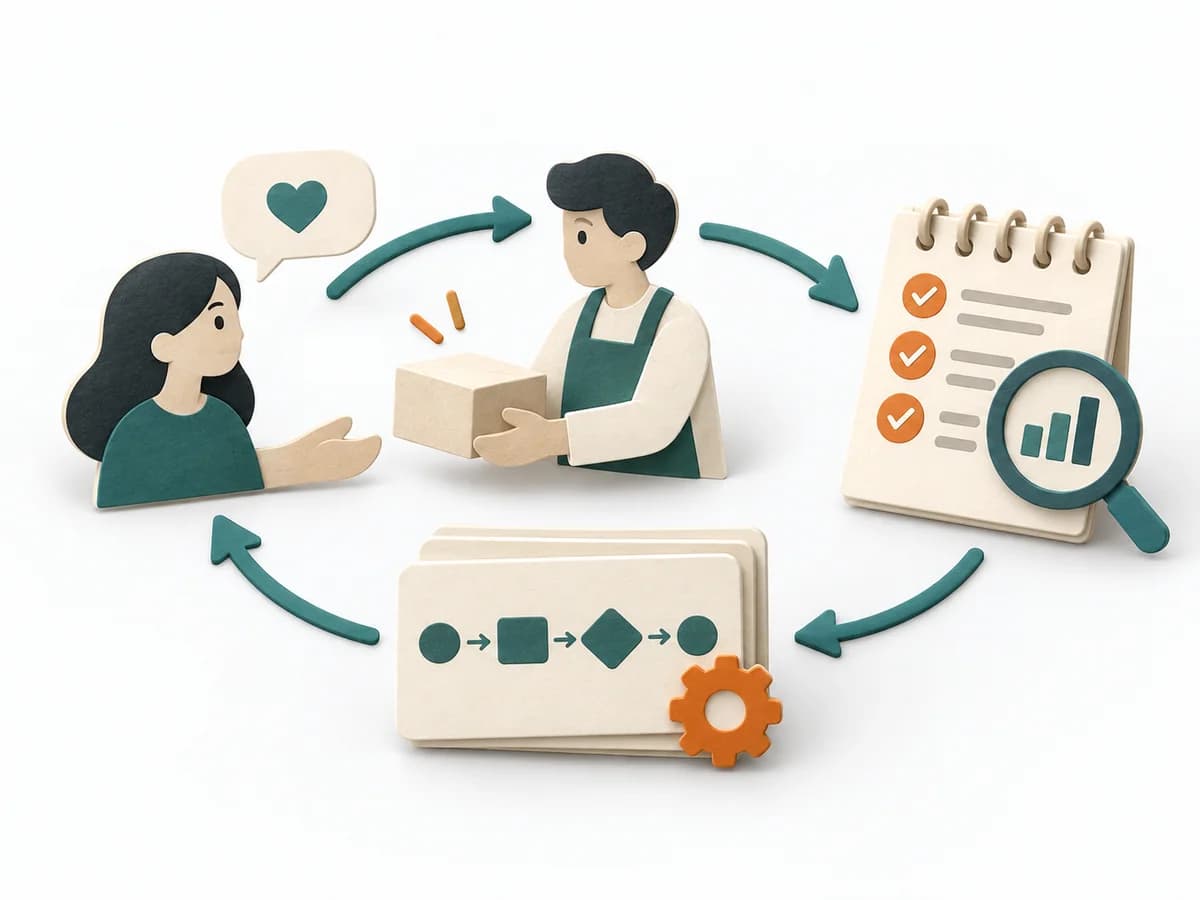 Product Discovery Concierge MVP |  Knowledge Modeling Event Modeling |  Product Discovery Experiment Canvas |
|---|---|---|---|---|
Purposedifferent | For uncertain business assumptions, the method forces the idea into contact with real market reactions early. It separates wishful picture, assumption, and observable behavior, so that learning becomes faster than planning. This translates uncertainty into measurable insight. | When an idea can first fail or grow through genuine hands-on support, it relies on manual work instead of automation. It shows whether user value holds up even under manual execution. | Event Modeling connects business workflows with commands, events, and views into one coherent mental model. It helps design behavior, UI, and technical slices from the same underlying logic. | When experiments become unreadable after the fact, it arranges hypothesis, signal, and learning goal on a single canvas. It separates problem, assumption, solution, and evidence. The result is captured as a Completed Experiment Canvas and a Success Metric. |
Complexitydifferent | Medium | Medium | Medium | Low |
Timedifferent | Wochen bis Monate je Lernzyklus | 1-4 Wochen | 2-6 h | 30-60 min |
Participantsdifferent | 2-8 | 3-10 Kunden | 2-8 | 1-5 |
Formatsame | Workshop + async | Workshop + async | Workshop + async | Workshop + async |
Outputdifferent | Hypothesis list, MVPs, Learning reports, Pivot or persevere decision | Concierge Learnings, Service Blueprint, MVP Risks | Event Model, UI Flow, Commands, Read Models | Completed Experiment Canvas, Success Metric |
Tagsno overlap | LeanStartupValidationMVP | MVPValidationServiceDiscovery | EventsBlueprintDomain-Driven DesignBehavior | ExperimentsValidationDiscoveryHypothesis |