View methods side by side.
Choose up to four methods. Add them using the search and share the comparison by copying its link.
| Criterion | 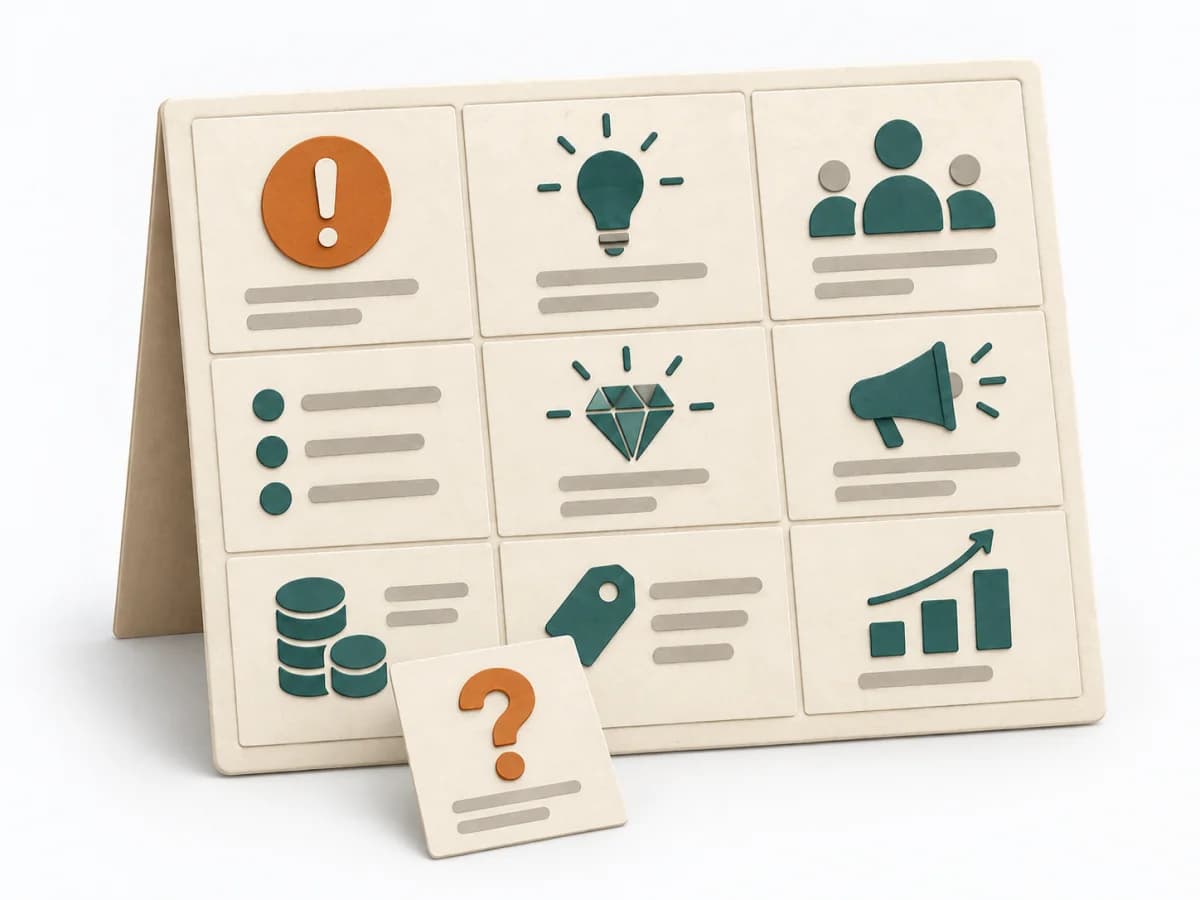 Product Strategy Lean Canvas | 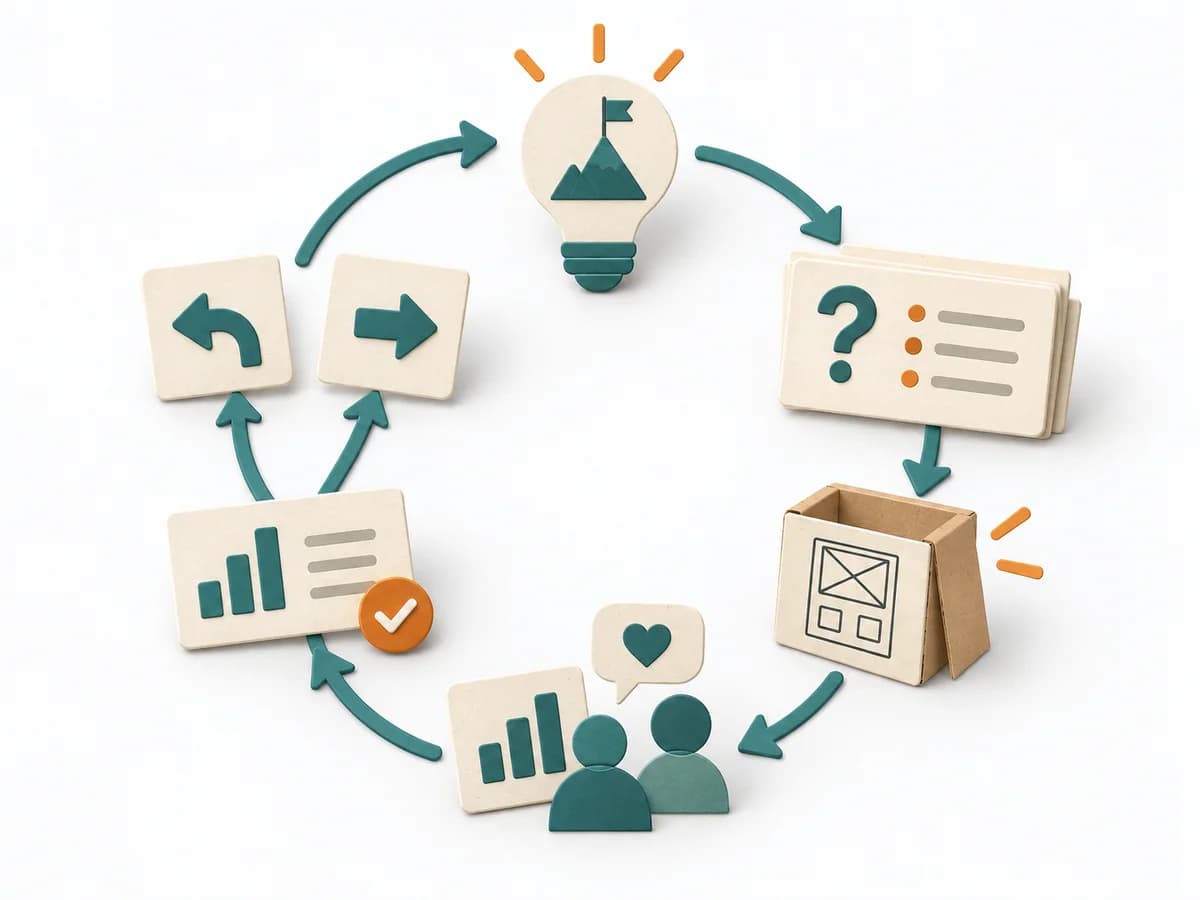 Innovation Lean Startup |  Facilitation Alignment Mapping |  Facilitation Power Interest Grid |
|---|---|---|---|---|
Purposedifferent | When an early product bet still has too many open points, it brings target group, problem, and assumptions into a single view. It condenses the idea so core risks become nameable. | For uncertain business assumptions, the method forces the idea into contact with real market reactions early. It separates wishful picture, assumption, and observable behavior, so that learning becomes faster than planning. This translates uncertainty into measurable insight. | When several people work toward one goal but hold different mental maps, Alignment Mapping makes the discrepancies visible. It arranges goals, assumptions, and priorities so shared direction becomes verifiable. | When many stakeholders compete for attention at once, the Power Interest Grid sorts them by influence and stake. It turns individual contributions into a visible selection. The result is captured as a Power Interest Grid and a stakeholder-specific strategy. |
Complexitydifferent | Medium | Medium | Medium | Low |
Timedifferent | 45-90 min | Wochen bis Monate je Lernzyklus | 1-2 h | 30-60 min |
Participantsdifferent | 1-6 | 2-8 | 4-12 | 2-8 |
Formatdifferent | Workshop + async | Workshop + async | Workshop | Workshop |
Outputdifferent | Lean Canvas, Core Assumptions, Experiment Backlog | Hypothesis list, MVPs, Learning reports, Pivot or persevere decision | Alignment Map, Open Issues, Decision Questions | Power Interest Grid, Strategy per Stakeholder |
Tagsno overlap | StartupLeanAssumptionsBusiness model | LeanStartupValidationMVP | AlignmentStakeholdersStrategyFacilitation | StakeholdersFacilitationAlignmentPlanning |