View methods side by side.
Choose up to four methods. Add them using the search and share the comparison by copying its link.
| Criterion |  Product Strategy Lean Canvas |  Engineering Hypothesis-Driven Troubleshooting |  Operations Barrier Analysis | 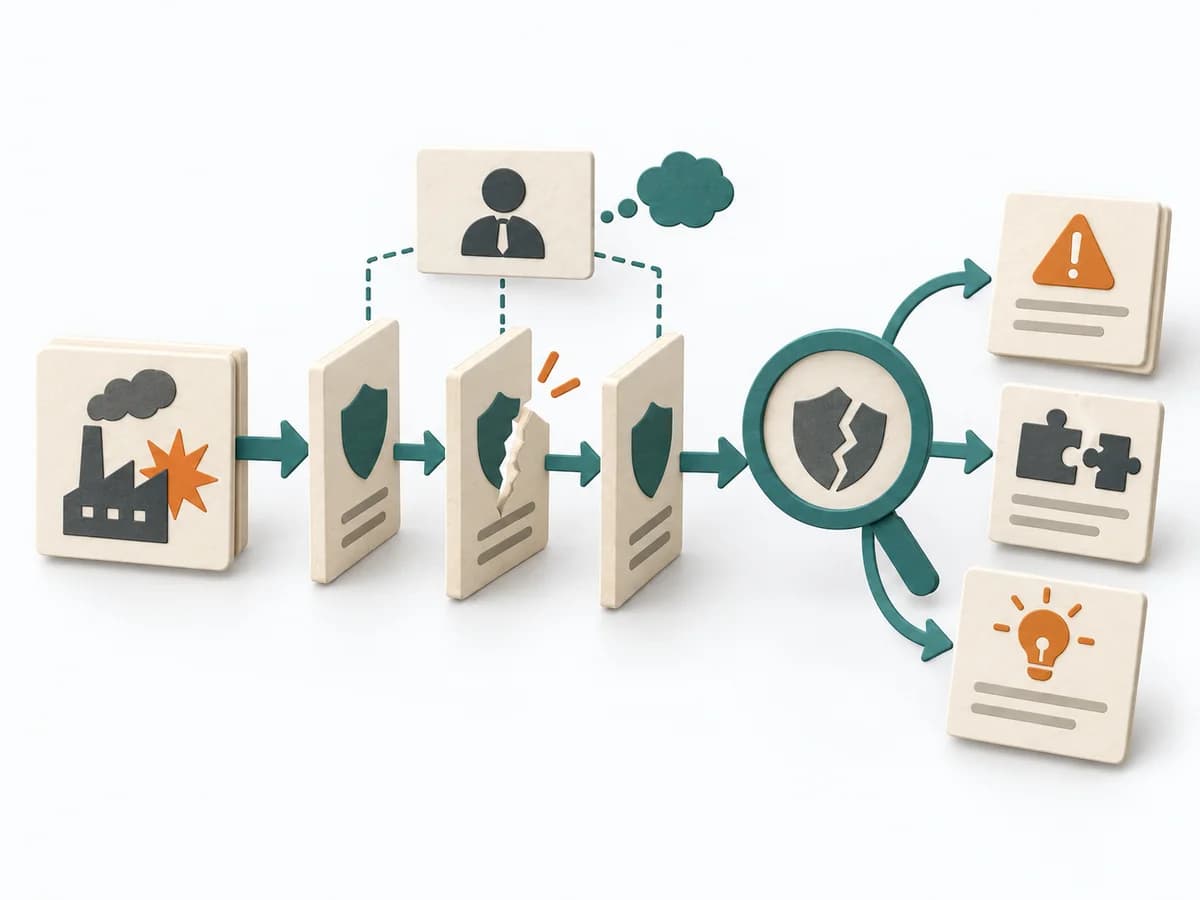 Operations MORT Analysis |
|---|---|---|---|---|
Purposedifferent | When an early product bet still has too many open points, it brings target group, problem, and assumptions into a single view. It condenses the idea so core risks become nameable. | When systems fail unexpectedly, spontaneous attempts often produce more noise than insight. Hypothesis-driven Troubleshooting translates symptoms into testable assumptions and makes troubleshooting learnable. | For a risk that can only be managed through multiple layers of protection, the method examines the effectiveness of each barrier. It shows where safeguards are missing, too weak, or fail under real conditions. | For a safety-relevant event or a system with high protection requirements, the method examines where controls failed. It exposes both technical and organizational gaps. |
Complexitydifferent | Medium | Medium | Medium | High |
Timedifferent | 45-90 min | 30-240 min | 2-4 h | Mehrere Tage bis Wochen |
Participantsdifferent | 1-6 | 1-6 | 2-6 | 2-6 |
Formatsame | Workshop + async | Workshop + async | Workshop + async | Workshop + async |
Outputdifferent | Lean Canvas, Core Assumptions, Experiment Backlog | Hypothesis Log, Test Plan, Evidence Notes, Diagnosis Summary | Barrier Inventory, Failure Analysis per Barrier, Action Backlog | MORT Worksheets, Findings per Branch, Corrective Actions, Systemic Recommendations |
Tagsno overlap | StartupLeanAssumptionsBusiness model | TroubleshootingProblem solvingDiagnosis | Root causeSafetyIncident | Root causeSafetySystemicIncident |