View methods side by side.
Choose up to four methods. Add them using the search and share the comparison by copying its link.
| Criterion |  Product Strategy Lean Canvas | 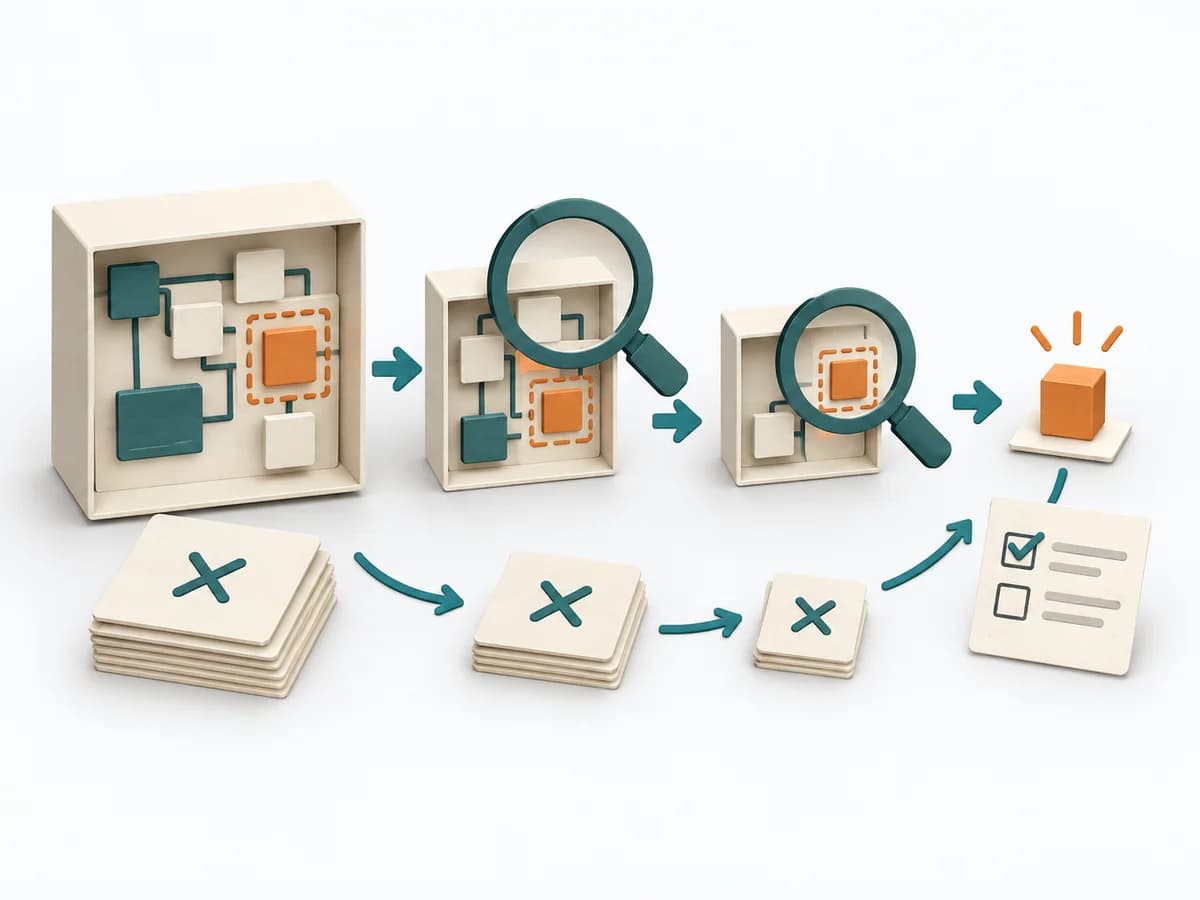 Engineering Fault Isolation |  Operations Gemba Walk | 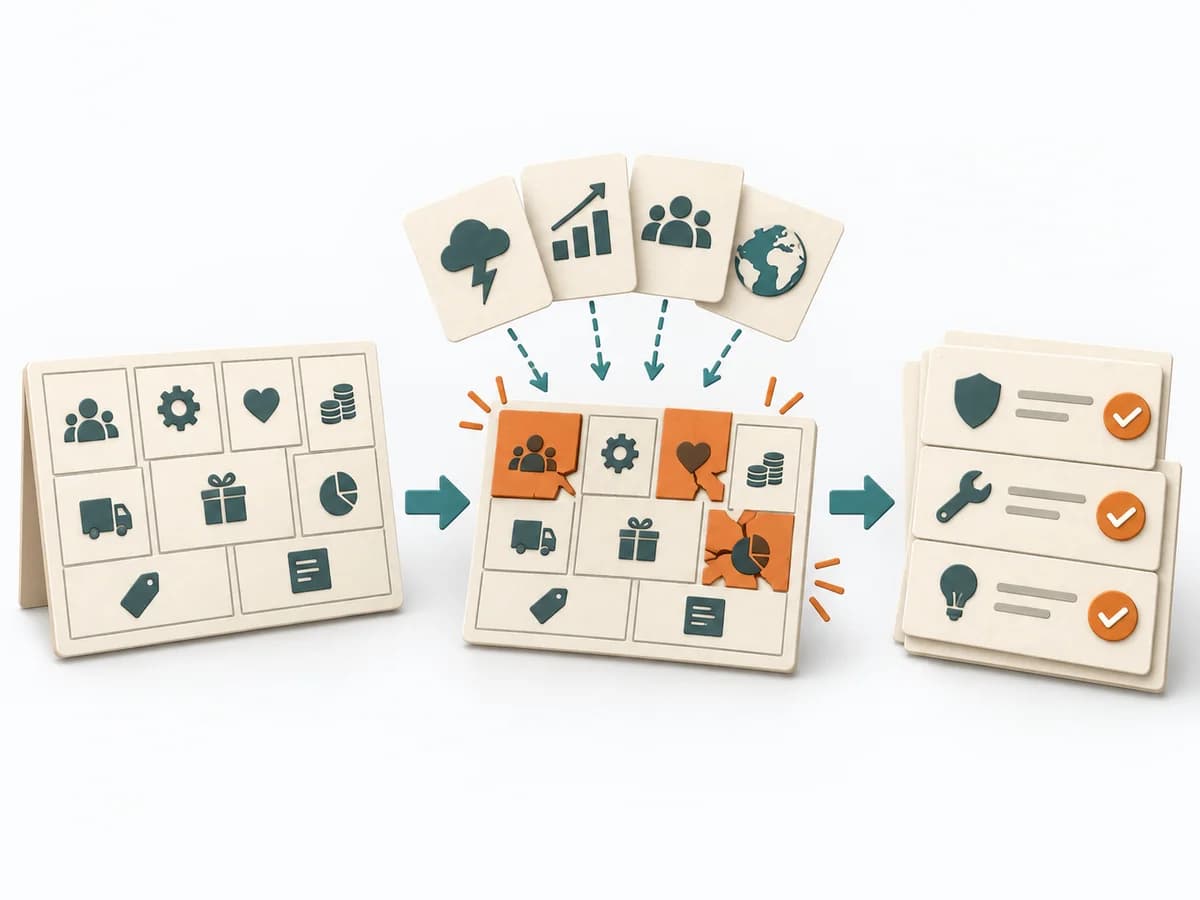 Business Strategy Business Model Stress Test |
|---|---|---|---|---|
Purposedifferent | When an early product bet still has too many open points, it brings target group, problem, and assumptions into a single view. It condenses the idea so core risks become nameable. | In technical failures, the visible symptom often gets mixed up with the actual cause. Fault Isolation narrows the fault space and progressively reduces which part of the system is truly affected. | When there is uncertainty about the real course of a process, the method brings observation to the place where work happens. It combines perception, follow-up questions, and process knowledge so decisions rest on actual workflows instead of assumptions. | A Business Model Stress Test checks how well a business model holds up under pressure and headwinds. It compares strengths, risks, market logic, and courses of action. The result is captured as a stress-test report and action plan per scenario. |
Complexitydifferent | Medium | Medium | Low | High |
Timedifferent | 45-90 min | 30-180 min | 30-120 min | Half day |
Participantsdifferent | 1-6 | 1-6 | 2-6 | 3-8 |
Formatdifferent | Workshop + async | Workshop + async | Workshop | Workshop |
Outputdifferent | Lean Canvas, Core Assumptions, Experiment Backlog | Fault Isolation Map, Test Log, Excluded Hypotheses, Narrowed Fault Area | Observation Notes, Improvement Ideas | Stress Test Report, Action Plan per Scenario |
Tagsno overlap | StartupLeanAssumptionsBusiness model | TroubleshootingDiagnosisEngineering | LeanObservationProcessOperations | StrategyBusiness modelRiskDiagnosis |