View methods side by side.
Choose up to four methods. Add them using the search and share the comparison by copying its link.
| Criterion |  Knowledge Modeling Knowledge Mapping |  Operations Root Cause Analysis | 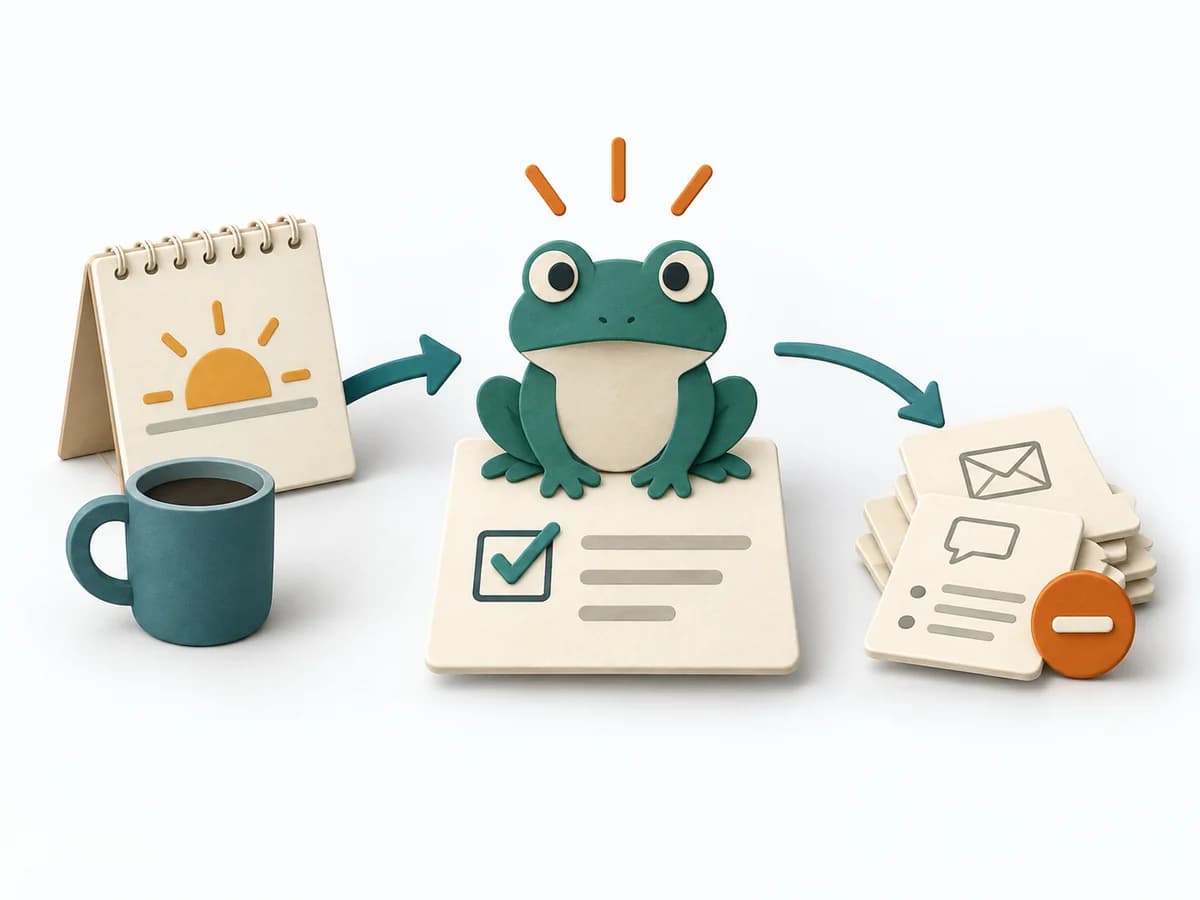 Operations Eat the Frog |  Operations Failure Mode and Effects Analysis |
|---|---|---|---|---|
Purposedifferent | Knowledge Mapping makes knowledge, gaps, and transfer paths visible across a field. It fits when expertise should not just exist but also be findable and transferable. | When a problem keeps recurring and the cause stays unclear, the method exposes the underlying mechanism. It separates symptom, guess, and robust explanation from one another. | The method protects energy and attention for the task that creates the largest progress and is often postponed. | For a process, product, or service with noticeable failure risks, the method assesses possible failure modes in advance. It directs attention to combinations of occurrence, effect, and detectability. |
Complexitydifferent | Medium | Medium | Low | High |
Timedifferent | 1-3 h | 1-4 h | 15-90 min daily | 2-6 h |
Participantsdifferent | 3-12 | 3-8 | 1 | 3-10 |
Formatdifferent | Workshop | Workshop + async | Async | Workshop |
Outputdifferent | Knowledge Map, Critical Knowledge Areas, Transfer Plan | Problem Statement, Cause Hypotheses, Confirmed Causes, Action Plan | Priority Task, Completion Note, Daily Focus | FMEA Table, Risk Priority, Mitigation Actions |
Tagsno overlap | KnowledgeMappingRisk | Root causeProblem solvingQualityIncident | PrioritizationProductivityFocusExecution | RiskQualityOperationsRoot cause |