View methods side by side.
Choose up to four methods. Add them using the search and share the comparison by copying its link.
| Criterion |  Knowledge Modeling Knowledge Mapping |  Agile ROAM Board | 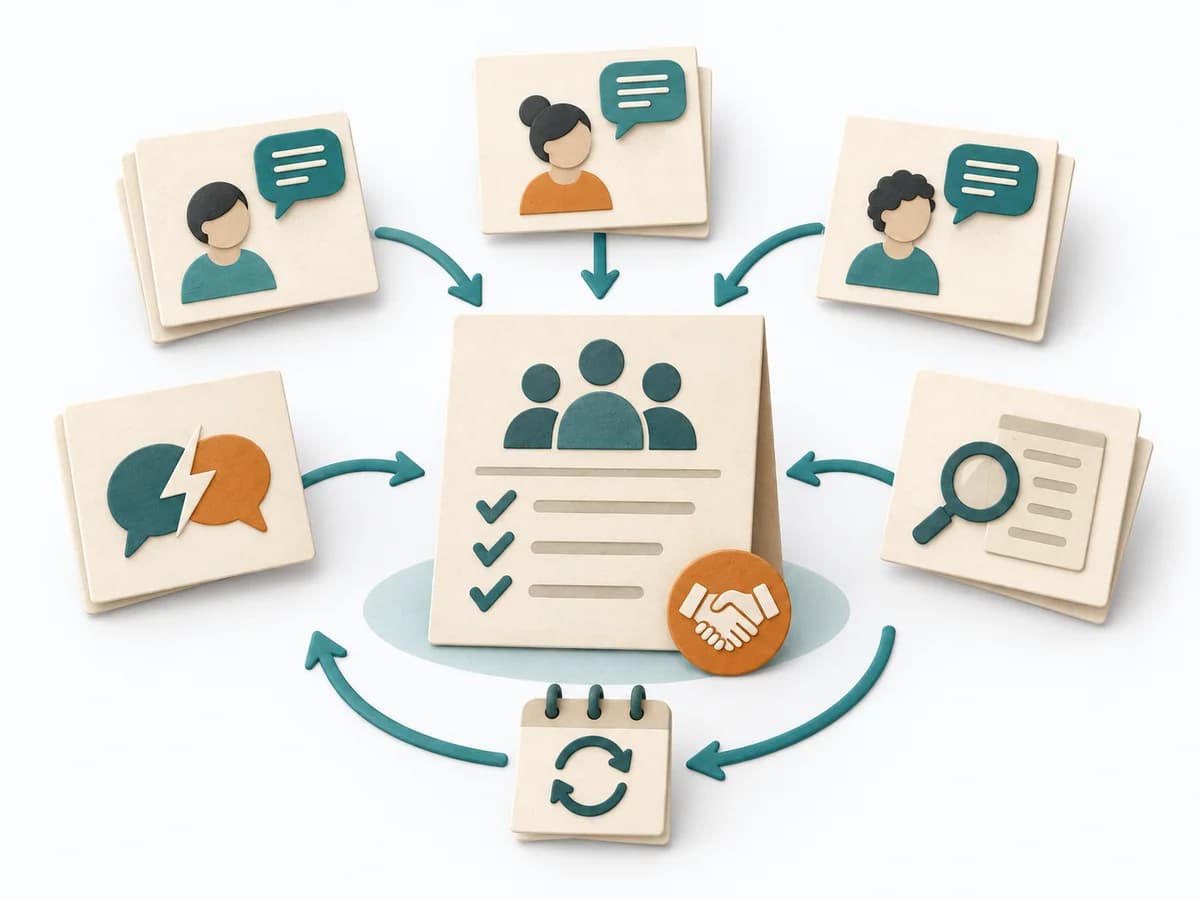 Agile Working Agreements | 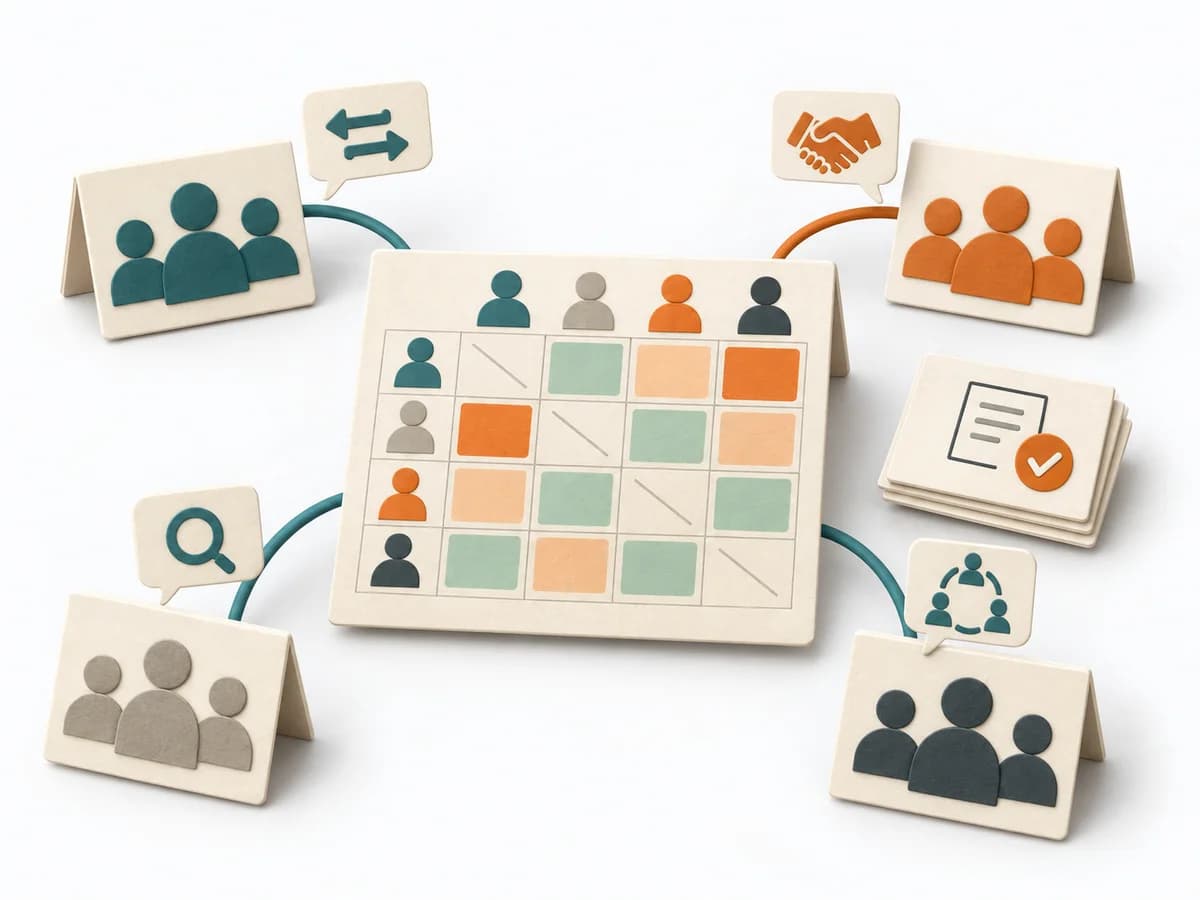 Team Design Team Topologies Interaction Modes |
|---|---|---|---|---|
Purposedifferent | Knowledge Mapping makes knowledge, gaps, and transfer paths visible across a field. It fits when expertise should not just exist but also be findable and transferable. | When work needs to move between different states or columns, it makes that movement and its handoffs legible. It sorts work by value, risk, and delivery ability. The result is captured as a ROAM Board and an Owner List. | When collaboration needs more than implicit expectations, it lays out shared ground rules openly. It creates reliability for conduct, availability, and decision paths. | When several teams collaborate repeatedly, it describes the right interaction mode for each interface between them. It clarifies responsibility, interaction, and load between teams. The result is captured as an interaction heat map and pairwise agreements. |
Complexitydifferent | Medium | Low | Low | Medium |
Timedifferent | 1-3 h | 20-40 min initial, dann laufend | 45-90 min | Half day |
Participantsdifferent | 3-12 | 3-15 | 3-12 | Team-Leads plus Architecture |
Formatdifferent | Workshop | Workshop + async | Workshop | Workshop |
Outputdifferent | Knowledge Map, Critical Knowledge Areas, Transfer Plan | ROAM Board, Owner List | Working Agreements, Team Norms, Review Cadence | Interaction Heat Map, Agreements per Pair |
Tagsno overlap | KnowledgeMappingRisk | RiskAgileTrackingAlignment | TeamCollaborationAgile | TeamAlignmentCollaborationOrganization |