View methods side by side.
Choose up to four methods. Add them using the search and share the comparison by copying its link.
| Criterion |  Knowledge Modeling Knowledge Mapping | 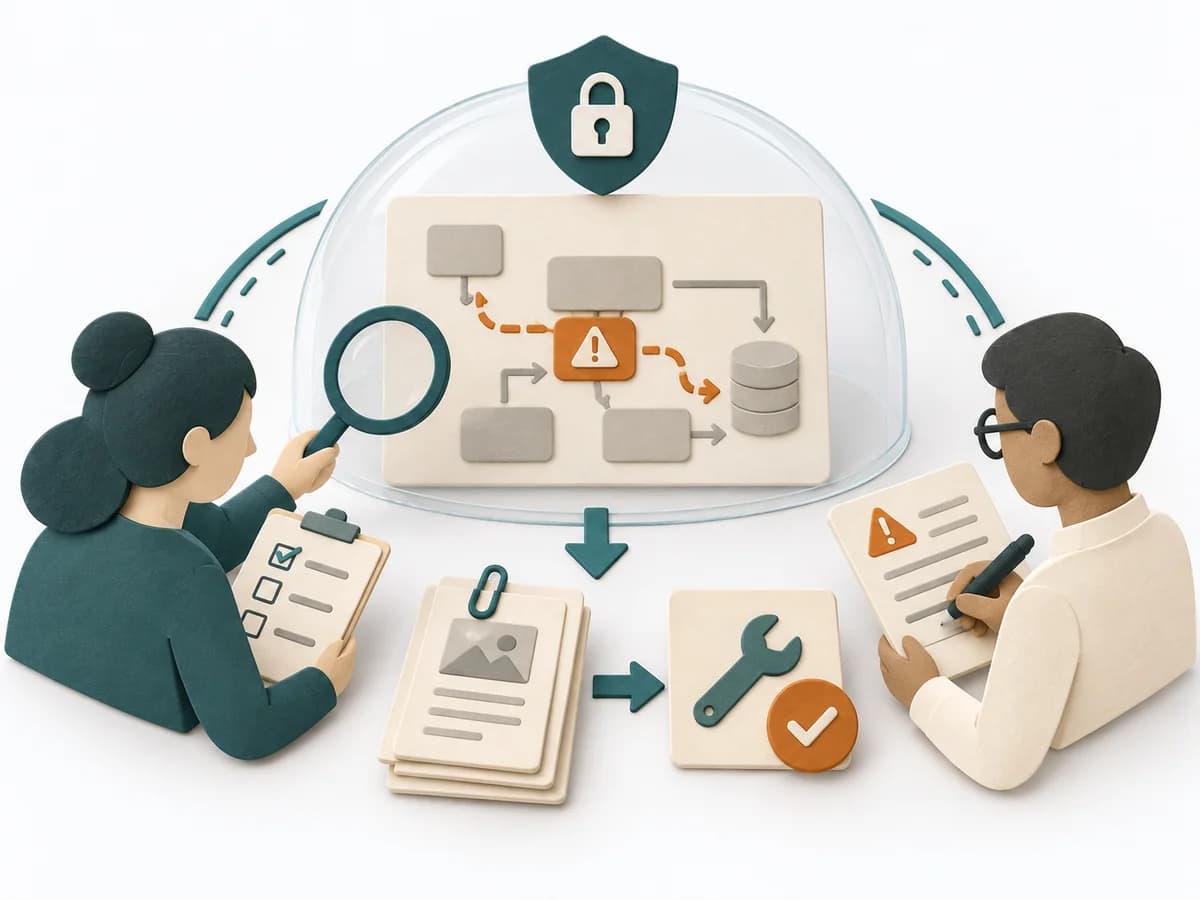 Decision Making Red Teaming | 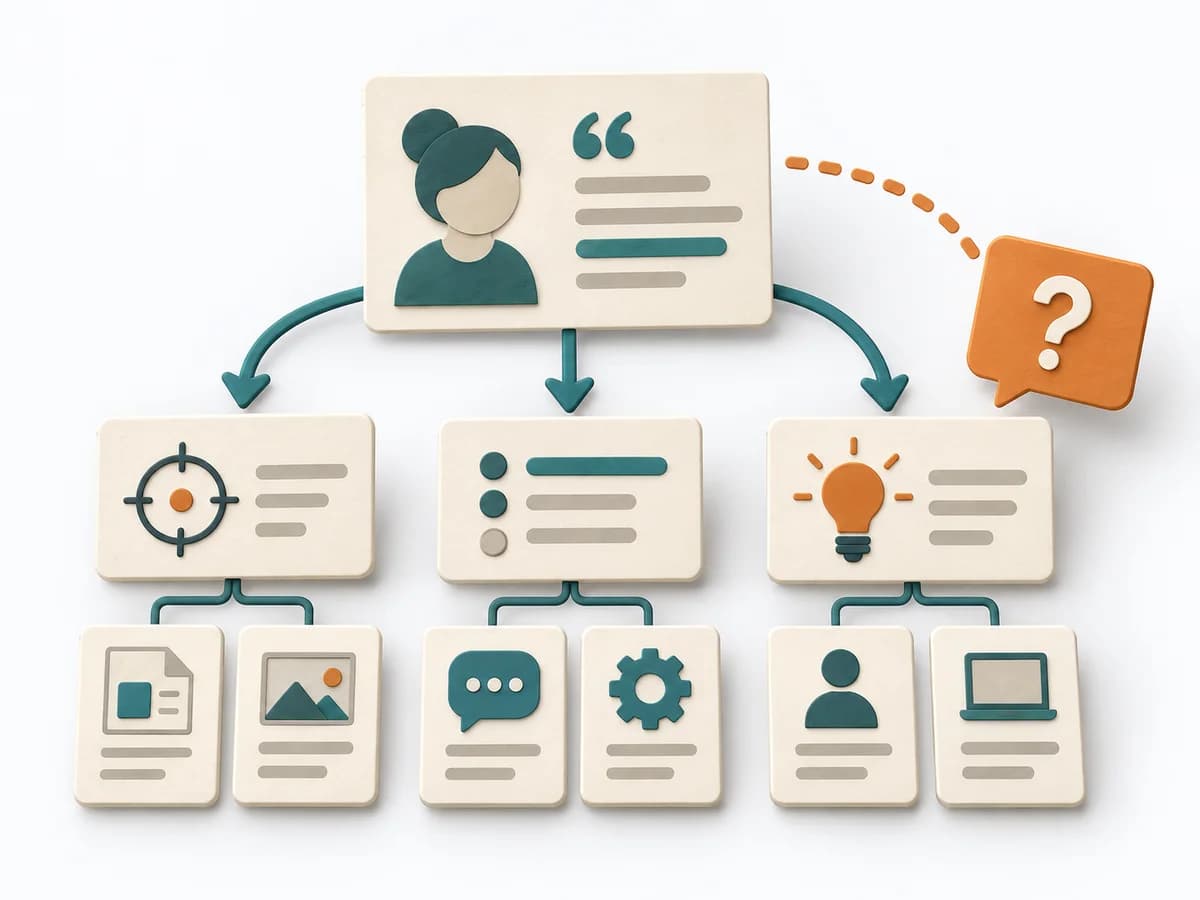 Agile Example Mapping | 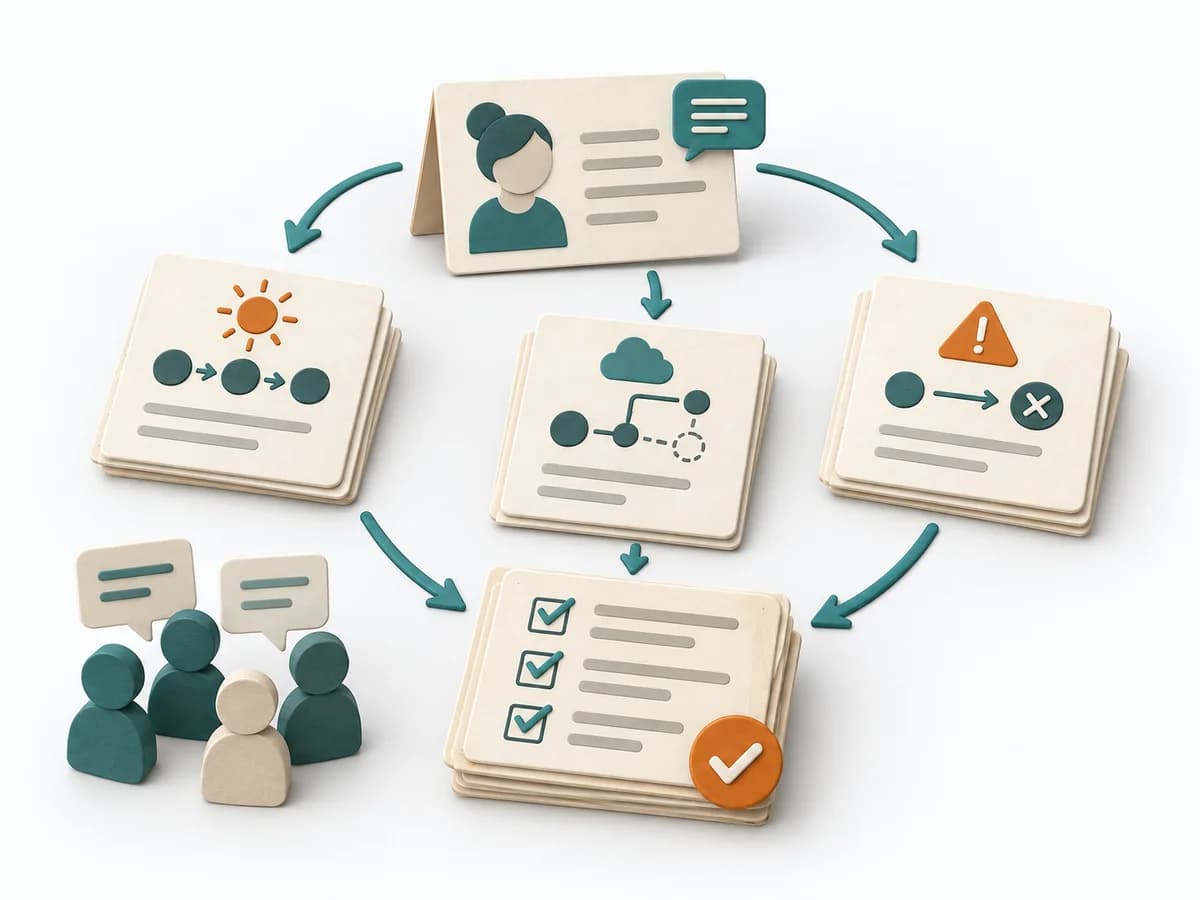 Agile Acceptance Criteria Workshop |
|---|---|---|---|---|
Purposedifferent | Knowledge Mapping makes knowledge, gaps, and transfer paths visible across a field. It fits when expertise should not just exist but also be findable and transferable. | For strategic decisions with high reach, agreement and gut feeling are often not enough. Red teaming brings deliberate opposition into the situation and tests where a plan breaks under real counterarguments. | When a story carries business rules and exceptions, it brings clarity before implementation. It makes examples, open questions, and boundaries visible enough that the logic becomes jointly sound. | When a story needs clear checkpoints before implementation, it sharpens expectation and scope together. It sorts work by value, risk, and delivery ability. The result is captured as Acceptance Criteria and a Story Update. |
Complexitydifferent | Medium | High | Low | Low |
Timedifferent | 1-3 h | 1-4 h | 30-60 min | 20-40 min pro Story |
Participantsdifferent | 3-12 | 3-8 | 3-7 | 3-6 |
Formatsame | Workshop | Workshop | Workshop | Workshop |
Outputdifferent | Knowledge Map, Critical Knowledge Areas, Transfer Plan | Challenge Findings, Risk Register, Mitigation Plan | Example Map, Acceptance Criteria, Open Questions | Acceptance Criteria, Story Update |
Tagsno overlap | KnowledgeMappingRisk | RiskDecisionSensemaking | Behavior-Driven DevelopmentRequirementsExamplesRefinement | AgileRequirementsRefinementBehavior-Driven Development |