View methods side by side.
Choose up to four methods. Add them using the search and share the comparison by copying its link.
| Criterion |  Knowledge Modeling Knowledge Mapping | 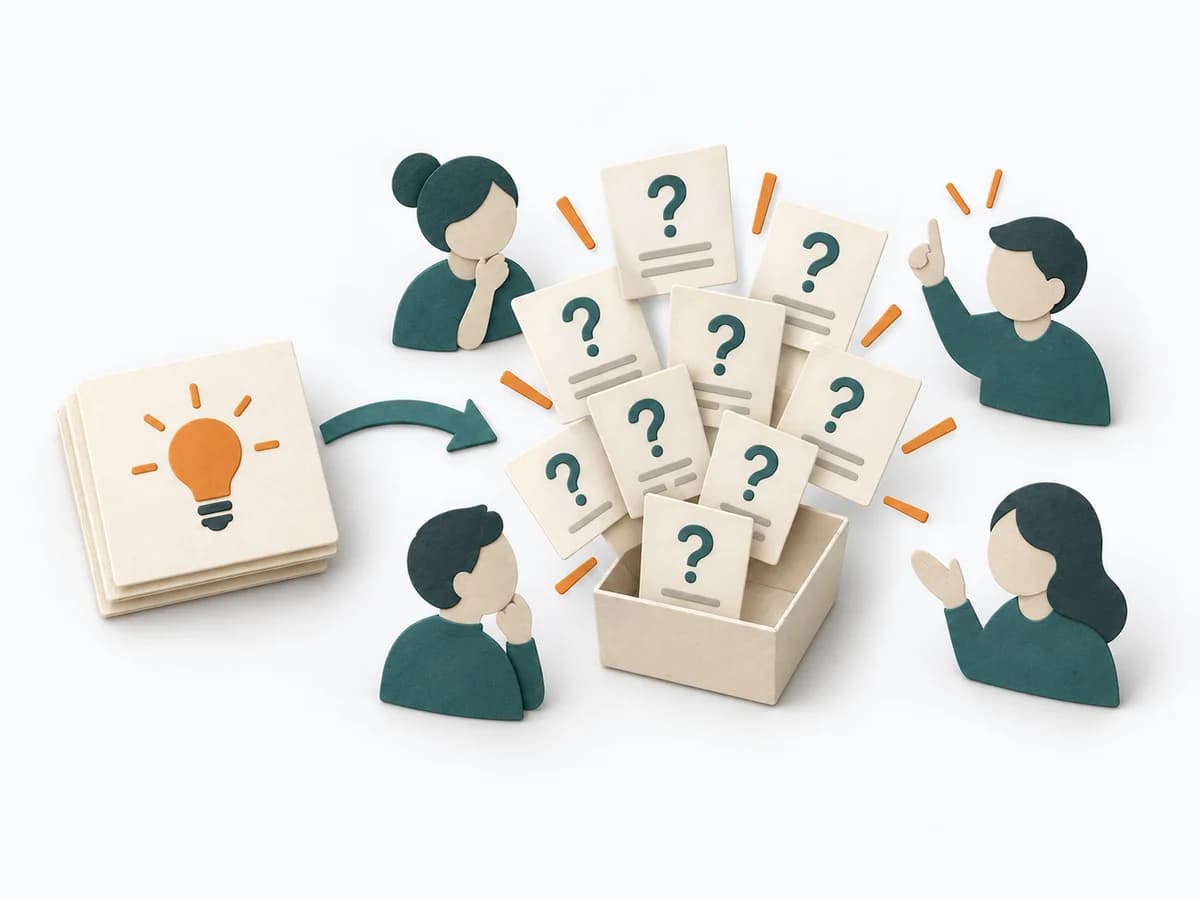 Facilitation Question Burst | 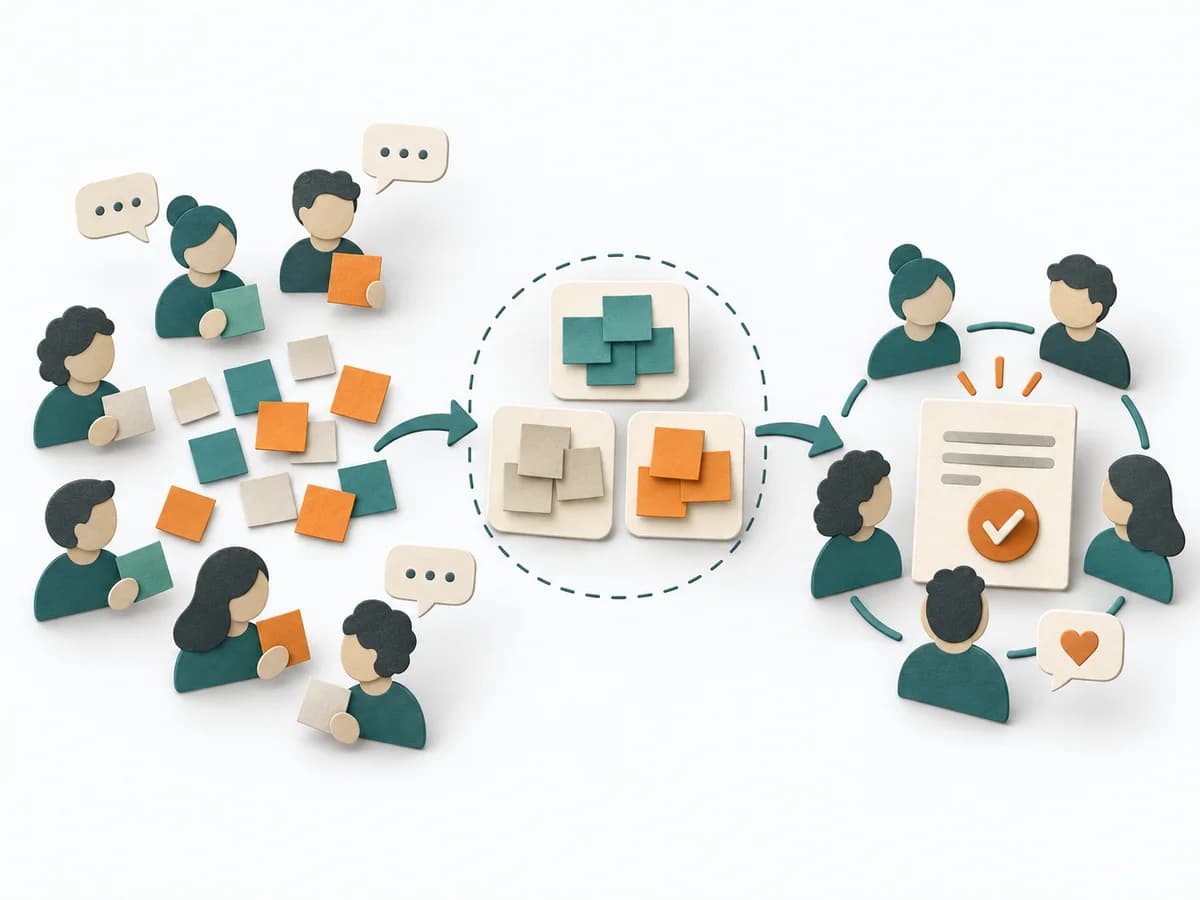 Facilitation Consensus Workshop | 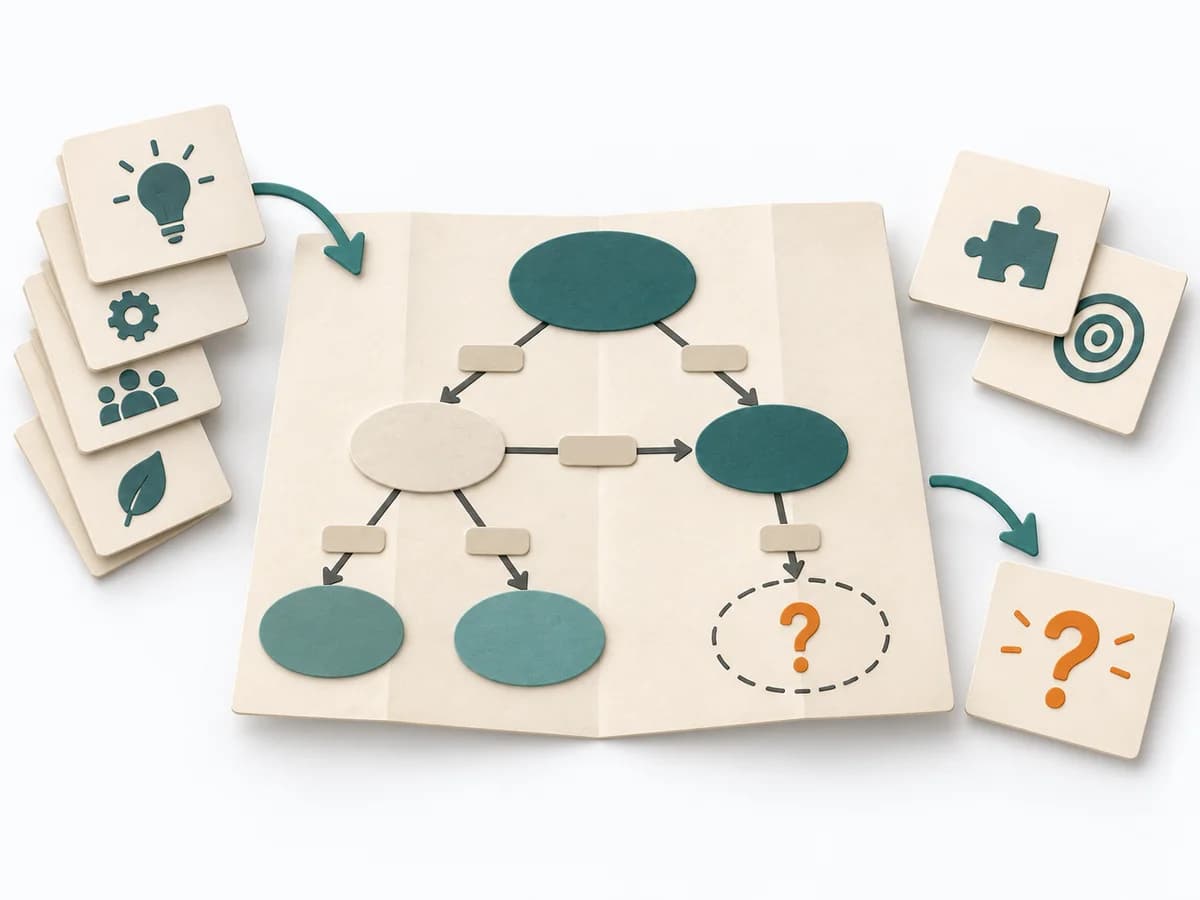 Knowledge Modeling Concept Mapping |
|---|---|---|---|---|
Purposedifferent | Knowledge Mapping makes knowledge, gaps, and transfer paths visible across a field. It fits when expertise should not just exist but also be findable and transferable. | When a problem gets covered up too quickly with answers, Question Burst puts the better question at the center. The format opens the thinking space before the group commits to an interpretation. | When a group needs a solid decision without outvoting individual factions, a Consensus Workshop creates a negotiable common ground. It makes agreement, reservations, and open tensions discussable at the same time. | Concept Mapping arranges terms and relationships in a network that makes subject-matter connections tangible. It fits when a topic needs to be understood structurally rather than linearly. |
Complexitydifferent | Medium | Low | Medium | Medium |
Timedifferent | 1-3 h | 15-30 min | 1-3 h | 1-2 h |
Participantsdifferent | 3-12 | 2-8 | 5-30 | 1-8 |
Formatdifferent | Workshop | Workshop | Workshop | Workshop + async |
Outputdifferent | Knowledge Map, Critical Knowledge Areas, Transfer Plan | Question List, Reframed Challenge, Learning Prompts | Consensus Clusters, Theme Titles, Priority Areas | Concept Map, Relationship Labels, Knowledge Gaps |
Tagsno overlap | KnowledgeMappingRisk | QuestionsReframingFacilitationSensemaking | FacilitationConsensusWorkshopAlignment | KnowledgeConceptsMappingSensemaking |