View methods side by side.
Choose up to four methods. Add them using the search and share the comparison by copying its link.
| Criterion | 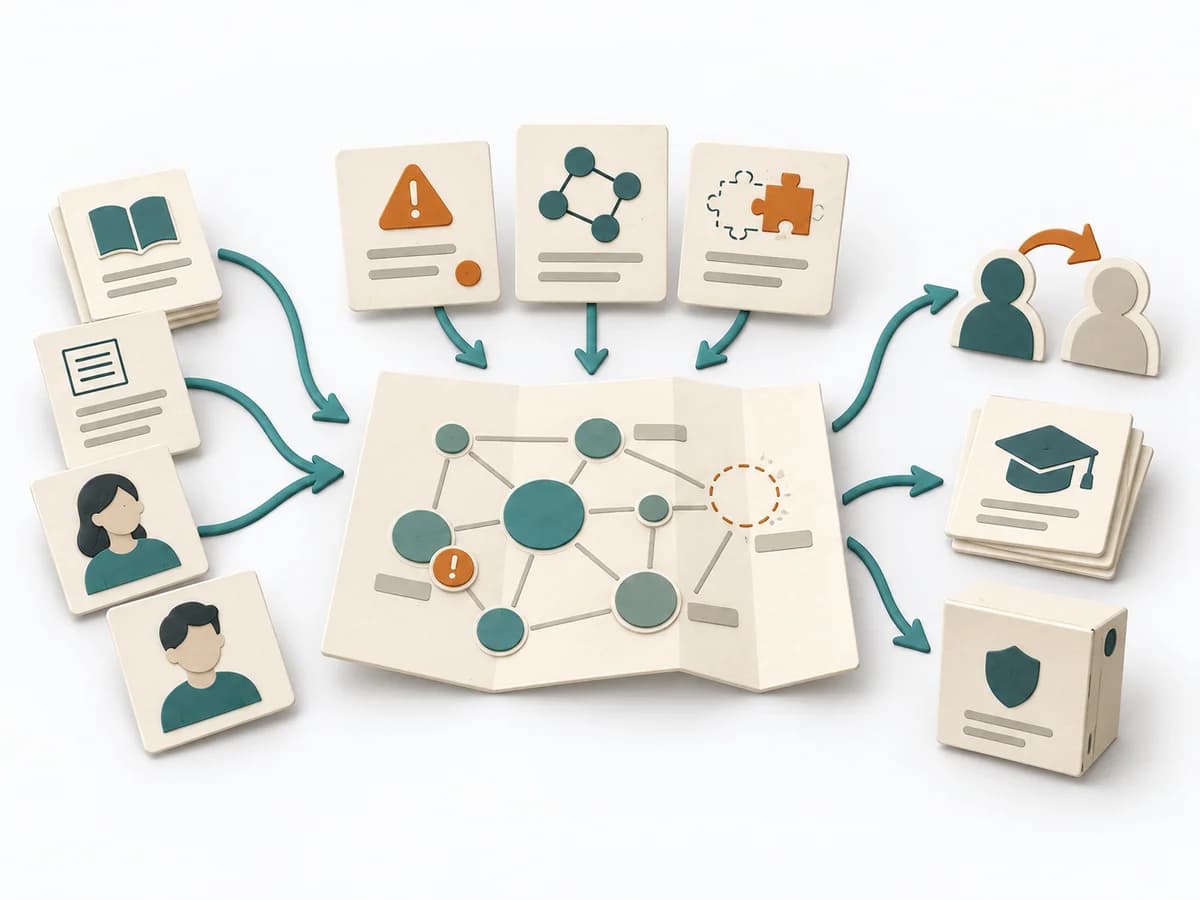 Knowledge Modeling Knowledge Mapping | 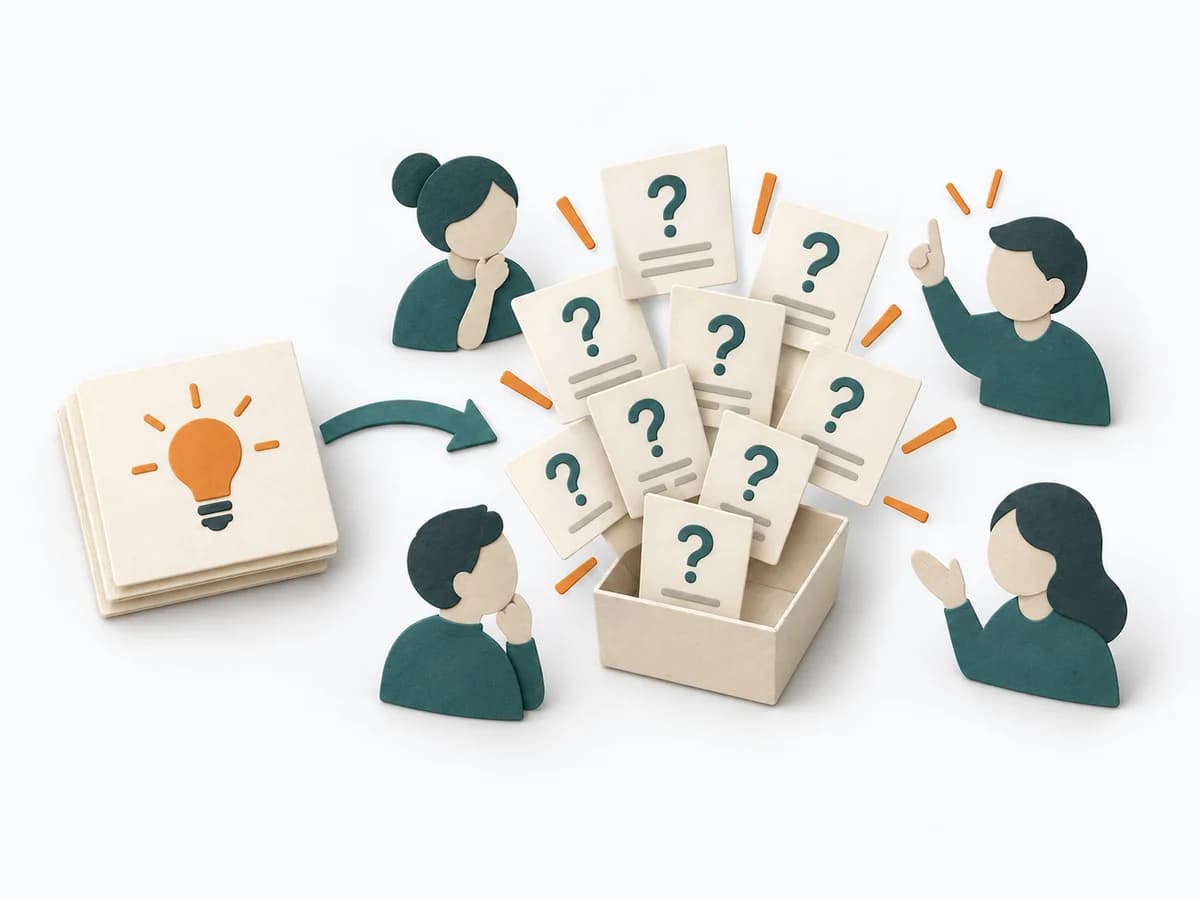 Facilitation Question Burst | 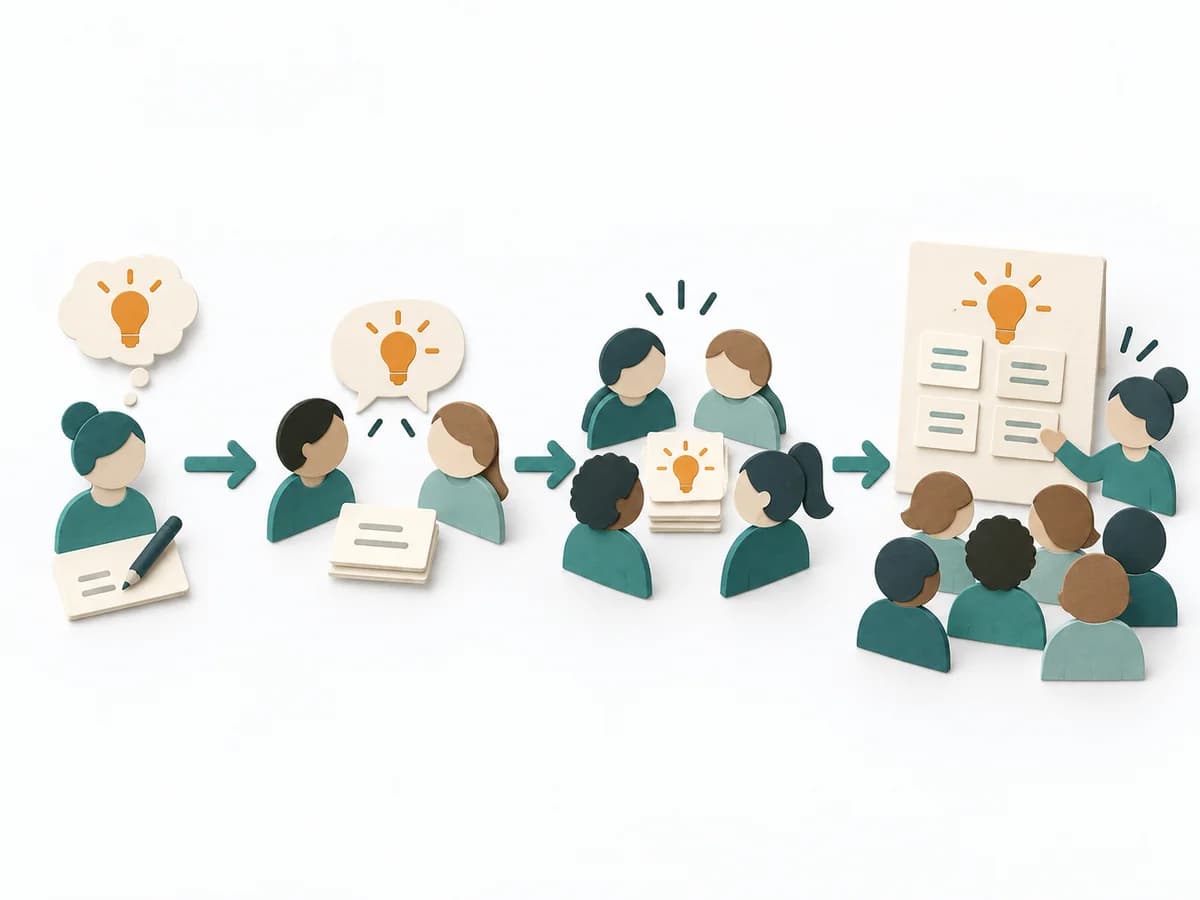 Facilitation 1-2-4-All | 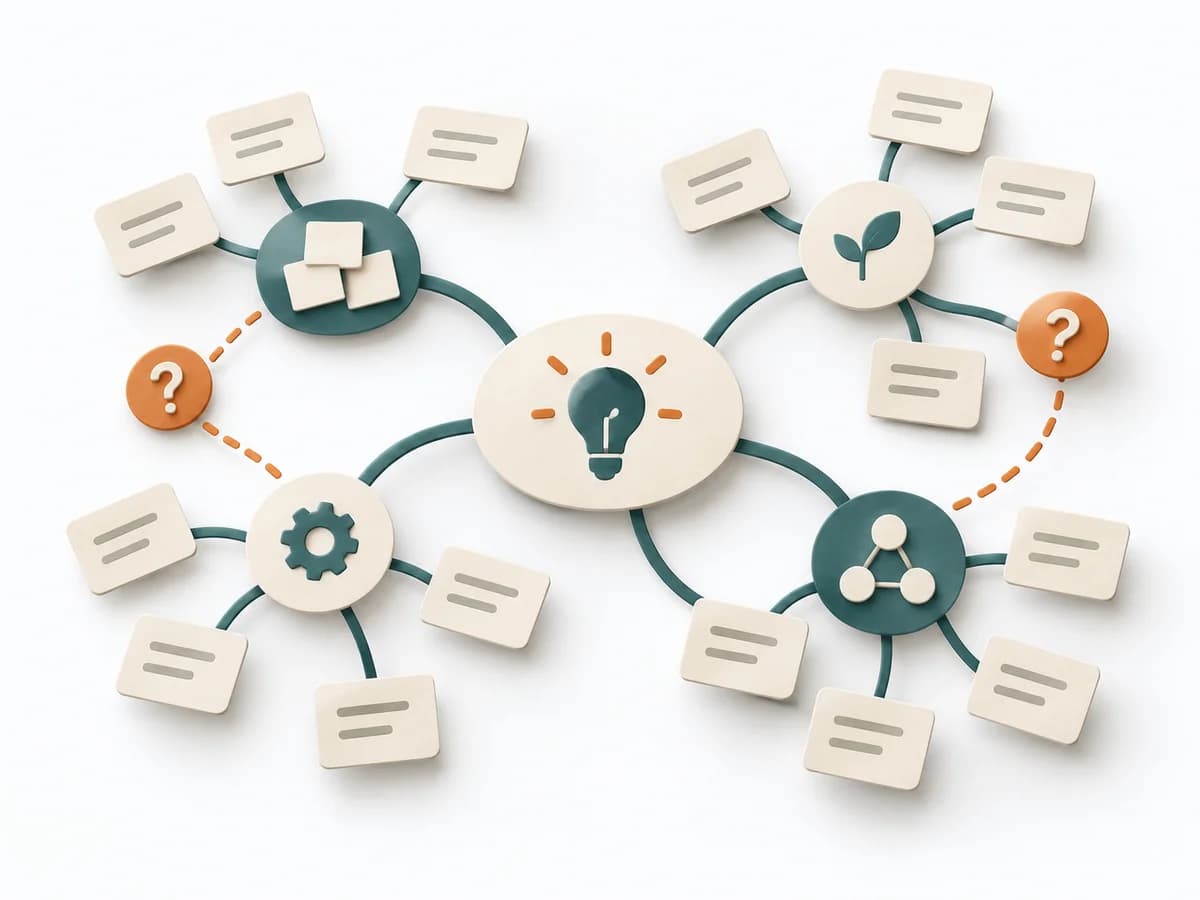 Facilitation Mind Mapping |
|---|---|---|---|---|
Purposedifferent | Knowledge Mapping makes knowledge, gaps, and transfer paths visible across a field. It fits when expertise should not just exist but also be findable and transferable. | When a problem gets covered up too quickly with answers, Question Burst puts the better question at the center. The format opens the thinking space before the group commits to an interpretation. | When many people in a group too rarely get to speak, 1-2-4-All distributes thinking time more fairly. The format builds participation step by step and makes quiet or still-unformed thoughts usable faster. | When a topic is still unclear and too many thoughts surface at once, Mind Mapping creates an open surface for ordering them. It makes connections, subtopics, and starting points visible without fixing them too early. |
Complexitydifferent | Medium | Low | Low | Low |
Timedifferent | 1-3 h | 15-30 min | 10-20 min | 15-45 min |
Participantsdifferent | 3-12 | 2-8 | 4-100+ | 1-10 |
Formatdifferent | Workshop | Workshop | Workshop | Workshop + async |
Outputdifferent | Knowledge Map, Critical Knowledge Areas, Transfer Plan | Question List, Reframed Challenge, Learning Prompts | Idea List, Shared Insights, Emergent Themes | Mind Map, Topic Clusters, Open Questions |
Tagsno overlap | KnowledgeMappingRisk | QuestionsReframingFacilitationSensemaking | FacilitationInclusionIdeation | BrainstormingIdeasMappingStructureFacilitation |