View methods side by side.
Choose up to four methods. Add them using the search and share the comparison by copying its link.
| Criterion | 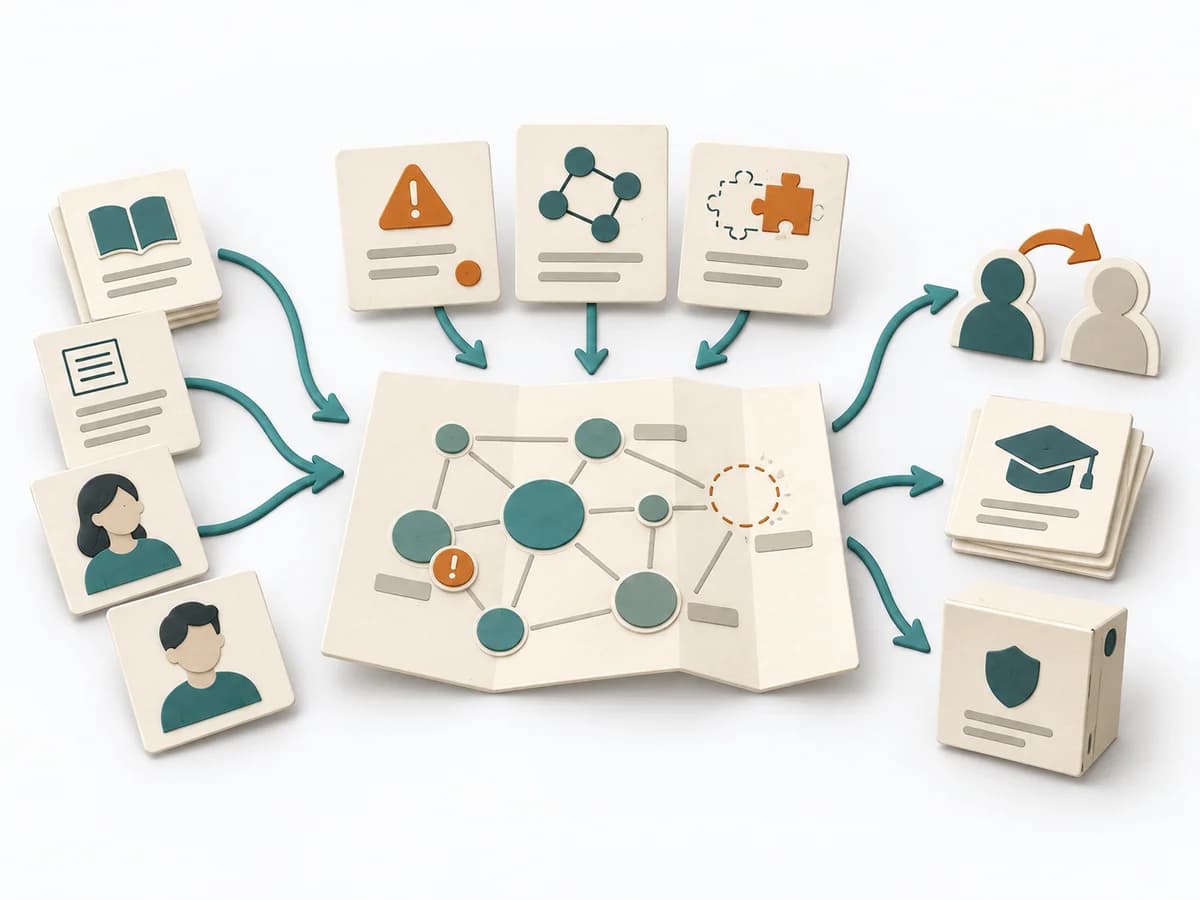 Knowledge Modeling Knowledge Mapping |  Facilitation Mind Mapping |  Facilitation Dot Voting | 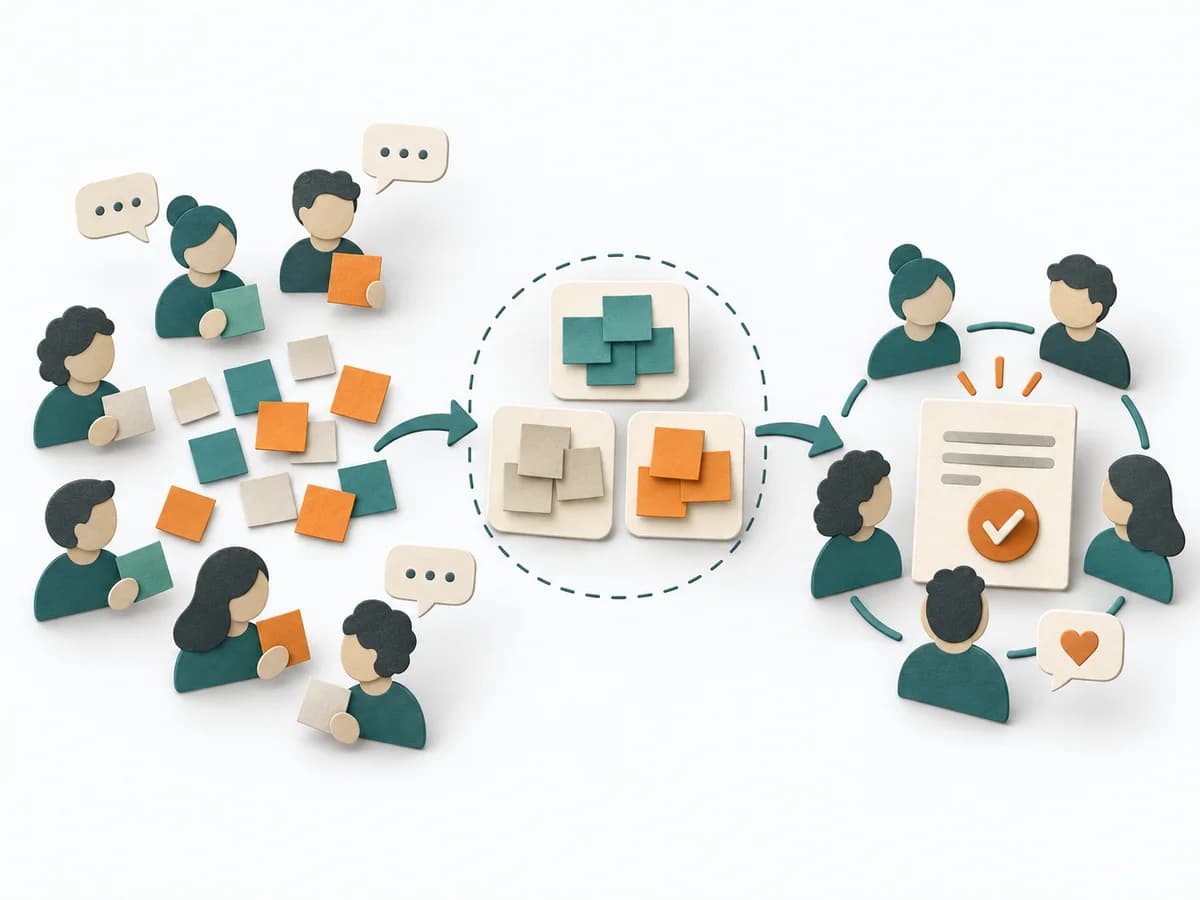 Facilitation Consensus Workshop |
|---|---|---|---|---|
Purposedifferent | Knowledge Mapping makes knowledge, gaps, and transfer paths visible across a field. It fits when expertise should not just exist but also be findable and transferable. | When a topic is still unclear and too many thoughts surface at once, Mind Mapping creates an open surface for ordering them. It makes connections, subtopics, and starting points visible without fixing them too early. | When a workshop has produced too many options and the group needs to condense quickly, dot voting makes preferences visible in a short time. It bundles individual votes into a solid signal for the next selection. | When a group needs a solid decision without outvoting individual factions, a Consensus Workshop creates a negotiable common ground. It makes agreement, reservations, and open tensions discussable at the same time. |
Complexitydifferent | Medium | Low | Low | Medium |
Timedifferent | 1-3 h | 15-45 min | 5-15 min | 1-3 h |
Participantsdifferent | 3-12 | 1-10 | 3-20 | 5-30 |
Formatdifferent | Workshop | Workshop + async | Workshop | Workshop |
Outputdifferent | Knowledge Map, Critical Knowledge Areas, Transfer Plan | Mind Map, Topic Clusters, Open Questions | Ranked list, Consensus signal, Shortlist | Consensus Clusters, Theme Titles, Priority Areas |
Tagsno overlap | KnowledgeMappingRisk | BrainstormingIdeasMappingStructureFacilitation | FacilitationVotingConsensusPrioritization | FacilitationConsensusWorkshopAlignment |