View methods side by side.
Choose up to four methods. Add them using the search and share the comparison by copying its link.
| Criterion | 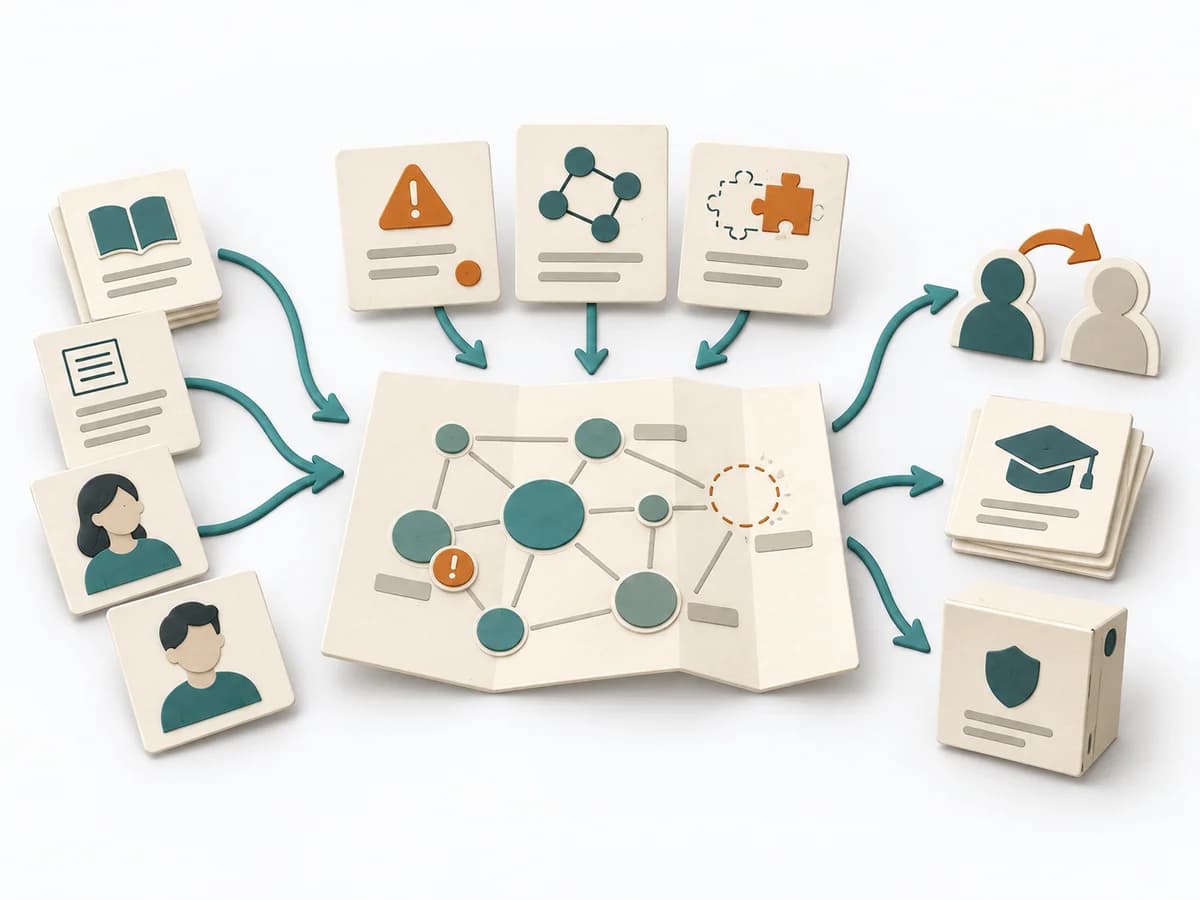 Knowledge Modeling Knowledge Mapping | 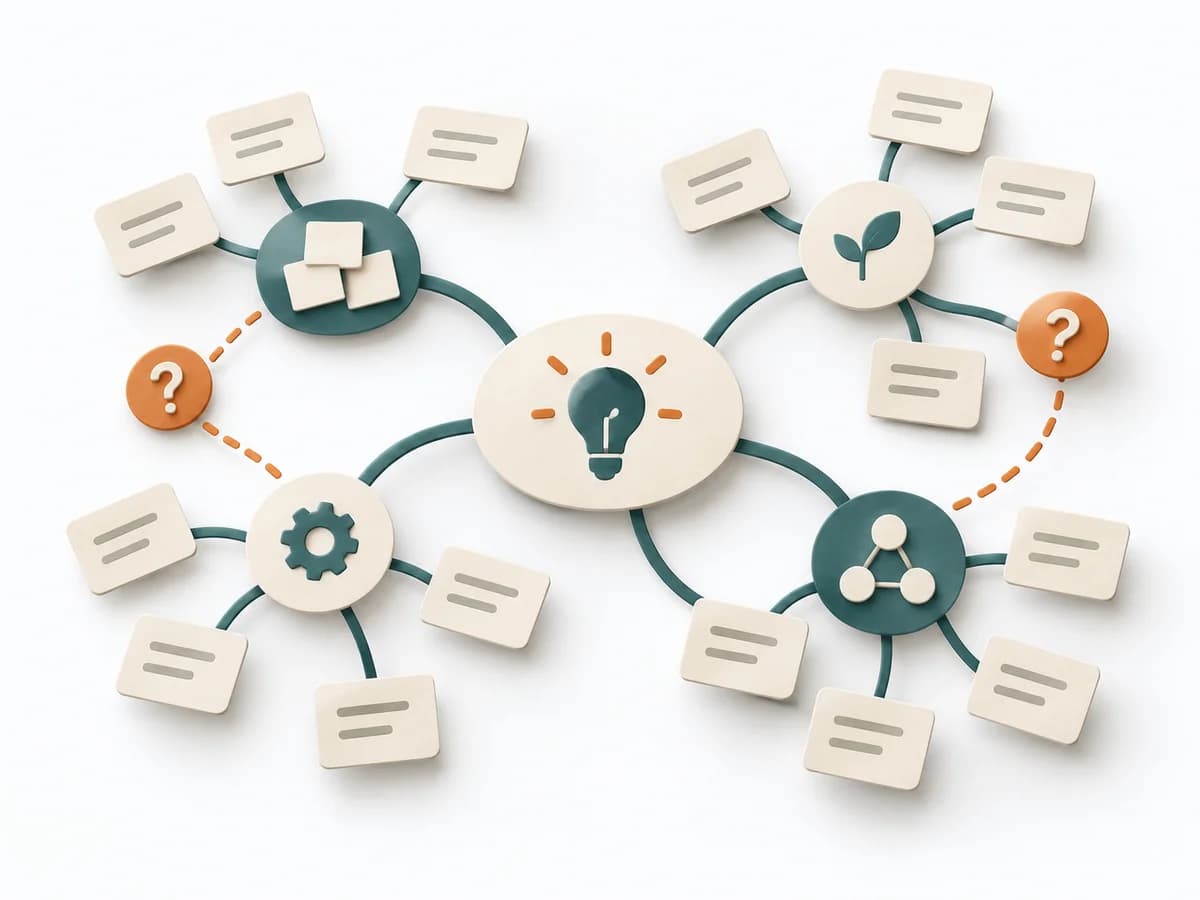 Facilitation Mind Mapping | 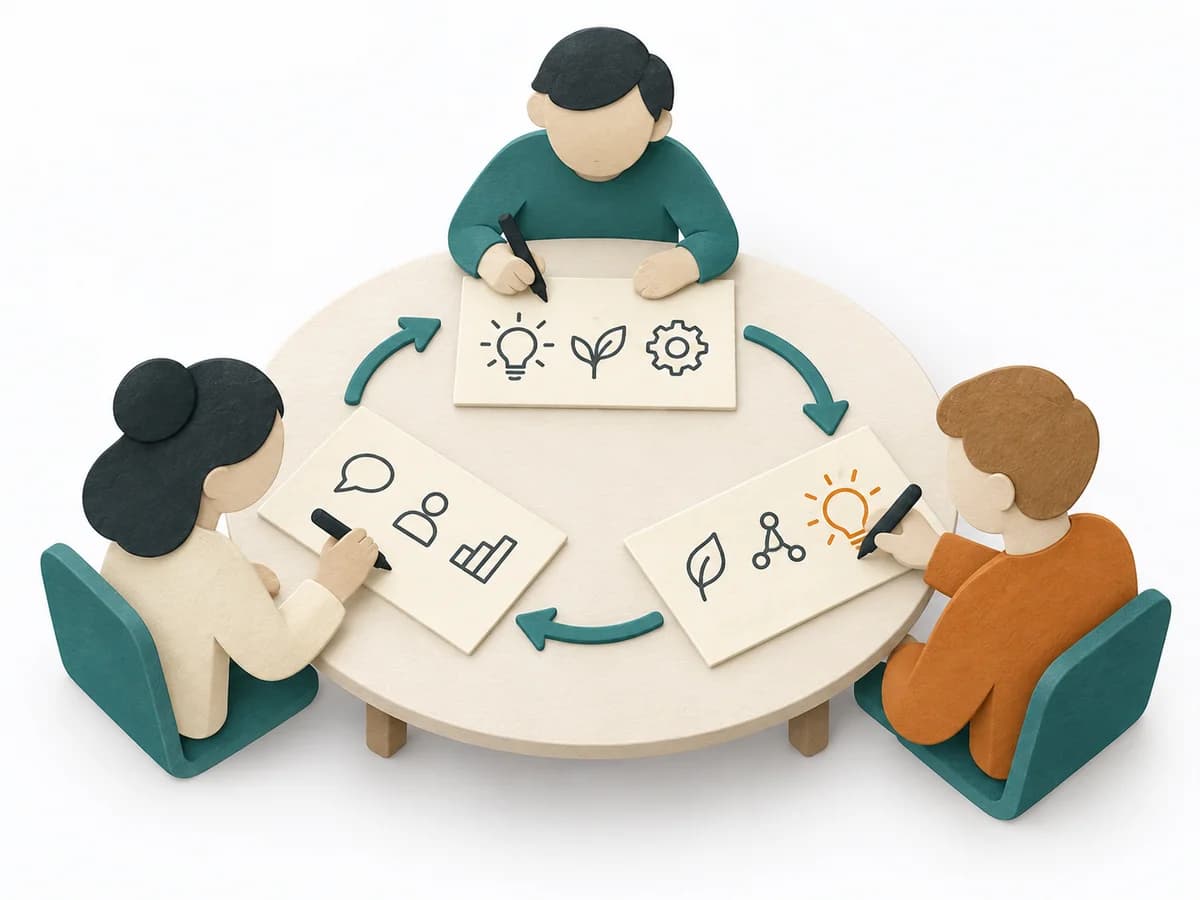 Innovation Brainwriting |  Knowledge Modeling Concept Mapping |
|---|---|---|---|---|
Purposedifferent | Knowledge Mapping makes knowledge, gaps, and transfer paths visible across a field. It fits when expertise should not just exist but also be findable and transferable. | When a topic is still unclear and too many thoughts surface at once, Mind Mapping creates an open surface for ordering them. It makes connections, subtopics, and starting points visible without fixing them too early. | When loud voices or hierarchy distort the idea search, the method creates a quiet entry into joint development. It gives everyone thinking space and gathers contributions without social brakes, making diversity more visible and easier to build on. | Concept Mapping arranges terms and relationships in a network that makes subject-matter connections tangible. It fits when a topic needs to be understood structurally rather than linearly. |
Complexitydifferent | Medium | Low | Low | Medium |
Timedifferent | 1-3 h | 15-45 min | 15-30 min | 1-2 h |
Participantsdifferent | 3-12 | 1-10 | 3-12 | 1-8 |
Formatdifferent | Workshop | Workshop + async | Workshop + async | Workshop + async |
Outputdifferent | Knowledge Map, Critical Knowledge Areas, Transfer Plan | Mind Map, Topic Clusters, Open Questions | Idea sheets, Expanded concepts, Prioritized list | Concept Map, Relationship Labels, Knowledge Gaps |
Tagsno overlap | KnowledgeMappingRisk | BrainstormingIdeasMappingStructureFacilitation | BrainstormingCollaborationInclusionIdeas | KnowledgeConceptsMappingSensemaking |