View methods side by side.
Choose up to four methods. Add them using the search and share the comparison by copying its link.
| Criterion | 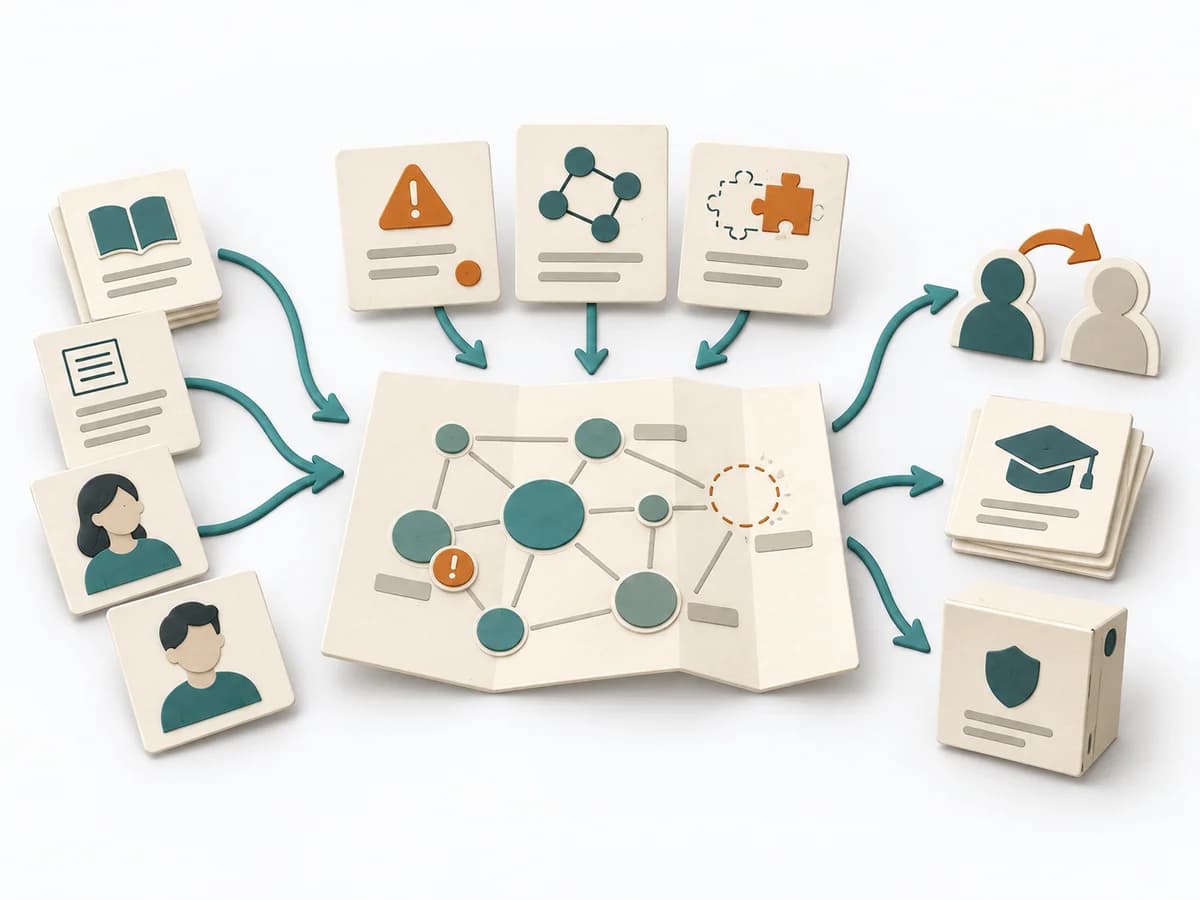 Knowledge Modeling Knowledge Mapping | 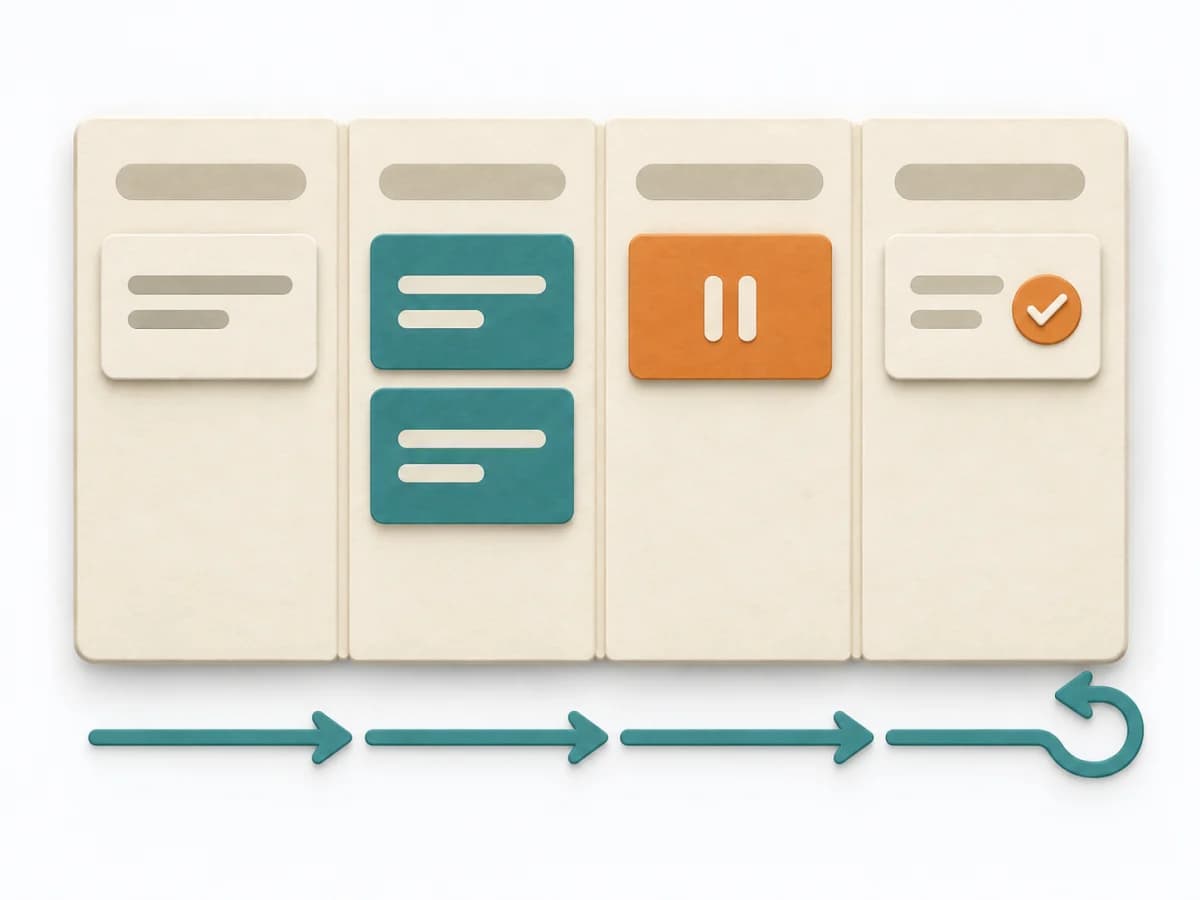 Engineering Kanban | 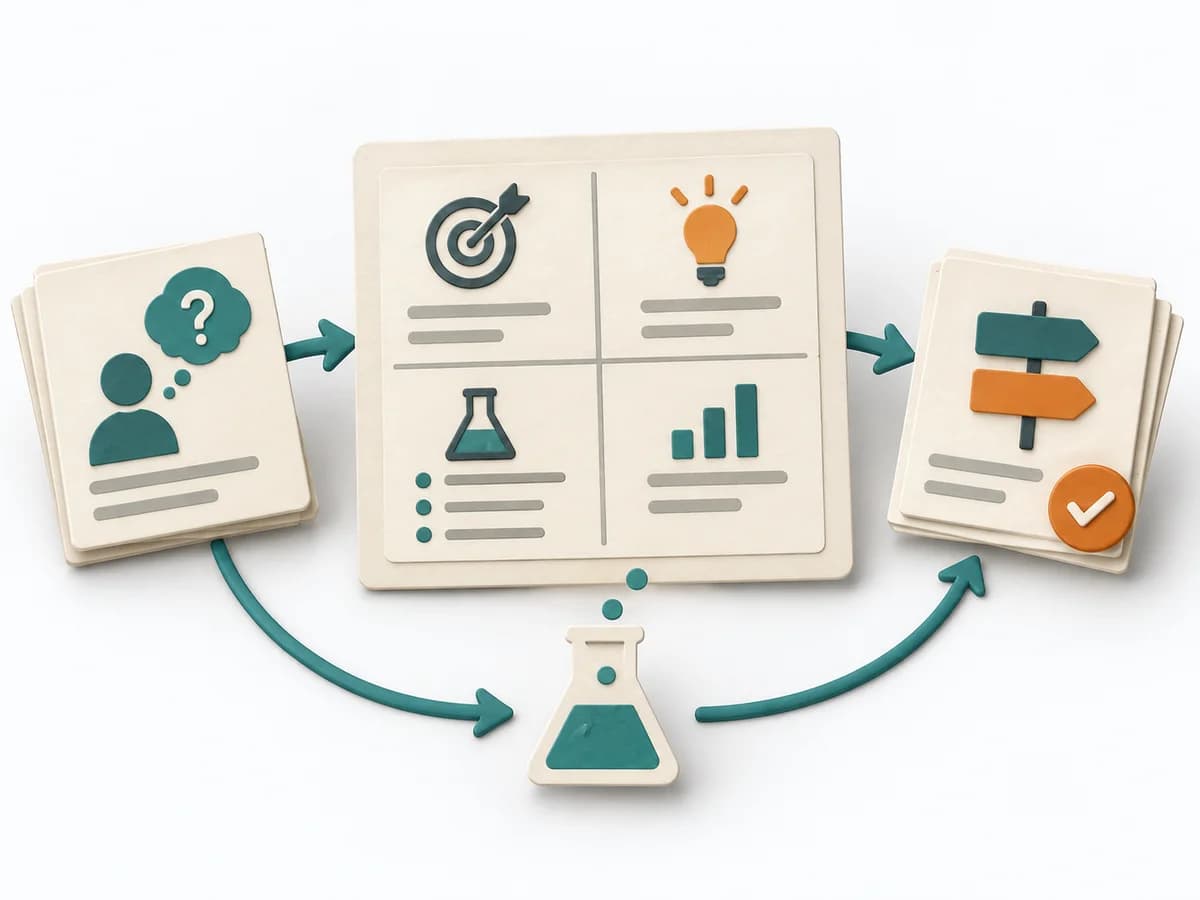 Product Discovery Experiment Canvas | 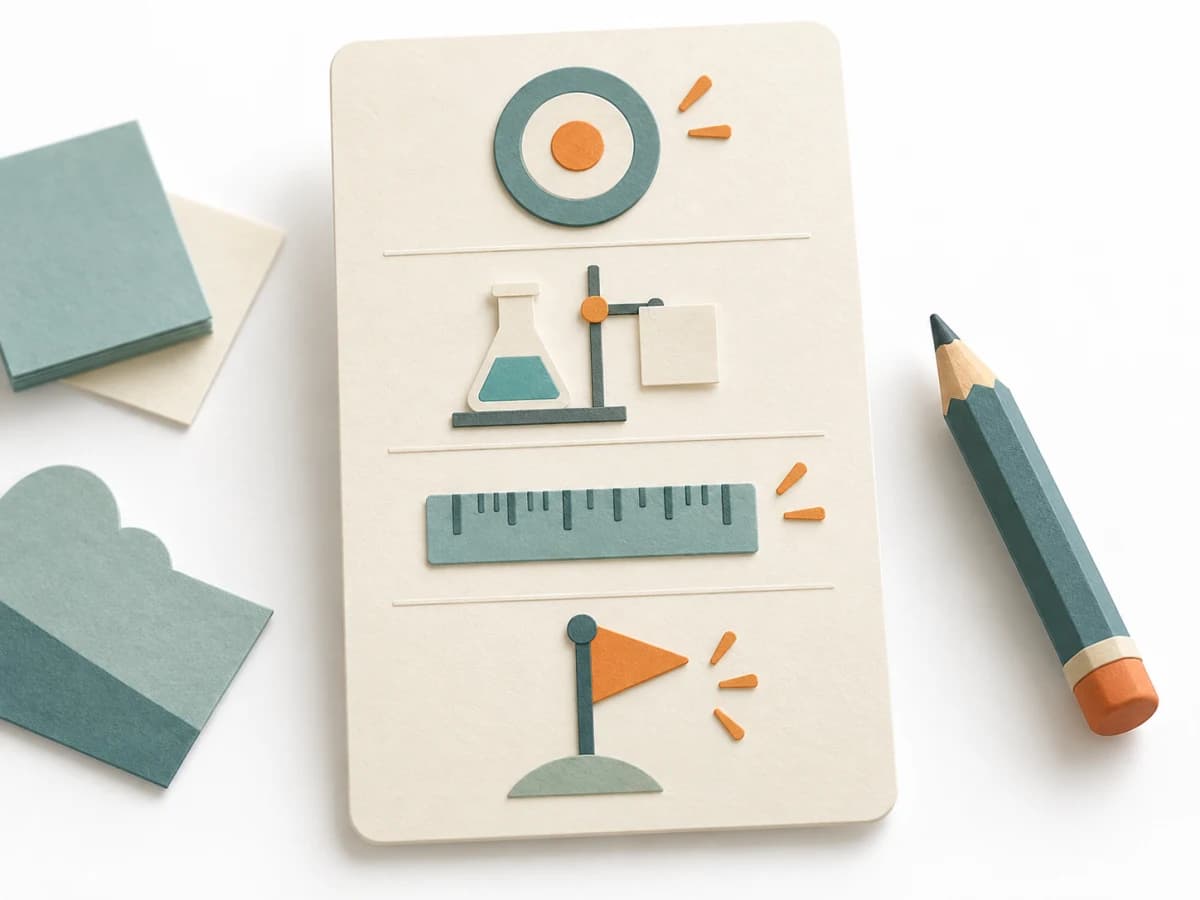 Product Discovery Test Card |
|---|---|---|---|---|
Purposedifferent | Knowledge Mapping makes knowledge, gaps, and transfer paths visible across a field. It fits when expertise should not just exist but also be findable and transferable. | When work sits in too many parallel streams, throughput suffers and no one sees the bottlenecks. Kanban makes the flow of work visible and limits overload so a system becomes calmer and more predictable. | When experiments become unreadable after the fact, it arranges hypothesis, signal, and learning goal on a single canvas. It separates problem, assumption, solution, and evidence. The result is captured as a Completed Experiment Canvas and a Success Metric. | The Test Card turns a critical assumption into a testable claim and specifies in advance which result counts as success. |
Complexitydifferent | Medium | Medium | Low | Low |
Timedifferent | 1-3 h | Ongoing | 30-60 min | 20-35 min |
Participantsdifferent | 3-12 | 2-12 | 1-5 | 1-5 |
Formatdifferent | Workshop | Workshop + async | Workshop + async | Workshop + async |
Outputdifferent | Knowledge Map, Critical Knowledge Areas, Transfer Plan | Kanban board, WIP policies, Flow metrics | Completed Experiment Canvas, Success Metric | Test Card with a pre-set threshold |
Tagsno overlap | KnowledgeMappingRisk | FlowVisual managementDelivery | ExperimentsValidationDiscoveryHypothesis | ExperimentsValidationDiscoveryHypothesis |