View methods side by side.
Choose up to four methods. Add them using the search and share the comparison by copying its link.
| Criterion |  Knowledge Modeling Knowledge Mapping | 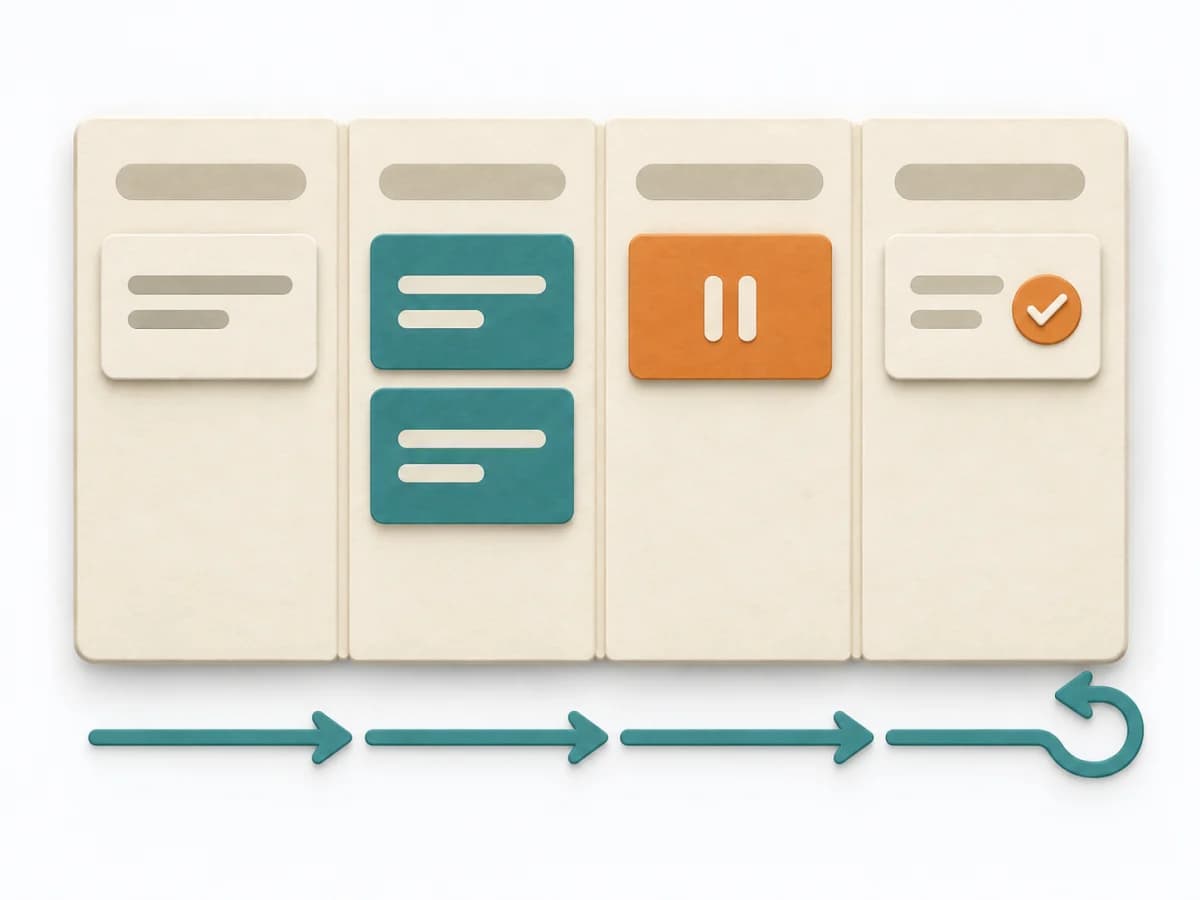 Engineering Kanban |  Decision Making Assumption Surfacing |  Product Strategy DIBB |
|---|---|---|---|---|
Purposedifferent | Knowledge Mapping makes knowledge, gaps, and transfer paths visible across a field. It fits when expertise should not just exist but also be findable and transferable. | When work sits in too many parallel streams, throughput suffers and no one sees the bottlenecks. Kanban makes the flow of work visible and limits overload so a system becomes calmer and more predictable. | Plans often contain assumptions that were never openly stated and remain dangerous precisely because of that. Assumption Surfacing makes these silent premises visible and prioritizes which of them carry the initiative or could sink it. | DIBB helps clarify target groups, value, goals, and priorities by making the logic behind a decision explicit. It captures results as a DIBB document, belief list, bet list, and learning report. |
Complexitydifferent | Medium | Medium | Low | Low |
Timedifferent | 1-3 h | Ongoing | 45-90 min | 1-2 h |
Participantsdifferent | 3-12 | 2-12 | 2-8 | 2-8 |
Formatdifferent | Workshop | Workshop + async | Workshop + async | Workshop + async |
Outputdifferent | Knowledge Map, Critical Knowledge Areas, Transfer Plan | Kanban board, WIP policies, Flow metrics | Assumption List, Critical Assumptions, Learning Plan | DIBB document, Belief list, Bet list, Learning report |
Tagsno overlap | KnowledgeMappingRisk | FlowVisual managementDelivery | AssumptionsRiskDecisionDiscovery | StrategyDecisionAssumptionsHypothesis |