View methods side by side.
Choose up to four methods. Add them using the search and share the comparison by copying its link.
| Criterion |  Knowledge Modeling Knowledge Mapping | 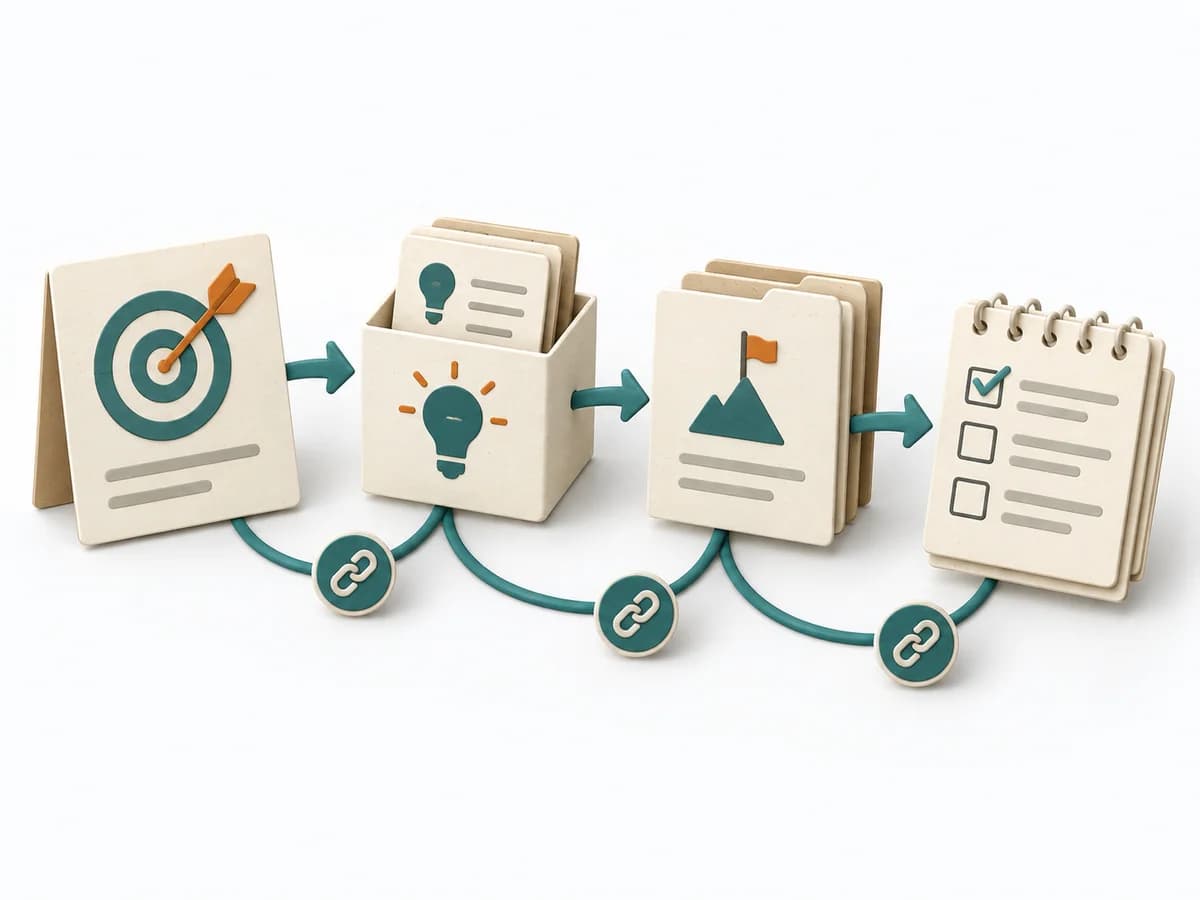 Product Strategy GIST Planning | 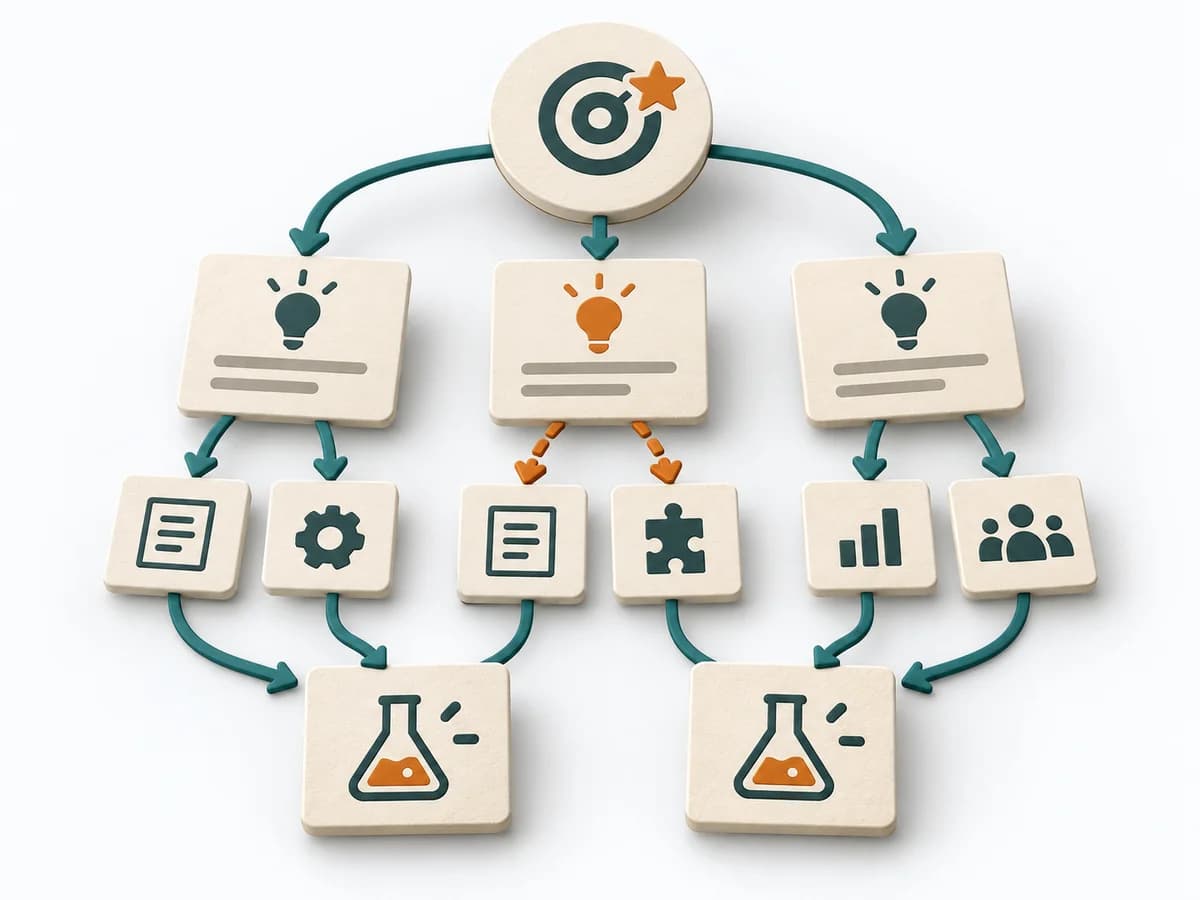 Product Discovery Opportunity Solution Tree | 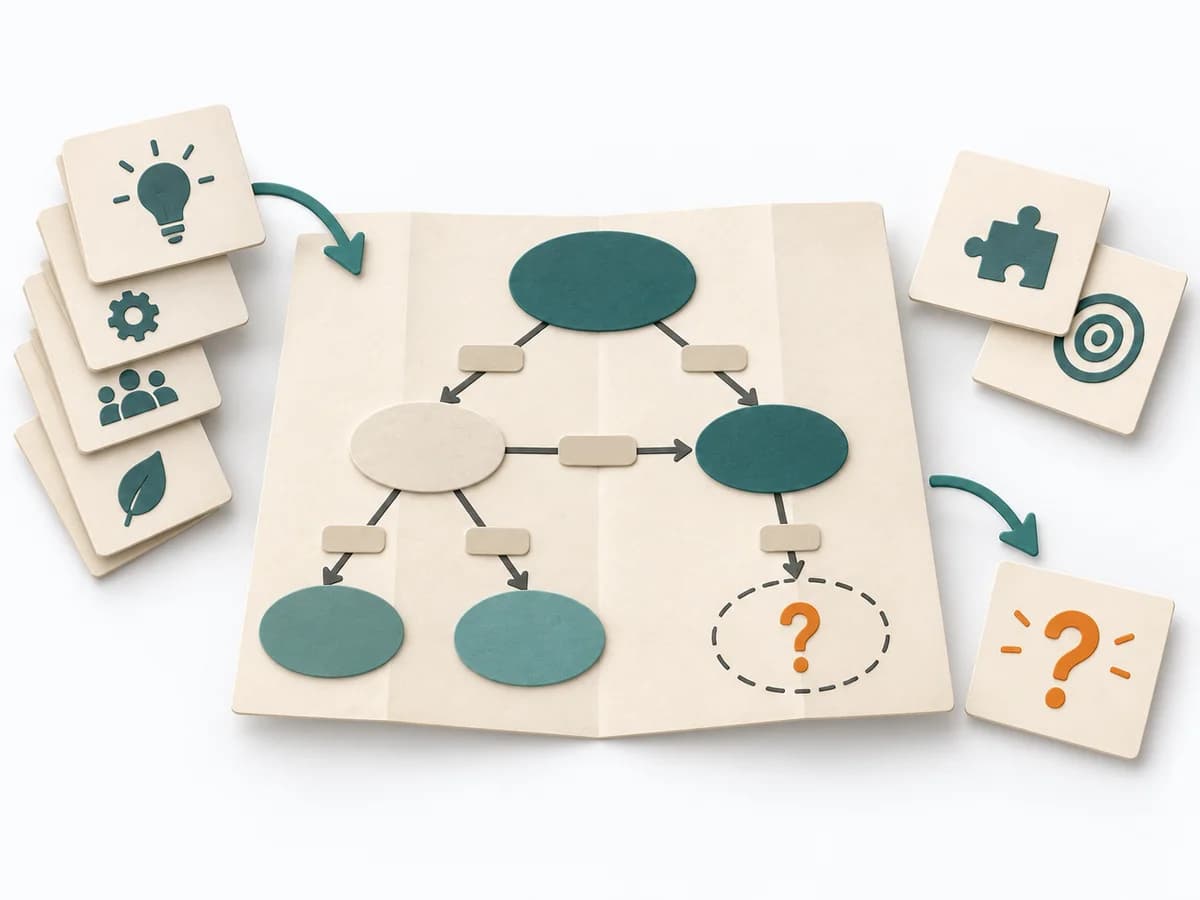 Knowledge Modeling Concept Mapping |
|---|---|---|---|---|
Purposedifferent | Knowledge Mapping makes knowledge, gaps, and transfer paths visible across a field. It fits when expertise should not just exist but also be findable and transferable. | GIST Planning helps clarify target groups, value, goals, and priorities. It links customer value, product logic, and decision priorities, and captures the result as goals, an idea bank, and a step-project list. | When discovery keeps swinging between goals, ideas, and learning loops, it creates clear steering logic. It connects the desired outcome, opportunities, and experiments into a legible structure. | Concept Mapping arranges terms and relationships in a network that makes subject-matter connections tangible. It fits when a topic needs to be understood structurally rather than linearly. |
Complexitysame | Medium | Medium | Medium | Medium |
Timedifferent | 1-3 h | Wochen bis Monate je Goal | 1-2 h Setup, laufend | 1-2 h |
Participantsdifferent | 3-12 | 3-10 | 2-6 | 1-8 |
Formatdifferent | Workshop | Workshop + async | Workshop + async | Workshop + async |
Outputdifferent | Knowledge Map, Critical Knowledge Areas, Transfer Plan | Goals, Idea bank, Step-project list, Tasks, Learning reports | Opportunity Solution Tree, Experiment Backlog, Learning Log | Concept Map, Relationship Labels, Knowledge Gaps |
Tagsno overlap | KnowledgeMappingRisk | RoadmapOutcomesPlanningExperiments | DiscoveryOutcomesExperimentsOpportunity | KnowledgeConceptsMappingSensemaking |