View methods side by side.
Choose up to four methods. Add them using the search and share the comparison by copying its link.
| Criterion | 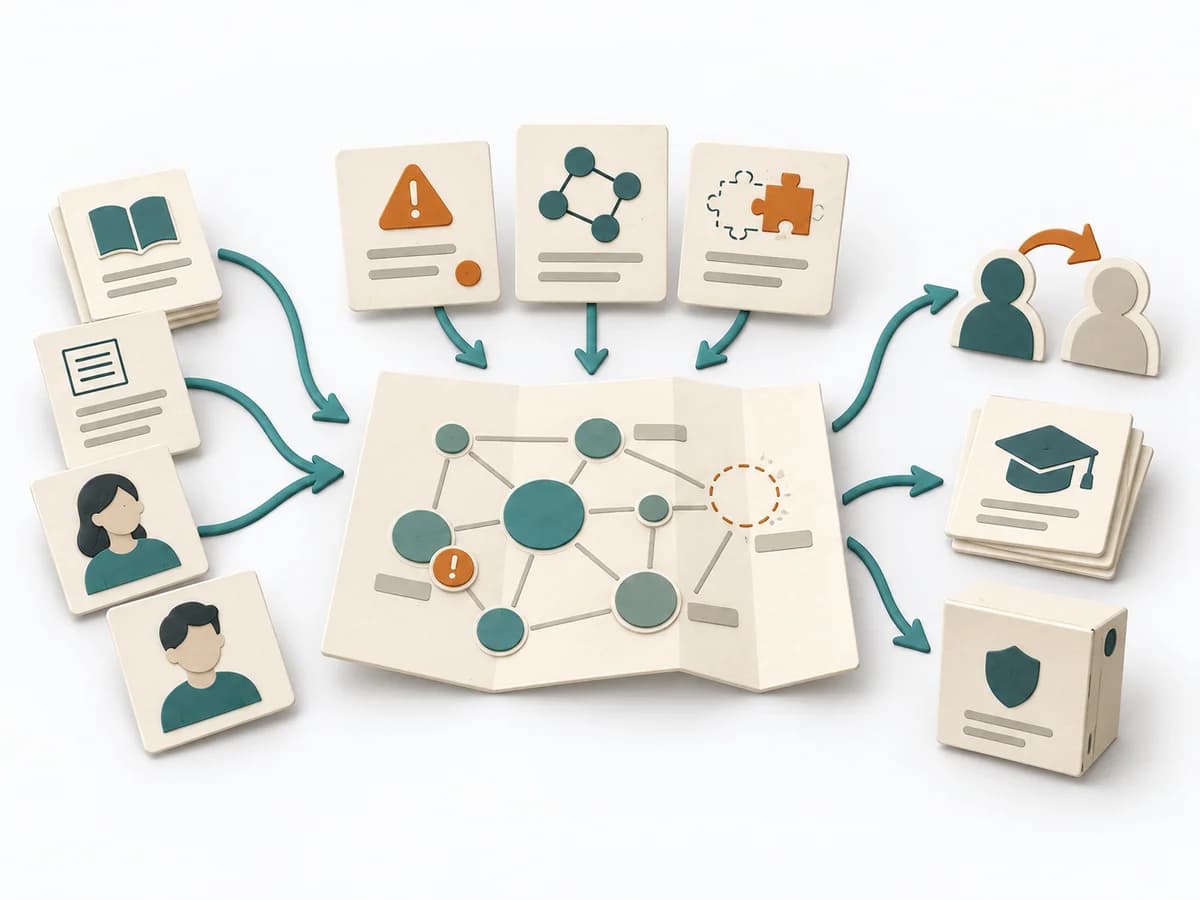 Knowledge Modeling Knowledge Mapping | 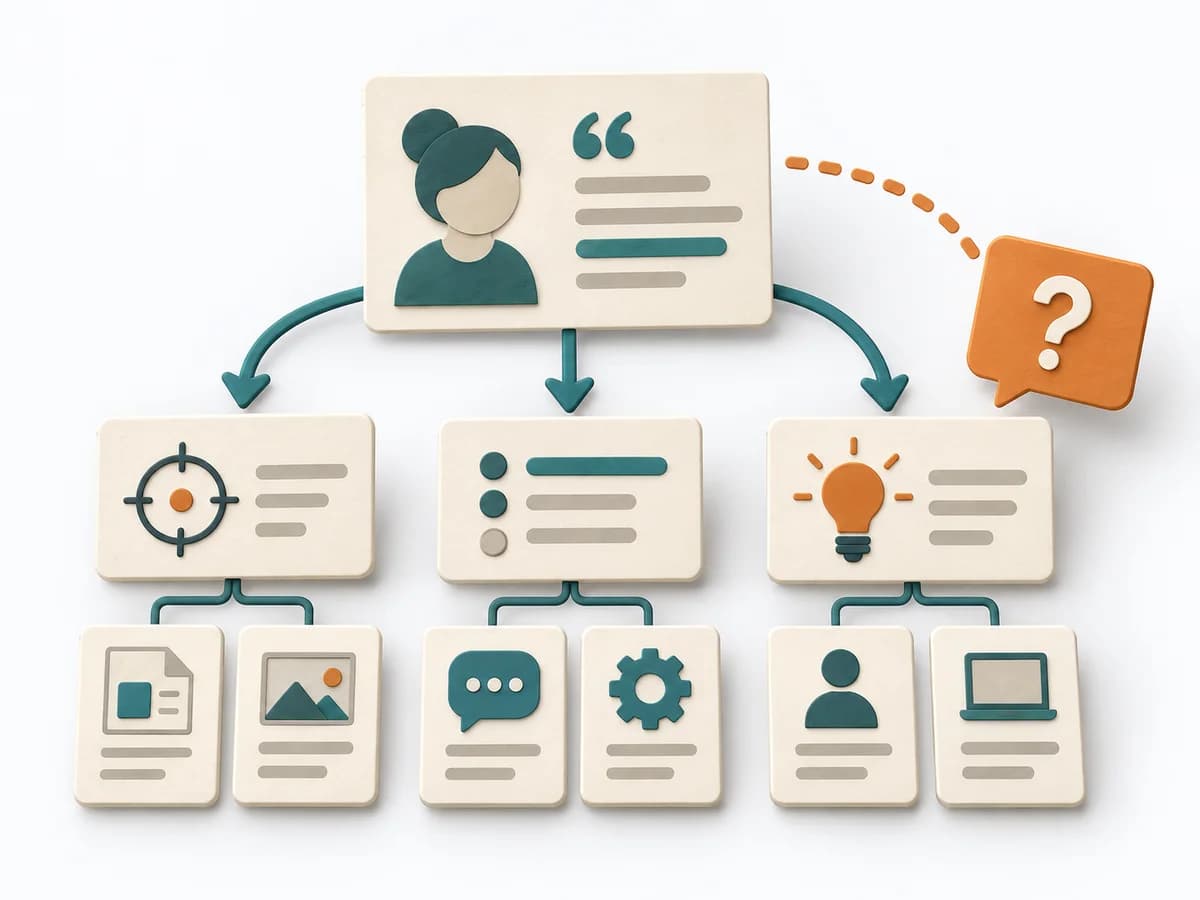 Agile Example Mapping | 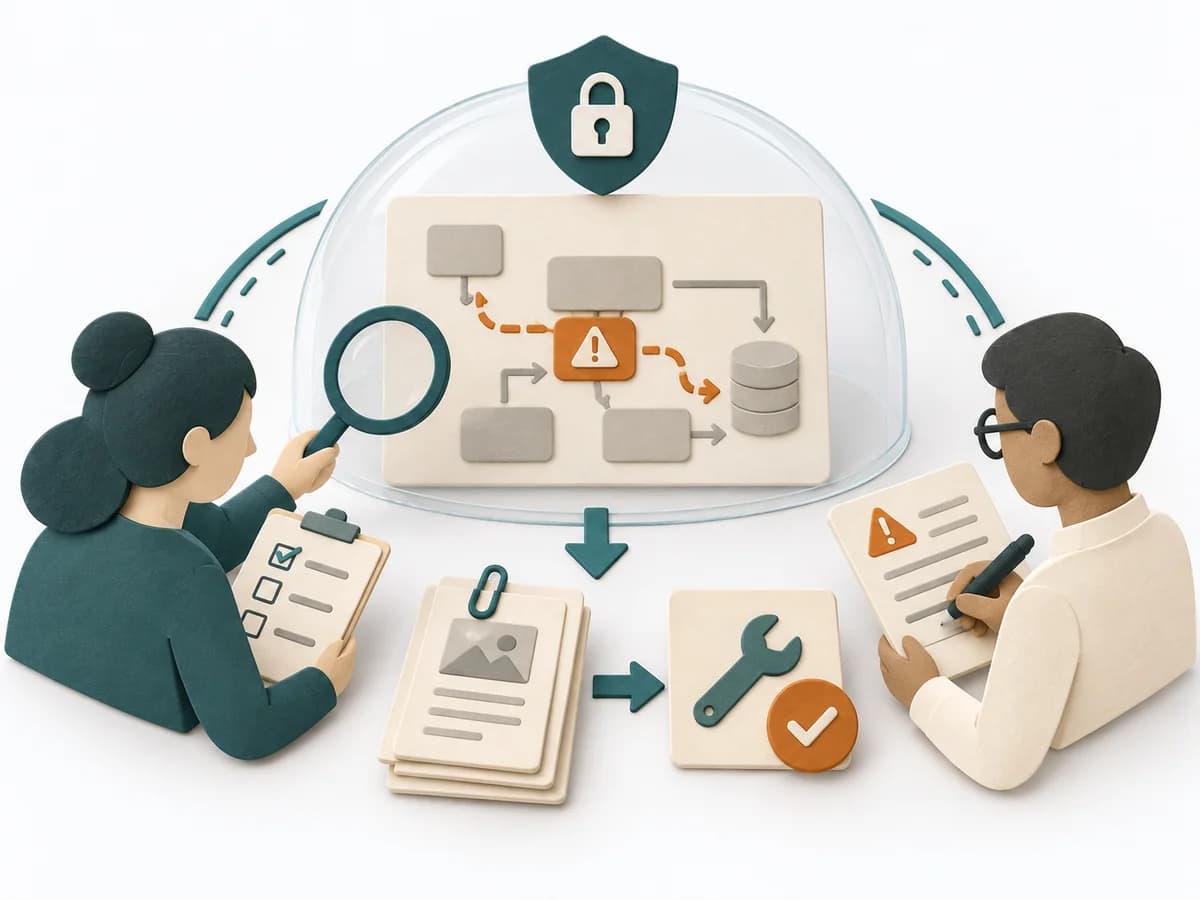 Decision Making Red Teaming | 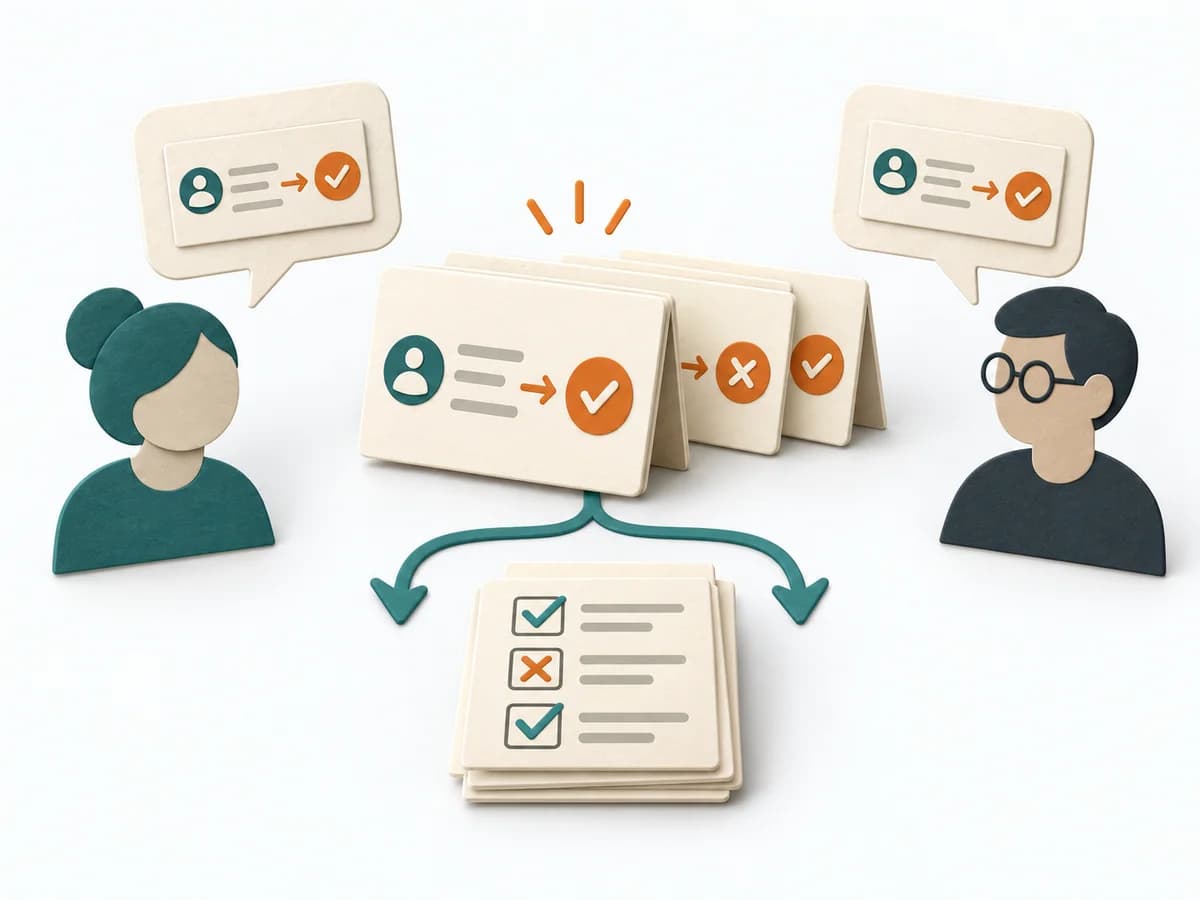 Agile Specification by Example |
|---|---|---|---|---|
Purposedifferent | Knowledge Mapping makes knowledge, gaps, and transfer paths visible across a field. It fits when expertise should not just exist but also be findable and transferable. | When a story carries business rules and exceptions, it brings clarity before implementation. It makes examples, open questions, and boundaries visible enough that the logic becomes jointly sound. | For strategic decisions with high reach, agreement and gut feeling are often not enough. Red teaming brings deliberate opposition into the situation and tests where a plan breaks under real counterarguments. | When business rules need to become precise, it ties language, example, and test together. It sorts work by value, risk, and delivery ability. The result is captured as an Example Table and Acceptance Tests. |
Complexitydifferent | Medium | Low | High | Medium |
Timedifferent | 1-3 h | 30-60 min | 1-4 h | 60-90 min pro Feature |
Participantsdifferent | 3-12 | 3-7 | 3-8 | 3-6 |
Formatsame | Workshop | Workshop | Workshop | Workshop |
Outputdifferent | Knowledge Map, Critical Knowledge Areas, Transfer Plan | Example Map, Acceptance Criteria, Open Questions | Challenge Findings, Risk Register, Mitigation Plan | Example Table, Acceptance Tests |
Tagsno overlap | KnowledgeMappingRisk | Behavior-Driven DevelopmentRequirementsExamplesRefinement | RiskDecisionSensemaking | AgileRequirementsExamplesBehavior-Driven Development |