View methods side by side.
Choose up to four methods. Add them using the search and share the comparison by copying its link.
| Criterion |  Knowledge Modeling Knowledge Mapping |  Product Discovery Assumption Mapping | 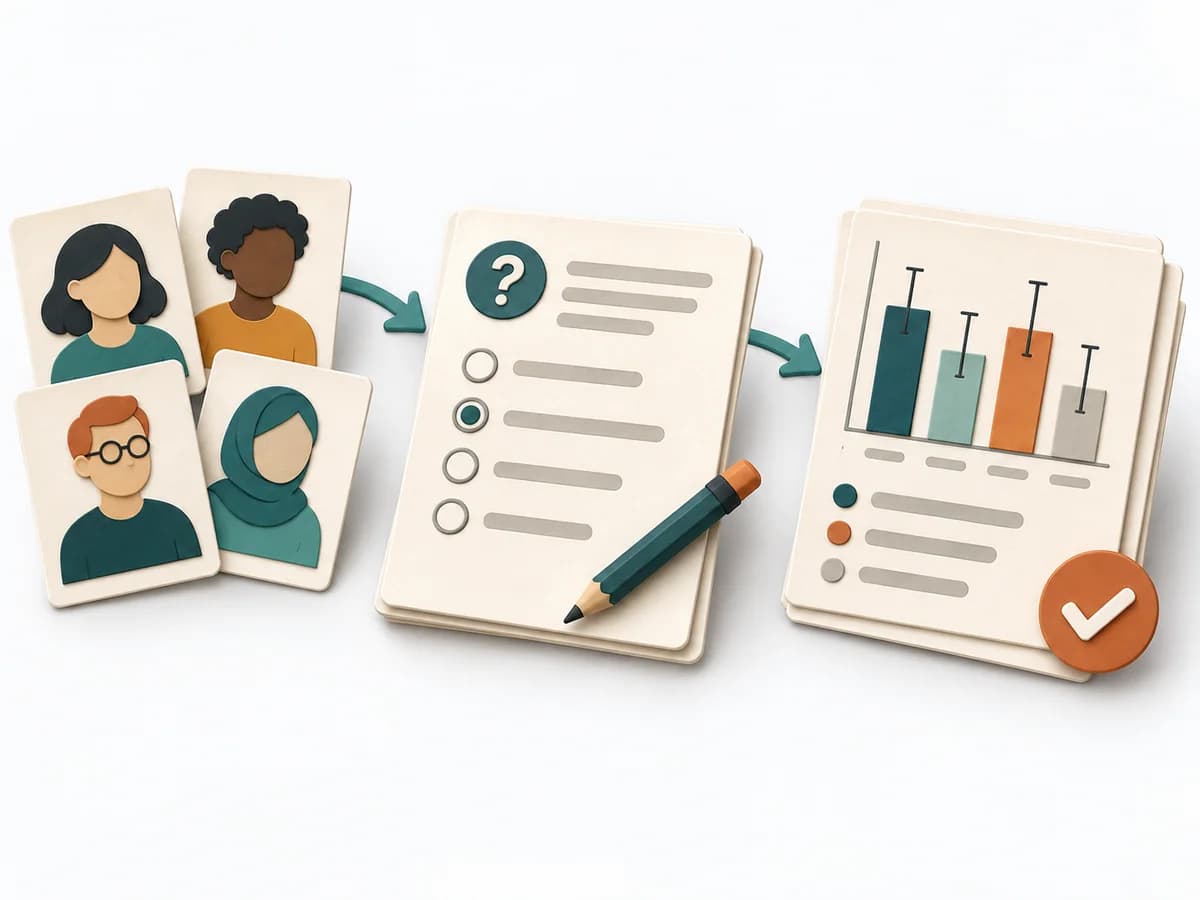 UX Research Surveys | 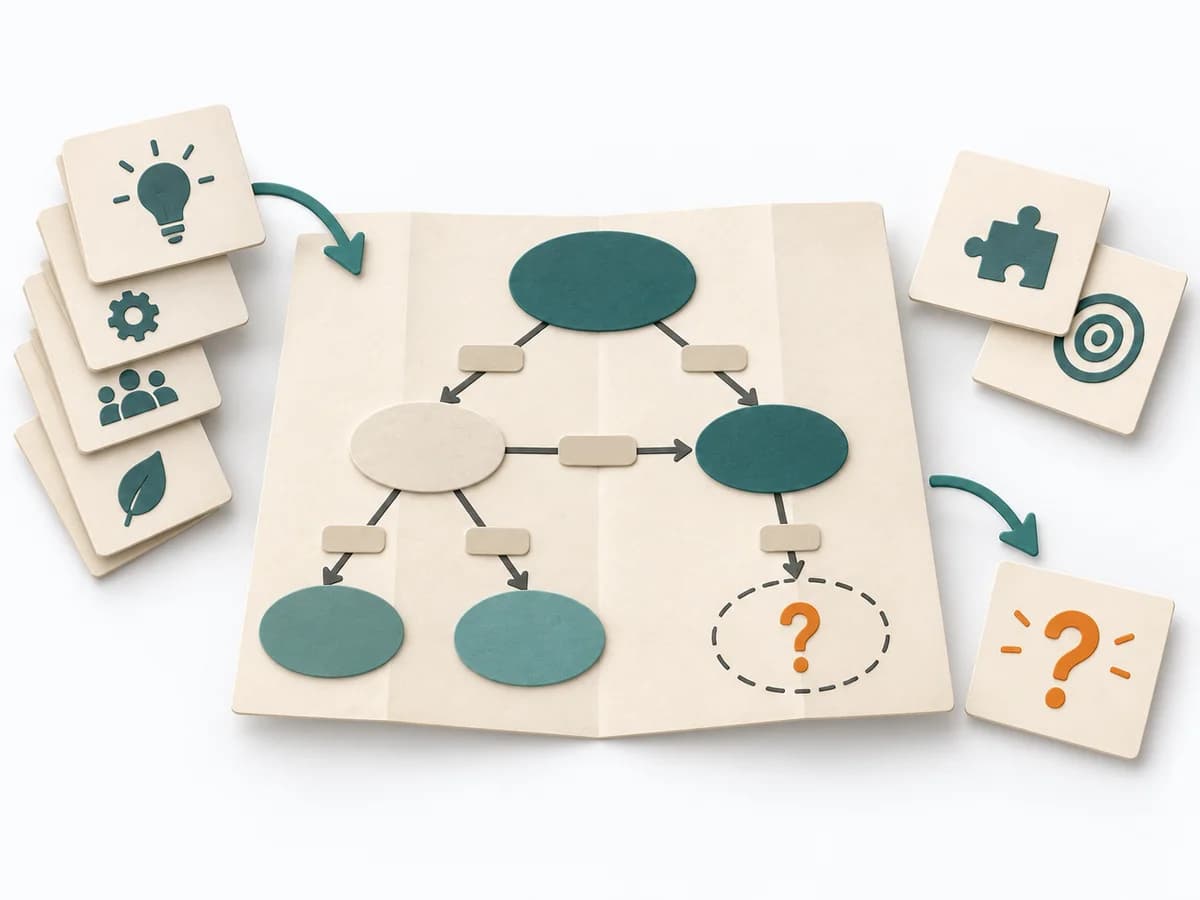 Knowledge Modeling Concept Mapping |
|---|---|---|---|---|
Purposedifferent | Knowledge Mapping makes knowledge, gaps, and transfer paths visible across a field. It fits when expertise should not just exist but also be findable and transferable. | When assumptions still sit unordered in the room, it weighs uncertainty against leverage. It makes visible which hypotheses should be checked first. | When a topic needs to be validated broadly and many people can answer the same question, surveys gather structured feedback in a scalable form. Answers become comparable and segmentable instead of remaining merely anecdotal. | Concept Mapping arranges terms and relationships in a network that makes subject-matter connections tangible. It fits when a topic needs to be understood structurally rather than linearly. |
Complexitysame | Medium | Medium | Medium | Medium |
Timedifferent | 1-3 h | 45-60 min | 3-14 Tage | 1-2 h |
Participantsdifferent | 3-12 | 2-8 | 50+ | 1-8 |
Formatdifferent | Workshop | Workshop + async | Async | Workshop + async |
Outputdifferent | Knowledge Map, Critical Knowledge Areas, Transfer Plan | Assumption map, Test backlog, Risk ranking | Survey Results, Charts, Segment Insights | Concept Map, Relationship Labels, Knowledge Gaps |
Tagsno overlap | KnowledgeMappingRisk | AssumptionsRiskExperimentsValidation | QuantitativeResearchValidation | KnowledgeConceptsMappingSensemaking |