View methods side by side.
Choose up to four methods. Add them using the search and share the comparison by copying its link.
| Criterion |  Operations Kepner-Tregoe | 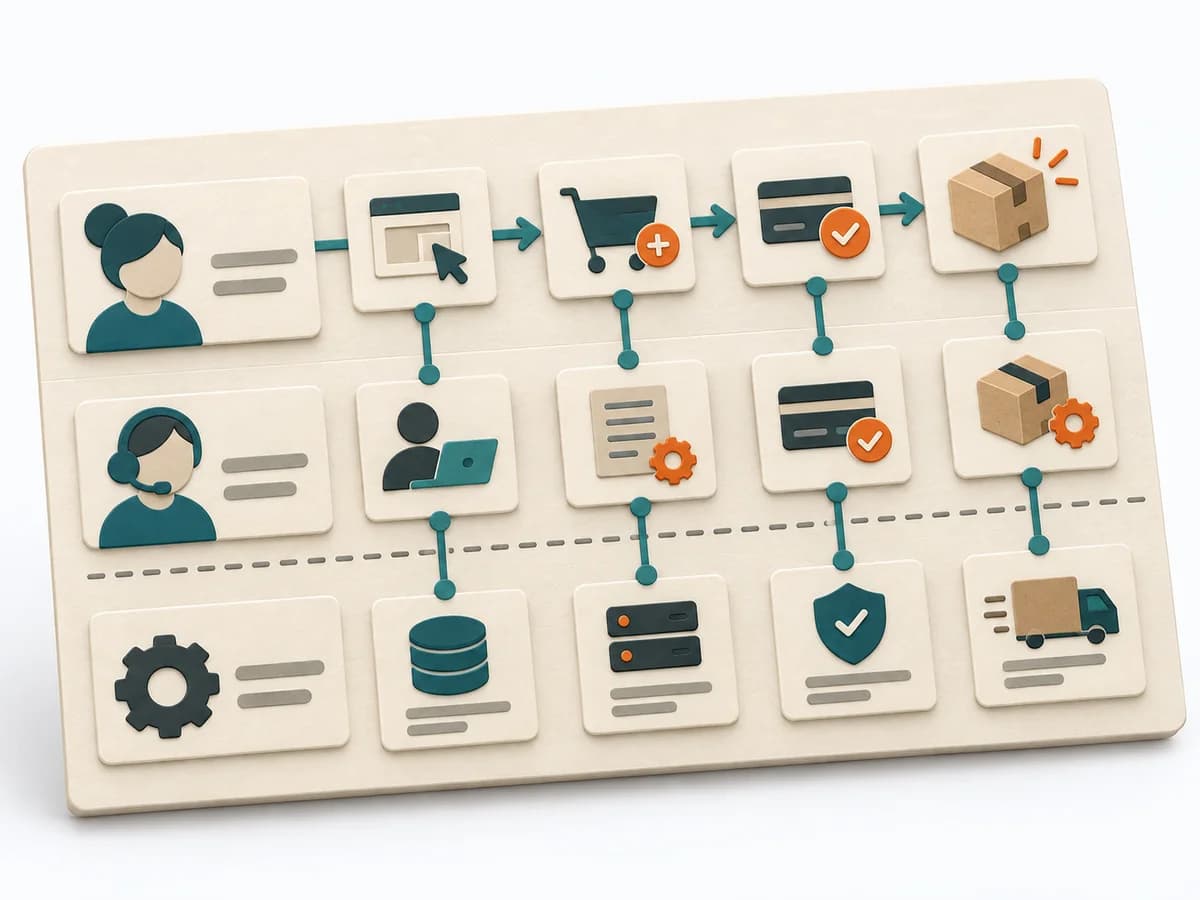 UX Design Service Blueprinting |  Operations Barrier Analysis |  Operations 5 Whys |
|---|---|---|---|---|
Purposedifferent | For a disturbance that's hard to pin down, the method cleanly separates problem, cause, and decision. It reduces mixing when symptoms allow several interpretations. | When a service experience is spread across several touchpoints, it brings frontstage and backstage together. It shows where user contact and internal responsibility must fit. | For a risk that can only be managed through multiple layers of protection, the method examines the effectiveness of each barrier. It shows where safeguards are missing, too weak, or fail under real conditions. | For a single, hard-to-explain deviation, the method exposes the causal chain behind the visible symptom. It keeps the cause open until a controllable condition emerges instead of a mere description. |
Complexitydifferent | High | High | Medium | Low |
Timedifferent | 2-8 h | 0.5-2 Tage | 2-4 h | 15-30 min |
Participantsdifferent | 2-8 | 6-12 | 2-6 | 2-6 |
Formatdifferent | Workshop + async | Workshop | Workshop + async | Workshop |
Outputdifferent | Problem Analysis, Decision Analysis, Risk Plan | Service Blueprint, Fail Points, Ownership Map | Barrier Inventory, Failure Analysis per Barrier, Action Backlog | Root cause notes, Countermeasures |
Tagsno overlap | Problem solvingRoot causeDecisionOperations | Service designOperationsJourneyBlueprint | Root causeSafetyIncident | Root causeIncidentLeanProblem solving |