View methods side by side.
Choose up to four methods. Add them using the search and share the comparison by copying its link.
| Criterion |  Operations Kepner-Tregoe | 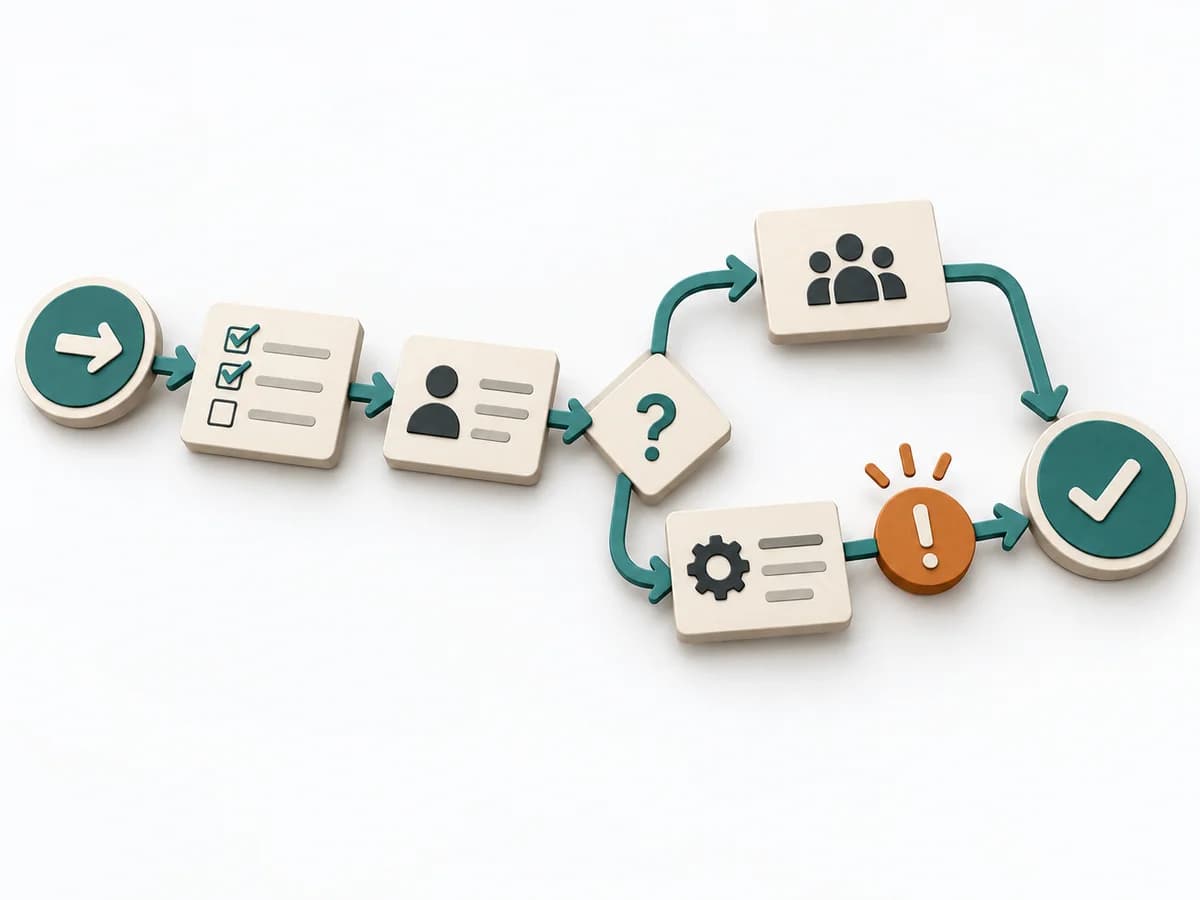 Operations Process Mapping |  Operations After-Action Review |  Operations 5 Whys |
|---|---|---|---|---|
Purposedifferent | For a disturbance that's hard to pin down, the method cleanly separates problem, cause, and decision. It reduces mixing when symptoms allow several interpretations. | With a confusing workflow that has many handoffs, the method makes the actual process visible. It shows where work is passed on, delayed, or duplicated, so improvement targets the right spots. | After missions or project phases with unclear outcomes, the method makes visible what actually happened and what can be learned from it. It separates course, effect, and causes so experience turns into solid improvement. | For a single, hard-to-explain deviation, the method exposes the causal chain behind the visible symptom. It keeps the cause open until a controllable condition emerges instead of a mere description. |
Complexitydifferent | High | Medium | Low | Low |
Timedifferent | 2-8 h | 1-3 h | 20-45 min | 15-30 min |
Participantsdifferent | 2-8 | 3-10 | 3-12 | 2-6 |
Formatdifferent | Workshop + async | Workshop | Workshop + async | Workshop |
Outputdifferent | Problem Analysis, Decision Analysis, Risk Plan | Process Map, Handoff List, Improvement Backlog | Lessons learned, Action items, Event summary | Root cause notes, Countermeasures |
Tagsno overlap | Problem solvingRoot causeDecisionOperations | ProcessOperationsImprovement | LearningOperationsImprovement | Root causeIncidentLeanProblem solving |