View methods side by side.
Choose up to four methods. Add them using the search and share the comparison by copying its link.
| Criterion | 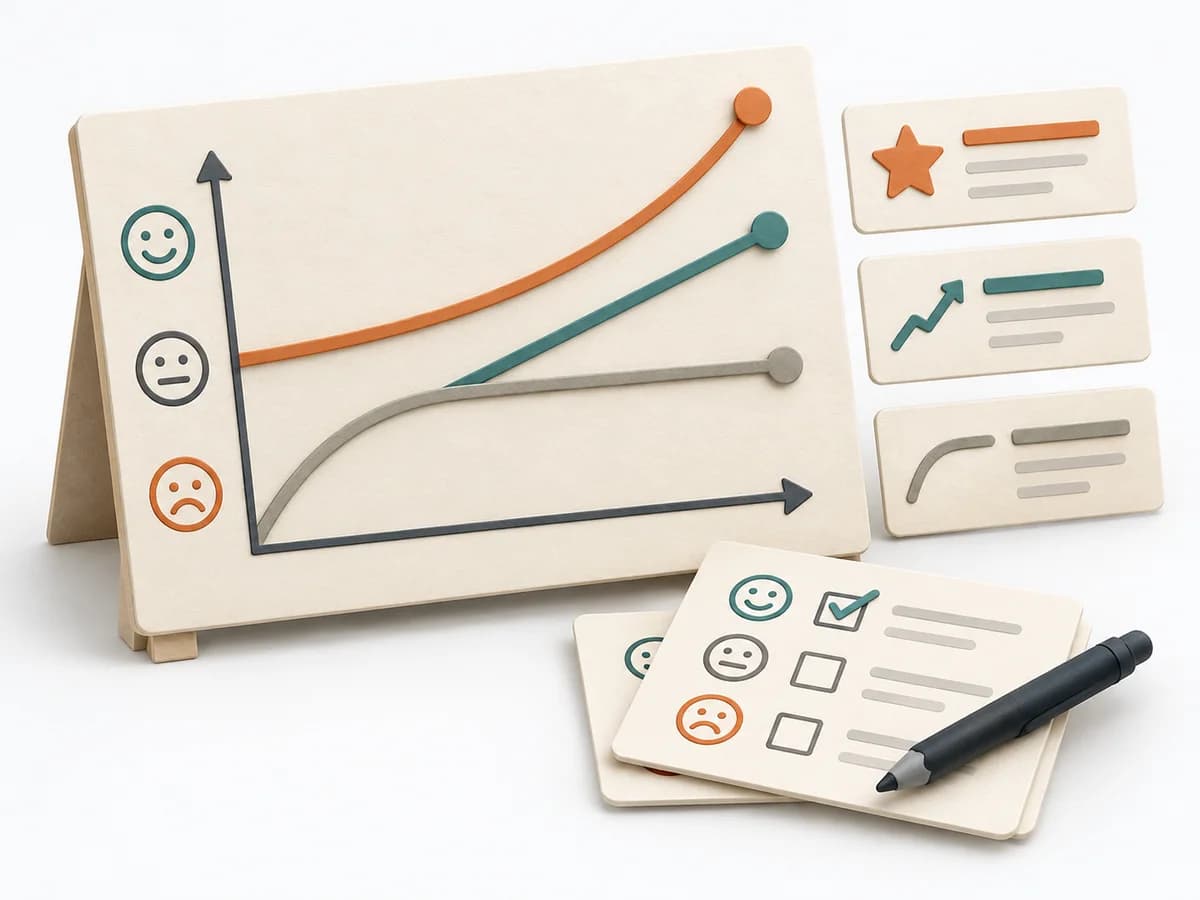 Product Discovery Kano Model | 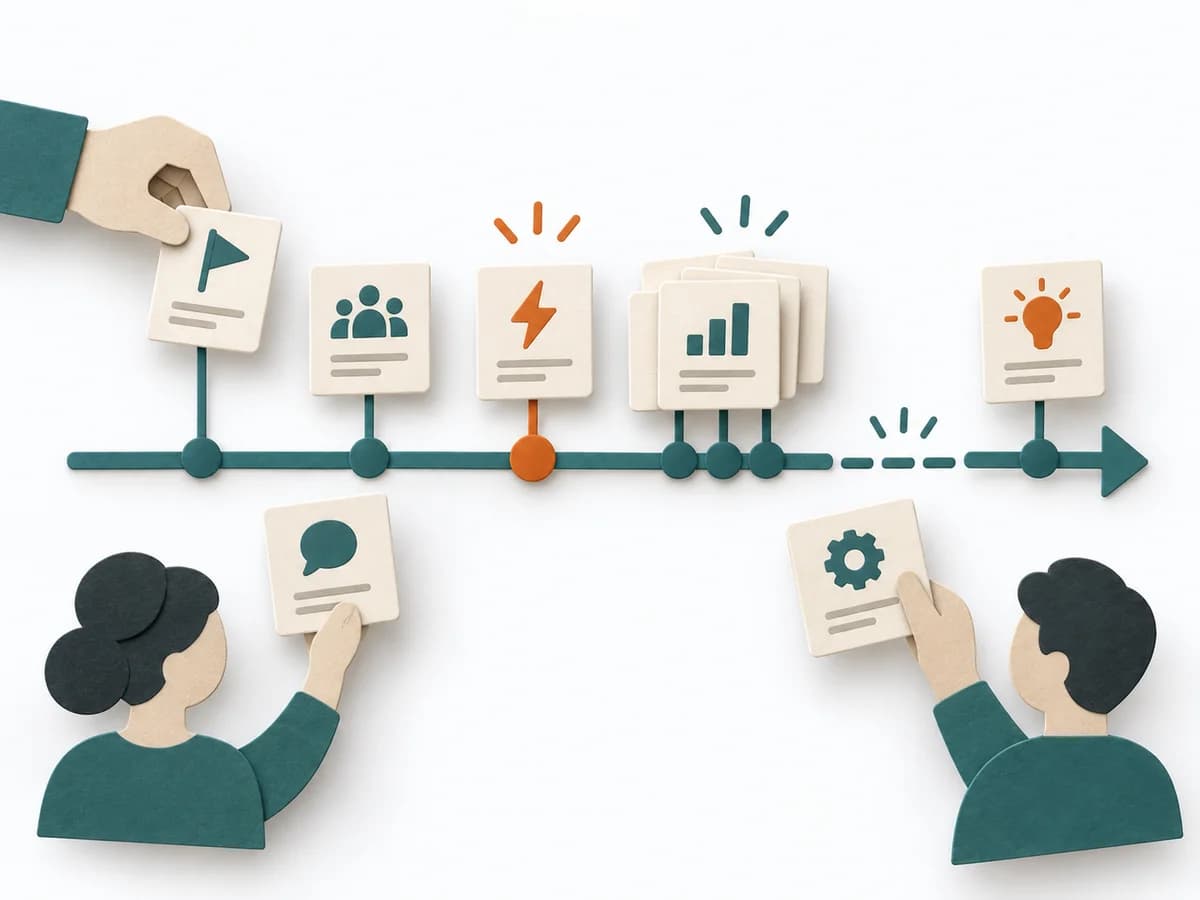 Facilitation Timeline |  Facilitation 1-2-4-All |  Facilitation Nominal Group Technique |
|---|---|---|---|---|
Purposedifferent | When features need to be distinguished by their effect on satisfaction, it makes expectations and surprises comparable. It separates basic needs, performance contribution, and delight. | When a project, incident, or change process is only remembered in fragments, Timeline brings the sequence back into a readable form. It makes turning points, precursors, and after-effects recognizable over the course of time. | When many people in a group too rarely get to speak, 1-2-4-All distributes thinking time more fairly. The format builds participation step by step and makes quiet or still-unformed thoughts usable faster. | When loud voices could dominate a round, Nominal Group Technique protects individual thinking time from group effects. It collects ideas separately first and only then enables shared weighting. |
Complexitydifferent | Medium | Low | Low | Medium |
Timedifferent | 1-2 Tage | 30-90 min | 10-20 min | 60-120 min |
Participantsdifferent | 10-50 | 2-12 | 4-100+ | 5-12 |
Formatdifferent | Workshop + async | Workshop + async | Workshop | Workshop |
Outputdifferent | Kano Matrix, Feature Classes, Priority Themes | Timeline, Milestones, Insight Notes | Idea List, Shared Insights, Emergent Themes | Ranked Ideas, Clarified Options, Group Priority |
Tagsno overlap | SatisfactionPrioritizationCustomer | TimelineFacilitationSequence | FacilitationInclusionIdeation | FacilitationPrioritizationVotingInclusion |