View methods side by side.
Choose up to four methods. Add them using the search and share the comparison by copying its link.
| Criterion |  Product Discovery Kano Model |  Facilitation Nominal Group Technique |  Product Discovery Opportunity Interview | 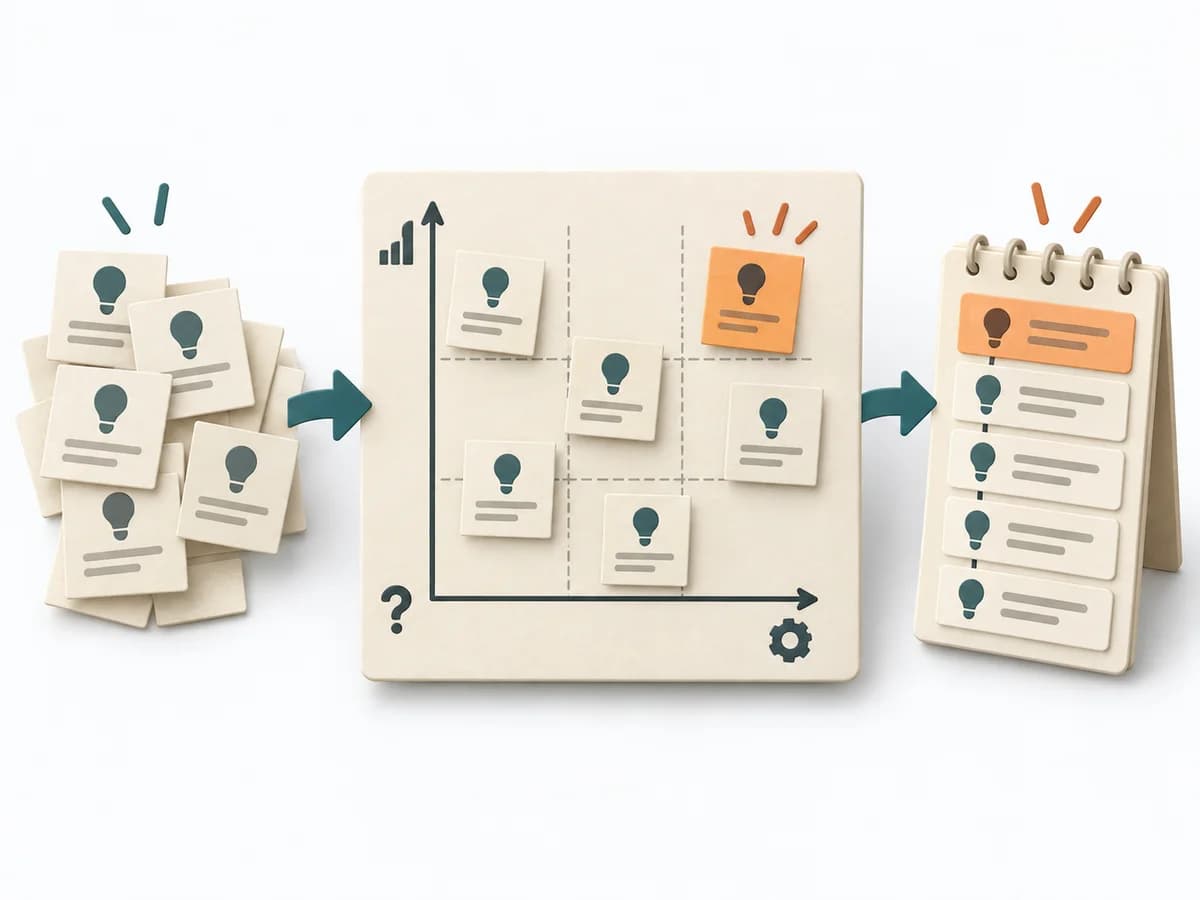 Product Discovery Hypothesis Prioritization Canvas |
|---|---|---|---|---|
Purposedifferent | When features need to be distinguished by their effect on satisfaction, it makes expectations and surprises comparable. It separates basic needs, performance contribution, and delight. | When loud voices could dominate a round, Nominal Group Technique protects individual thinking time from group effects. It collects ideas separately first and only then enables shared weighting. | When opportunities are still hidden behind signals of need, it structures conversations around needs and obstacles. It looks for patterns that lead to new product opportunities. | When many hypotheses compete for attention, it brings order to their learning sequence and importance. It separates problem, assumption, solution, and evidence. The result is captured as a prioritization canvas and a hypothesis backlog. |
Complexitysame | Medium | Medium | Medium | Medium |
Timedifferent | 1-2 Tage | 60-120 min | 30-60 min je Interview | 60-90 min |
Participantsdifferent | 10-50 | 5-12 | 5-12 Interviews | 3-8 |
Formatdifferent | Workshop + async | Workshop | Workshop + async | Workshop |
Outputdifferent | Kano Matrix, Feature Classes, Priority Themes | Ranked Ideas, Clarified Options, Group Priority | Interview Notes, Opportunity Themes, Customer Quotes | Prioritization Canvas, Hypothesis Backlog |
Tagsno overlap | SatisfactionPrioritizationCustomer | FacilitationPrioritizationVotingInclusion | DiscoveryInterviewsOpportunityCustomer | ExperimentsPrioritizationDiscoveryHypothesis |