View methods side by side.
Choose up to four methods. Add them using the search and share the comparison by copying its link.
| Criterion | 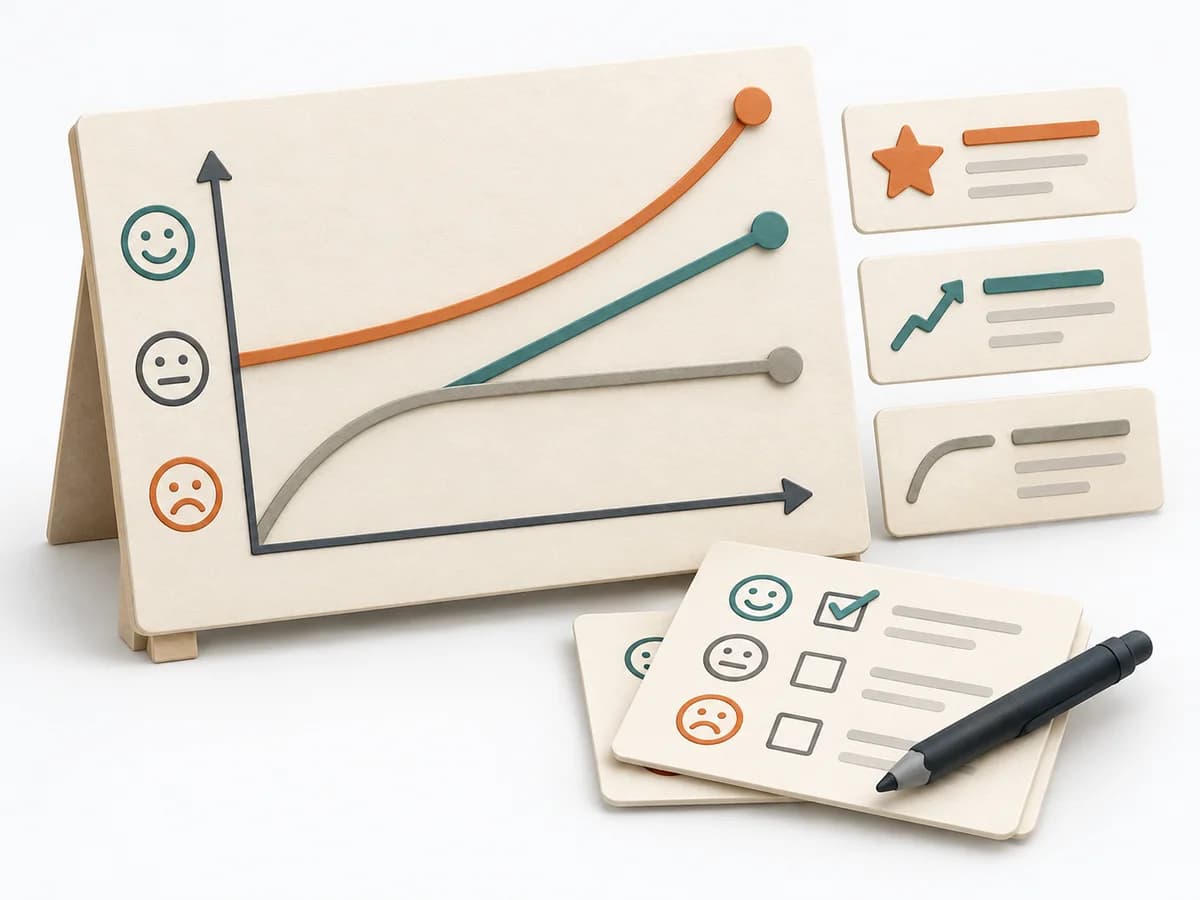 Product Discovery Kano Model |  Delivery MoSCoW |  Decision Making Force Field Analysis |  Decision Making OODA Loop |
|---|---|---|---|---|
Purposedifferent | When features need to be distinguished by their effect on satisfaction, it makes expectations and surprises comparable. It separates basic needs, performance contribution, and delight. | When a release carries too many demands and priorities are only ever negotiated, MoSCoW creates clear boundaries for the next cut. Must, Should, Could, and Won't make commitment, room for maneuver, and trade-off logic visible to everyone involved. | In change initiatives, supporting and restraining forces sit at the table at the same time. Force Field Analysis makes these tensions explicit and shows where change can be pushed forward by strengthening or relieving. | In dynamic situations, decisions become outdated faster than they can be prepared. The OODA Loop holds observing, orienting, deciding, and acting together as a recurring rhythm so reaction does not slide into inertia. |
Complexitydifferent | Medium | Low | Low | Medium |
Timedifferent | 1-2 Tage | 30-90 min | 45-90 min | 15-60 min je Zyklus |
Participantsdifferent | 10-50 | 3-12 | 3-12 | 1-8 |
Formatdifferent | Workshop + async | Workshop + async | Workshop | Workshop + async |
Outputdifferent | Kano Matrix, Feature Classes, Priority Themes | Prioritized Backlog, Release Scope, Tradeoff Notes | Force Field Map, Change Levers, Risk Notes | Situation Assessment, Decision Loop, Action Updates |
Tagsno overlap | SatisfactionPrioritizationCustomer | PrioritizationScopeDecision | ChangeDecisionStrategy | DecisionChangeLearningStrategy |