View methods side by side.
Choose up to four methods. Add them using the search and share the comparison by copying its link.
| Criterion |  Product Discovery Kano Model |  Decision Making Force Field Analysis |  Product Strategy DIBB | 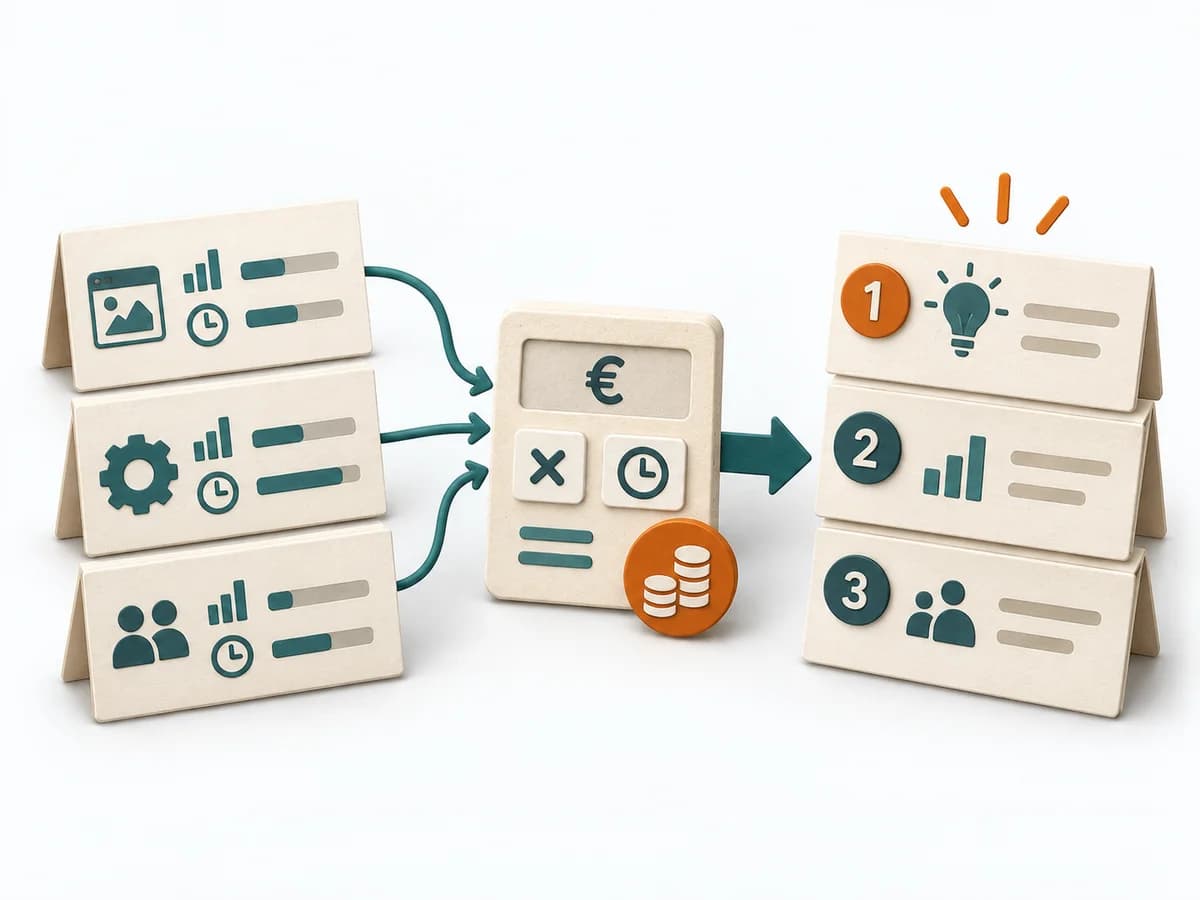 Delivery Cost of Delay |
|---|---|---|---|---|
Purposedifferent | When features need to be distinguished by their effect on satisfaction, it makes expectations and surprises comparable. It separates basic needs, performance contribution, and delight. | In change initiatives, supporting and restraining forces sit at the table at the same time. Force Field Analysis makes these tensions explicit and shows where change can be pushed forward by strengthening or relieving. | DIBB helps clarify target groups, value, goals, and priorities by making the logic behind a decision explicit. It captures results as a DIBB document, belief list, bet list, and learning report. | Helps clarify scope, order, and delivery flow in concrete terms. It makes work, constraints, and sequence manageable. The result is captured as a Cost of Delay table and prioritization sequence. |
Complexitydifferent | Medium | Low | Low | High |
Timedifferent | 1-2 Tage | 45-90 min | 1-2 h | 90-180 min |
Participantsdifferent | 10-50 | 3-12 | 2-8 | 3-8 |
Formatdifferent | Workshop + async | Workshop | Workshop + async | Workshop |
Outputdifferent | Kano Matrix, Feature Classes, Priority Themes | Force Field Map, Change Levers, Risk Notes | DIBB document, Belief list, Bet list, Learning report | CoD Table, Prioritization Sequence |
Tagsno overlap | SatisfactionPrioritizationCustomer | ChangeDecisionStrategy | StrategyDecisionAssumptionsHypothesis | PrioritizationDeliveryEconomicsDecision |